Meadow Vole
The meadow vole (Microtus pennsylvanicus) is one of the most common and prolific small mammals in North America, distinguished by its vast geographic range…
How do meadow voles compare to other vole species?
The meadow vole (Microtus pennsylvanicus) is one of the most common and prolific small mammals in North America, distinguished by its vast geographic range and high reproductive rate. Compared to other vole species, it exhibits several unique characteristics:12
- Size and Build: Weighing less than 50 grams, it is larger than the woodland vole, which weighs up to 37 grams and is specialized for burrowing with a more cylindrical body and larger claws. Conversely, it is significantly smaller than the European water vole, which can weigh up to 250 grams.132
- Habitat and Behavior: While most voles are terrestrial, the meadow vole is primarily surface-dwelling, traveling along networks of trails. This contrasts with the subterranean lifestyle of the woodland vole or the mole vole, and the specialized arboreal habits of the tree voles (Arborimus). Unlike the semiaquatic American water vole, the meadow vole is not a specialized swimmer, though it can swim if necessary.123
- Reproduction: The meadow vole is exceptionally prolific, producing up to 17 litters per year, a rate that exceeds many other species.1
What role do meadow voles play in their ecosystem?
The meadow vole (Microtus pennsylvanicus) serves as a vital component of North American ecosystems, primarily functioning as a key prey species and a primary consumer of vegetation.
Ecological Roles
- Prey Base: Meadow voles are a critical food source for a wide variety of predators, including weasels, hawks, and owls. Their high reproductive rate—producing up to 17 litters per year—allows them to sustain these predator populations despite significant mortality rates.1
- Primary Consumption: As herbivores, they forage on grasses, sedges, seeds, and herbaceous plants. By consuming these plants and occasionally tender tree bark, they influence the vegetation structure of their habitats, which include meadows, swampy pastures, and grassy forest openings.1
- Habitat Modification: Meadow voles create extensive networks of surface trails and underground tunnels. These pathways facilitate movement through dense vegetation and contribute to the physical structure of the ground layer in their environments.1
- Population Dynamics: In many regions, particularly in the north, meadow voles exhibit cyclical population densities, reaching high numbers every two to five years. These fluctuations have significant, though still researched, impacts on the local food web and ecosystem stability.1
What are the physical characteristics of meadow voles?
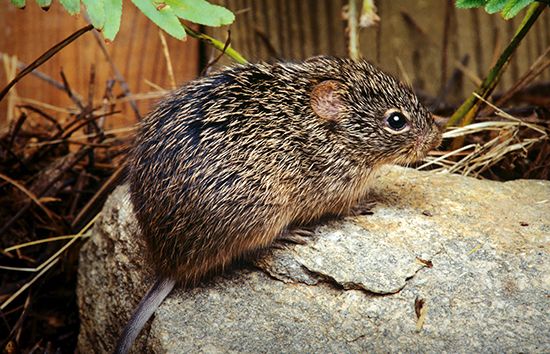
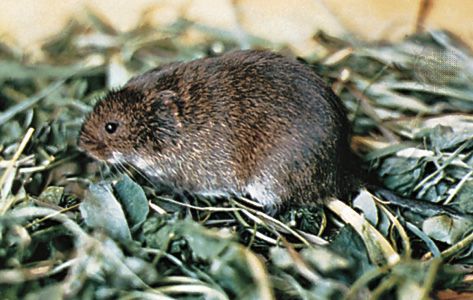
The meadow vole (Microtus pennsylvanicus) is a stout, small-bodied mammal characterized by the following physical traits:
- Size and Weight: Adults typically weigh less than 50 grams (1.8 ounces). Their total body length, which includes a short tail measuring 3 to 6 cm (1.2 to 2.4 inches), ranges from 15 to 20 cm (5.9 to 7.9 inches).12
- Fur: They possess dense, soft fur. The coloration is generally chestnut-brown on the upperparts, while the underparts are typically gray or grayish buff. Some individuals may appear much darker in color.12
- General Morphology: Like other voles, they exhibit a blunt muzzle, small eyes, and small ears, which are common features among members of the subfamily Arvicolinae.12
What is the diet of a meadow vole?
The diet of the meadow vole (Microtus pennsylvanicus) consists primarily of various plant materials. They forage for grasses, including their seeds, as well as sedges and other herbaceous plants. Additionally, they consume tender tree bark.1
To survive the winter months, meadow voles cache roots, tubers, and other plant parts within their burrows to serve as a food supply. While their diet is predominantly herbivorous, some vole species more broadly may occasionally consume insects and fungi.12
Sources
- meadow vole — Encyclopædia Britannica
- vole — Encyclopædia Britannica
- woodland vole — Encyclopædia Britannica
Published on · 3 min read