Meconopsis
Meconopsis is a genus comprising approximately 45 species of herbaceous plants within the poppy family, Papaveraceae. These plants are primarily native to…
What is Meconopsis?
Meconopsis is a genus comprising approximately 45 species of herbaceous plants within the poppy family, Papaveraceae. These plants are primarily native to south-central Asia and are widely cultivated as prized ornamentals due to their attractive blooms.12
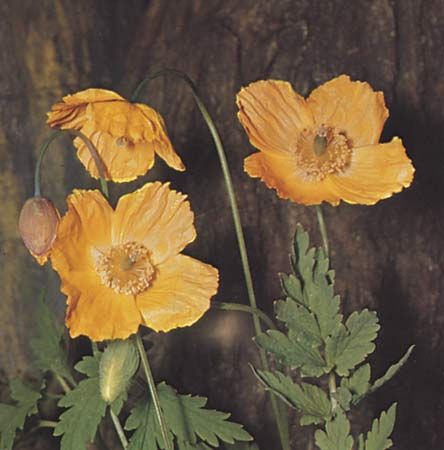
The genus is most famous for its striking blue flowers, including the Himalayan blue poppy (Meconopsis baileyi), the Tibetan poppy (M. grandis), and the hybrid cultivar M. ‘Lingholm’. While most species are Asiatic, the Welsh poppy (M. cambrica) is the only representative native to Europe and is distinguished by its yellow flowers. Botanically, these plants are characterized by flowers featuring stigmas that form a globular mass atop the ovary.12
What makes the Himalayan blue poppy so difficult to grow?
How does the Welsh poppy differ from other Meconopsis species?
The Welsh poppy (Meconopsis cambrica) differs from the majority of its genus primarily in its geographic origin and floral coloration. While the genus Meconopsis consists of approximately 45 species that are predominantly native to south-central Asia, the Welsh poppy is the only representative native to western Europe.13
Furthermore, the genus is widely celebrated for its striking blue-flowered species, such as the Himalayan blue poppy (Meconopsis baileyi) and the Tibetan poppy (M. grandis). In contrast, the Welsh poppy is distinguished by its showy, pale-yellow flowers.13
What are the main characteristics of the poppy family?
The Papaveraceae, or poppy family, is a diverse group of flowering plants within the order Ranunculales, comprising approximately 48 genera and 2,220 species. While primarily composed of herbaceous plants found in the Northern Hemisphere, the family also includes woody shrubs and a genus of small tropical trees.45
Physical Characteristics
Members of the family are widely recognized for several distinct features:
- Flowers: Most species possess bisexual, dish-shaped flowers that are often large and nodding. These typically feature 4 to 12 separate, frequently crinkled petals and numerous stamens.645
- Foliage and Sap: The leaves are generally deeply cut or divided into leaflets. A defining trait for many is the presence of colored latex or milky sap.64
- Fruit: The reproductive structure develops into a spherical or linear capsule. In many species, including those in the genus Papaver, seeds are dispersed through pores beneath a stigmatic disk when the capsule is shaken by the wind.64
The family is highly valued for its many garden ornamentals and its pharmaceutical significance, most notably the opium poppy, which serves as a source for various opiate drugs.64
Sources
- Meconopsis — Encyclopædia Britannica
- meconopsis — Merriam-Webster
- Welsh poppy — Merriam-Webster
- poppy — Encyclopædia Britannica
- Papaveraceae — Encyclopædia Britannica
- list of plants in the family Papaveraceae — Encyclopædia Britannica
Published on · 2 min read