Medusa
In Greek mythology, Medusa was the most famous of the three Gorgons, monstrous sisters known for their ability to turn anyone who looked at them into stone.…
What is medusa?
In Greek mythology, Medusa was the most famous of the three Gorgons, monstrous sisters known for their ability to turn anyone who looked at them into stone. She is typically depicted as a winged female with snakes for hair.12
While often portrayed as a villain, Medusa was the only mortal Gorgon. In many accounts, such as Ovid’s Metamorphoses, she was originally a beautiful woman who was violated by Poseidon in a temple of Athena. Athena subsequently cursed her, transforming her hair into snakes and her gaze into a petrifying weapon.23
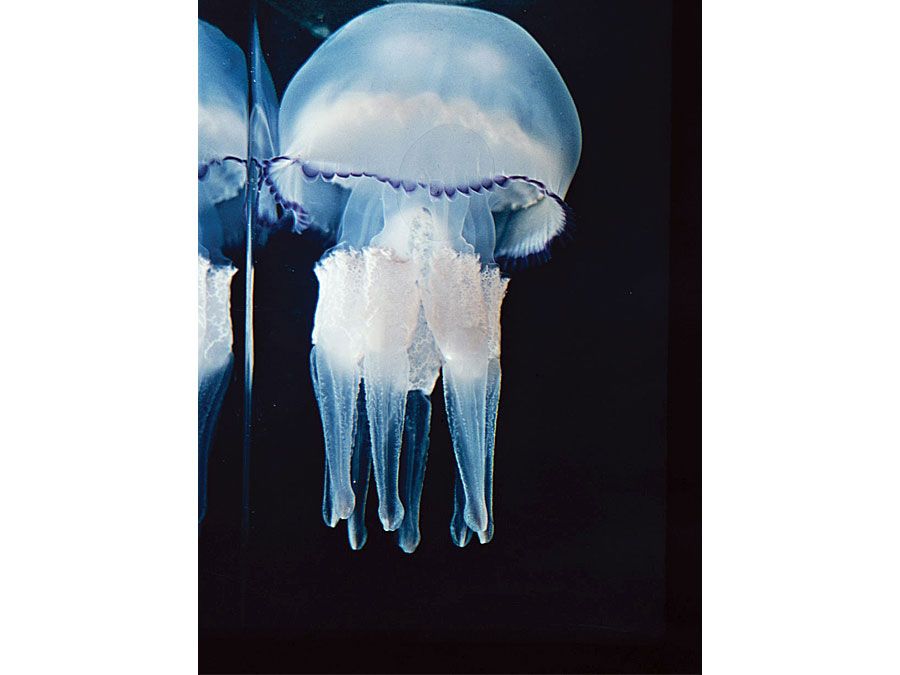
Medusa was eventually beheaded by the hero Perseus, who used a reflective shield to avoid her gaze. Modern scholarship often interprets her story as a tragic narrative regarding sexual violence and the repression of female agency. Additionally, the term “medusa” is used in biology to describe the bell-shaped, free-swimming stage of certain jellyfish.12
Who were the other two Gorgon sisters?
The other two Gorgon sisters in Greek mythology were Stheno and Euryale.14
According to the poet Hesiod, all three sisters were the daughters of the primordial sea deities Phorcys and Ceto. While Medusa was mortal, Stheno and Euryale were immortal. Their names carry specific meanings: Stheno is translated as “the Mighty,” and Euryale is known as “the Far Springer”. Like Medusa, they were often depicted as winged creatures with snakes for hair.14
When Perseus beheaded Medusa, he was pursued by her immortal sisters, but he managed to escape them by using a cap or helmet belonging to Hades that granted him invisibility.14
What is the significance of Pegasus in the Medusa myth?
In Greek mythology, the winged horse Pegasus serves as a significant symbol of the tragic and transformative nature of Medusa’s story. Pegasus, along with the warrior Chrysaor, was conceived by Medusa following her encounter with Poseidon in the temple of Athena6.
The birth of Pegasus is intrinsically linked to Medusa’s death; he sprang from her blood at the moment she was beheaded by the hero Perseus. This emergence marks the transition of Medusa’s narrative from one of victimization and monstrous transformation to the release of divine offspring.56
Beyond this origin, Pegasus became a celebrated figure in his own right, famously captured by the hero Bellerophon to aid in his battles against the Chimera. Ultimately, the horse ascended to become a servant of Zeus and a constellation, representing a shift from the tragic circumstances of his birth to a symbol of poetic inspiration and the soul’s immortality.5
We could dive deeper into the exploits of Bellerophon or explore other mythological creatures born from the blood of the Gorgons.
How do modern interpretations of Medusa differ from ancient ones?
In ancient traditions, Medusa was primarily viewed as a monstrous figure—a terrifying Gorgon whose gaze turned beholders to stone. Early artistic depictions from the Archaic period often rendered her as a grotesque creature with a round face, flat nose, and projecting teeth. Her role in these myths was largely destructive, serving as a cautionary tale about transgression or as a talismanic image (the gorgoneion) used to ward off evil.24
Modern interpretations have significantly revised this perception, shifting the focus from villain to victim. Scholars and contemporary discourse now frequently highlight her story as an emblem of sexual violence, emphasizing that she was punished by Athena for an assault she suffered at the hands of Poseidon. Through a feminist lens, Medusa is seen as a symbol of female rage, the toxic effects of the male gaze, and endurance. Rather than merely a monster to be slain, she is now often portrayed as a tragic figure whose agency was stripped away by divine cruelty.24
Sources
- Did you know? — Merriam-Webster
- Medusa — Encyclopædia Britannica
- Perseus — Encyclopædia Britannica
- Gorgon — Encyclopædia Britannica
- Pegasus — Encyclopædia Britannica
- Poseidon: Top Questions — Encyclopædia Britannica
Published on · 3 min read