Millepore
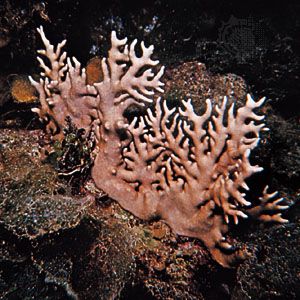
A millepore refers to any of the stony, reef-building hydrozoan corals that belong to the order Milleporina and the genus Millepora.
What is millepore?
A millepore refers to any of the stony, reef-building hydrozoan corals that belong to the order Milleporina and the genus Millepora.1
These organisms are significant contributors to coral reefs, often appearing in branching, encrusting, or massive forms. While they share reef-building characteristics with madrepores, they are biologically distinct because they pass through a free-swimming medusoid stage during their life cycle.1
How do hydrozoans differ from true corals?
Hydrozoans (specifically the order Milleporina, or millepores) and true corals (class Anthozoa) are both cnidarians that contribute to reef building, but they differ significantly in their biological classification and life cycles.
Key Differences
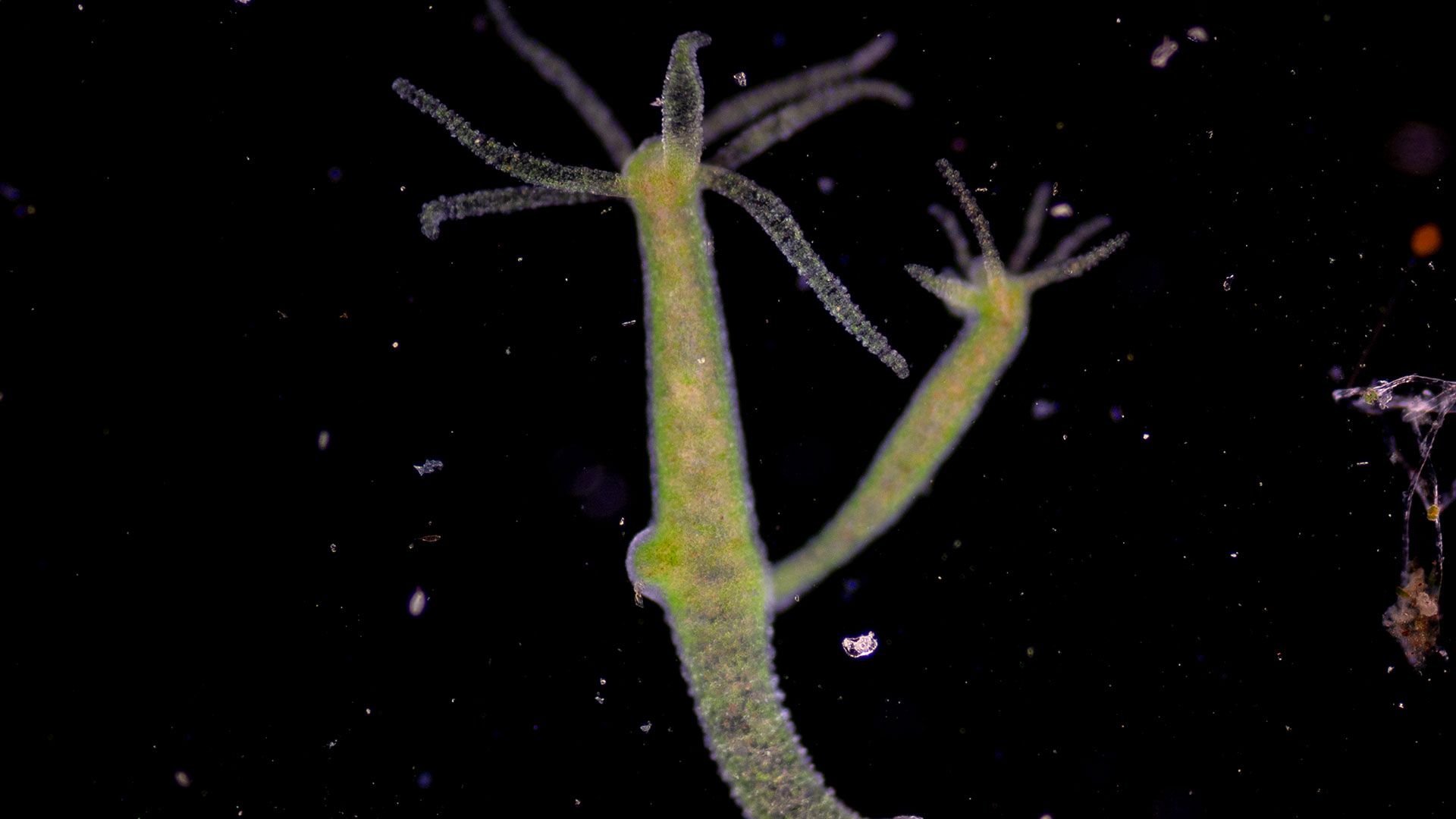
- Biological Classification: True corals belong to the class Anthozoa, whereas millepores belong to the class Hydrozoa. Millepores are more closely related to the hydra than to true corals.2
- Life Cycle: A primary distinction is that millepores pass through a free-swimming medusa stage during their life cycle. In contrast, the medusa stage is entirely absent in anthozoan corals, which exist only as polyps.231
- Skeleton Structure: While both groups form calcium carbonate skeletons, their composition differs. Anthozoan polyps secrete an external skeleton that they can retract into. Hydrocoral skeletons are considered internal because they are shallowly penetrated by channels of living tissue.45
- Gamete Development: In anthozoans, gametes develop in the endoderm, whereas in hydrozoans, they ripen in the ectoderm.1
What is the role of coral reefs in ocean ecosystems?
Coral reefs are among the most complex and productive ecosystems on Earth, often described as “oases” in the open ocean due to their high biological productivity. They provide a vital foundation for marine life, supporting approximately 25 percent of all marine species.910
Structural and Ecological Roles
- Framework Building: Reef-building corals, primarily stony corals, create a rigid, calcareous skeleton made of calcium carbonate. This structure serves as a substrate for a diverse array of organisms, including algae, mollusks, sponges, and echinoderms.1112
- Symbiotic Relationships: Corals maintain a symbiotic partnership with zooxanthellae, photosynthetic algae that provide food for the coral and accelerate the formation of the reef skeleton.109
- Habitat Provision: Beyond the living coral, the reef complex includes carbonate sand and mud, which provide essential habitats for seagrasses and mangroves723) and mangroves. These associated environments help stabilize sediment and protect shorelines from erosion and storm surges.1413
Environmental Significance
Reefs act as critical nurseries for various marine species, supporting biodiversity and local fisheries. However, these ecosystems are highly sensitive to environmental stressors, such as rising seawater temperatures, which can trigger bleaching—a process where corals expel their vital zooxanthellae, potentially leading to colony death.101415
What does it mean for a coral to have a medusoid stage?
It is important to clarify that “true corals” (class Anthozoa) do not have a medusoid stage; they exist exclusively as polyps throughout their life cycle. When a cnidarian possesses a medusoid stage, it means the organism undergoes a life cycle that includes a free-swimming, bell- or umbrella-shaped form commonly known as a medusa (or jellyfish).17185
In species that exhibit this stage, the medusa typically serves as the adult, sexually reproductive form. While the polyp is a sessile (attached) form that often reproduces asexually, it can produce medusae through budding or metamorphosis. In some hydrozoan species, these medusae may remain attached to the parent colony rather than separating to swim freely, effectively functioning as reproductive structures.1718
Because anthozoans lack this stage entirely, the term “medusoid stage” is only applicable to other classes of cnidarians, such as Hydrozoa, Scyphozoa, and Cubozoa.1718
Sources
- millepore — Merriam-Webster
- millepore — Encyclopædia Britannica
- cnidarian - Support mechanisms and skeletons — Encyclopædia Britannica
- coral — Encyclopædia Britannica
- cnidarian - Reproduction and life cycles — Encyclopædia Britannica
- hydrocoral — Merriam-Webster
- Hydrocorallina — Merriam-Webster
- hydroid — Encyclopædia Britannica
- coral reef - Corals and other reef-building organisms — Encyclopædia Britannica
- coral reef - Coral bleaching — Encyclopædia Britannica
- coral reef - Threats to coral reefs — Encyclopædia Britannica
- Coral Bleaching: A Threat to Our Reefs — Encyclopædia Britannica
- Marine ecosystem - Benthos — Encyclopædia Britannica
- coral reef - Structure — Encyclopædia Britannica
- coral reef - Biological factors — Encyclopædia Britannica
- mangrove: Top Questions — Encyclopædia Britannica
- cnidarian - Size range and diversity of structure — Encyclopædia Britannica
- medusa — Encyclopædia Britannica
Published on · 3 min read