Jellyfish
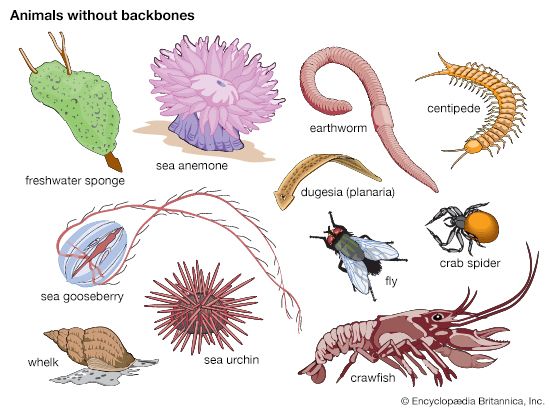
Jellyfish are defined as invertebrates primarily because they lack a vertebral column or backbone. As members of the phylum Cnidaria, they possess several…
What are the main characteristics that define jellyfish as marine invertebrates?
Jellyfish are defined as invertebrates primarily because they lack a vertebral column or backbone. As members of the phylum Cnidaria, they possess several distinct biological characteristics:1
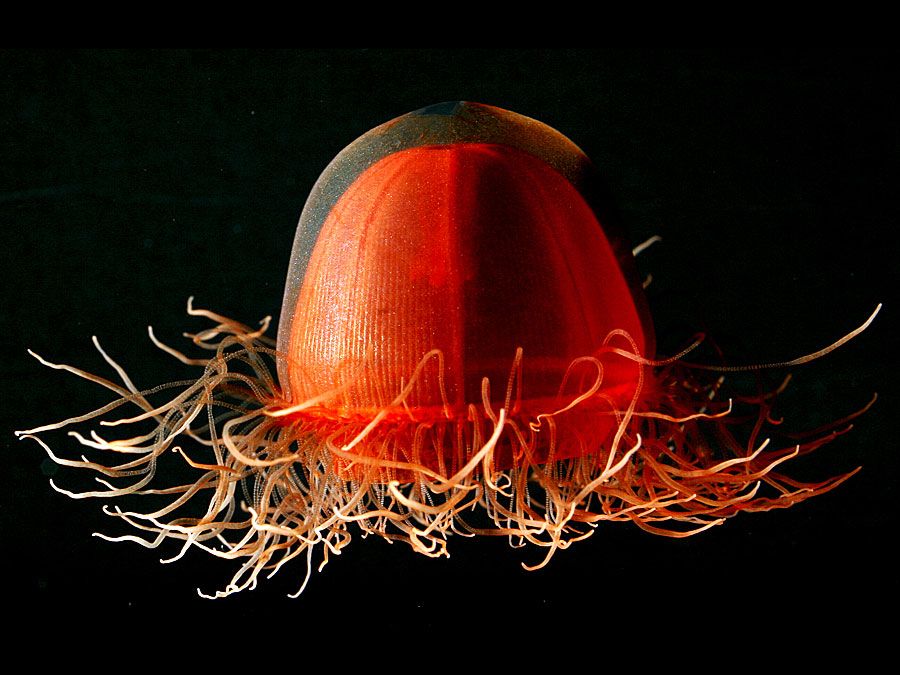
- Body Structure: They exhibit radial symmetry, with body parts arranged uniformly around a central axis. Their bodies consist of two cellular layers—the ectoderm and endoderm—separated by a thick, gelatinous, non-living layer called the mesoglea.23
- Lack of Complex Organs: Jellyfish do not have a brain, heart, blood, or lungs. Instead of a centralized nervous system, they utilize a nerve net to coordinate movement and feeding.42
- Physiology: They absorb oxygen directly from the water through their epidermis via diffusion. Many species also use rhythmic bell pulsing to assist in the distribution of nutrients and gases.2
- Feeding: Most jellyfish capture prey using tentacles equipped with stinging cells known as nematocysts, though some species are suspension feeders.3
What is the life cycle of a typical jellyfish?
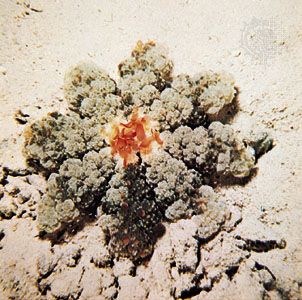
The life cycle of a typical free-swimming scyphozoan jellyfish involves an alternation between two distinct body forms: the sessile polyp and the free-swimming medusa.-swimming medusa.2
The cycle generally proceeds through three primary stages:
- Polyp Stage: A sessile, bottom-dwelling polyp (known as a scyphistoma) reproduces asexually by budding off young medusae from its upper end. These small, immature jellyfish are called ephyrae, which eventually grow into adult medusae.5
- Adult Stage: The adult medusae are typically dioecious, meaning they are either male or female. They reproduce sexually by releasing sperm and eggs into the water. In many species, the resulting embryo is brooded within the adult’s gut before being released.5
- Larval Stage: The fertilized egg develops into a ciliated planula larva. After swimming in the plankton for a period, the larva attaches to a solid surface, such as a rock, where it metamorphoses into a new scyphistoma, completing the cycle.52
While this pattern is typical for many species, some jellyfish, such as the Stauromedusae, exhibit direct development where the polyp stage is suppressed.5
What are some of the most common or well-known species of jellyfish?
Several species of jellyfish are particularly well-known due to their size, unique biological traits, or interactions with humans. Some of the most notable include:
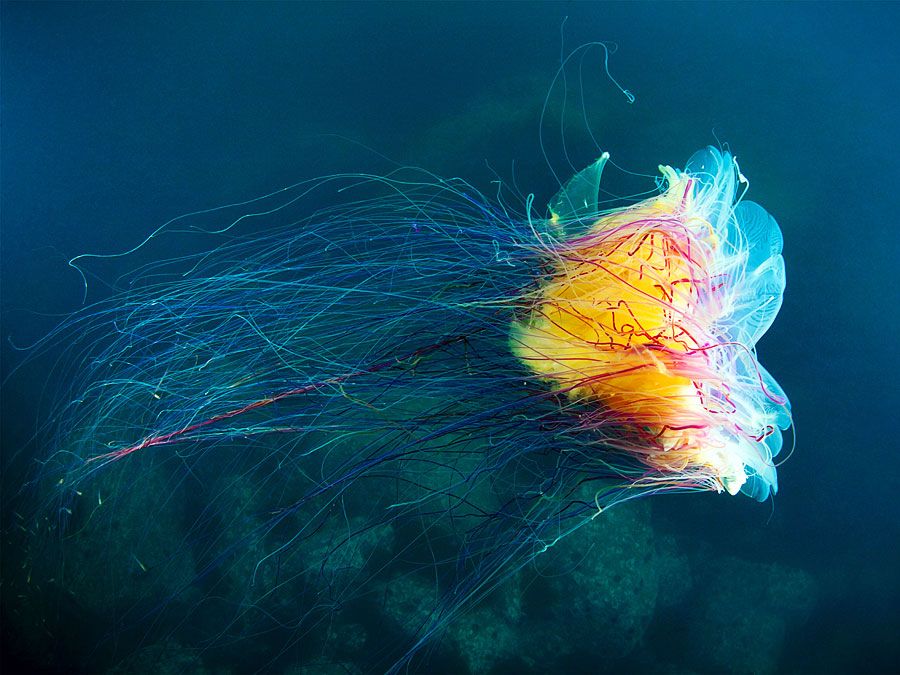
- Lion’s mane jellyfish (Cyanea capillata): Recognized as the largest known jellyfish in the world, this species inhabits cold northern waters. It can reach diameters of up to 2.4 meters (8 feet) and possesses up to 1,200 tentacles, which can extend to lengths exceeding 36 meters (120 feet).78
- Australian box jellyfish (Chironex fleckeri): Widely considered the most venomous jellyfish, this species is a strong swimmer capable of hunting prey. Its potent venom can cause cardiac arrest and death in humans within minutes, making it a significant concern for coastal safety.97
- Immortal jellyfish (Turritopsis dohrnii): This small hydrozoan is famous for its ability to evade death by reverting its adult medusa form back into a polyp stage through a process called transdifferentiation. This cycle can theoretically repeat indefinitely.710
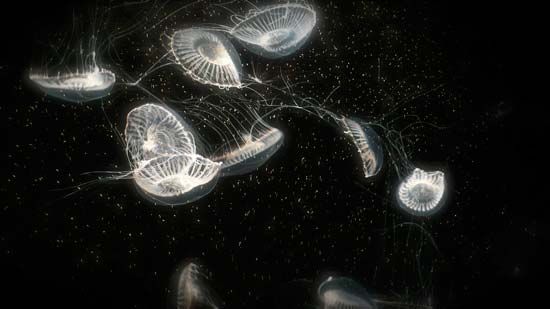
- Moon jelly (Aurelia): A common genus found in coastal waters across North America and Europe, these jellyfish are easily identified by their translucent, bell-shaped bodies and the four distinct, circular gonads visible near the center of their underside.1112
How do jellyfish reproduce, and what is the purpose of their medusa stage?
Jellyfish reproduce through both sexual and asexual processes, typically alternating between two distinct body forms: the sessile polyp and the free-swimming medusa.135
Reproduction
- Sexual Reproduction: This occurs primarily during the medusa stage. Adult medusae are generally dioecious (having separate sexes) and release gametes into the water, where fertilization occurs. The resulting embryo develops into a ciliated planula larva, which eventually settles on a solid surface to transform into a polyp.1362
- Asexual Reproduction: This occurs during the polyp stage. Polyps can produce new individuals through budding or, in many scyphozoans, through a process called strobilation, where they bud off immature medusae known as ephyrae.135
Purpose of the Medusa Stage
The medusa serves as the adult, sexually mature phase of the life cycle. While the polyp is typically a sedentary, juvenile form specialized for growth and asexual proliferation, the medusa is designed for mobility and reproduction. By being free-swimming, the medusa allows the species to disperse over wider areas, facilitating the distribution of offspring and the genetic mixing necessary for the survival of the population.51314
Sources
- Do jellyfish have brains? — Encyclopædia Britannica
- jellyfish — Encyclopædia Britannica
- Do jellyfish have a heart? — Encyclopædia Britannica
- invertebrate — Encyclopædia Britannica
- cnidarian - Size range and diversity of structure — Encyclopædia Britannica
- Reproductive behaviour - Coelenterates — Encyclopædia Britannica
- What is the most venomous jellyfish? — Encyclopædia Britannica
- How many tentacles does a jellyfish have? — Encyclopædia Britannica
- lion’s mane jellyfish — Encyclopædia Britannica
- immortal jellyfish — Encyclopædia Britannica
- moon jelly — Encyclopædia Britannica
- moon jelly — Merriam-Webster
- cnidarian - Reproduction and life cycles — Encyclopædia Britannica
- medusa — Encyclopædia Britannica
Published on · 4 min read