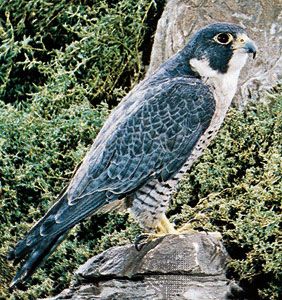
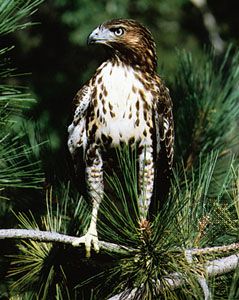
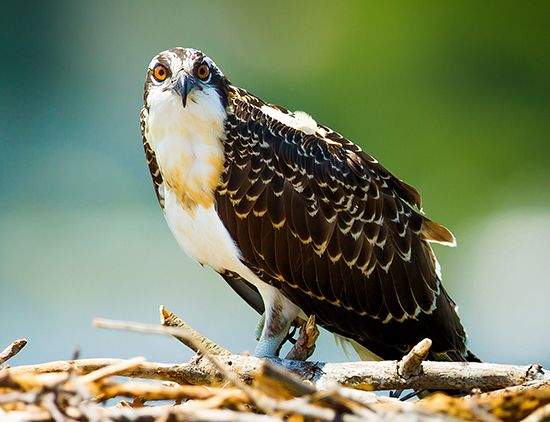
Merlin
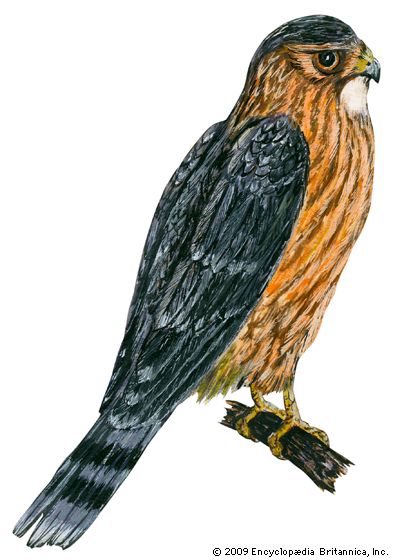
The merlin (Falco columbarius) is a small, compact falcon characterized by distinct sexual dimorphism in its plumage.
What are the distinctive physical characteristics of the merlin bird?
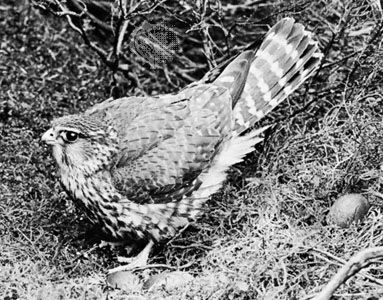
The merlin (Falco columbarius) is a small, compact falcon characterized by distinct sexual dimorphism in its plumage.12
Key physical features include:
- Back and Upperparts: Adult males exhibit a slate-blue coloration, while females and immature birds possess brown backs.12
- Underparts: The underparts are finely streaked.1
- Tail: A defining characteristic for all merlins is the tail, which features narrow white bands and a broad, dark terminal band.12
As a bird of prey, the merlin is known for being an aggressive and fearless hunter, utilizing its compact build to accelerate after smaller birds in midair rather than diving at them.1
How do male and female merlins differ in appearance?
Male and female merlins (Falco columbarius) exhibit distinct differences in their plumage, a trait known as sexual dimorphism.
- Adult Males: These birds are characterized by slate-blue backs and underparts that are finely streaked.1
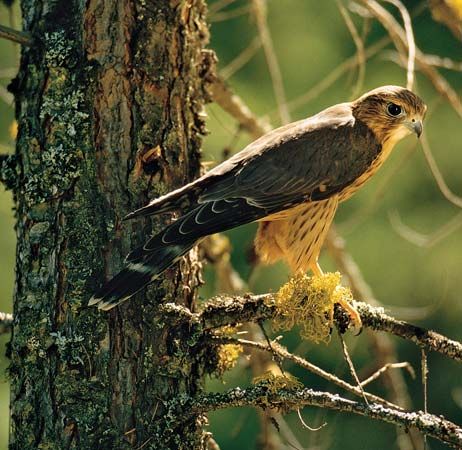
- Females: In contrast, females possess brown backs.1
While these differences distinguish the sexes, both males and females, as well as immature birds, share a common tail pattern consisting of narrow white bands.1
How does the merlin’s hunting behavior differ from other birds of prey?
The merlin (Falco columbarius) is recognized as an aggressive and fearless hunter, primarily preying on smaller birds that it captures in midair.1
Its hunting technique is distinct from that of the peregrine falcon. While the peregrine falcon is known for its high-speed dives at prey, the merlin does not employ this method. Instead, it relies on its ability to accelerate rapidly after its target to secure a catch. In addition to smaller birds, the merlin’s diet also includes insects and rodents. Due to these traits, the species has a long history of being utilized in falconry.1
What role do merlins play in folklore and literature, especially in relation to falconry?
It is important to clarify that the term “Merlin” refers to two distinct subjects: a small bird of prey (Falco columbarius) and a legendary figure in Arthurian legend. While they share a name, they are not related in folklore or literature.
The Merlin (Bird of Prey)
The merlin is a small, aggressive falcon known for its speed and hunting prowess. Because of these traits, it has a long history of being used in falconry, an ancient sport that flourished among the privileged classes in the Middle Ages. While the bird is a subject of natural history and sporting tradition, it does not hold a symbolic or narrative role in literature or mythology.
Merlin (The Enchanter)
In contrast, the legendary Merlin is a central figure in medieval romance. He is depicted as a wise man, prophet, and enchanter who served as a counselor to Uther Pendragon and King Arthur. His character evolved through various texts, ranging from a wild man of the woods gifted with divination to a demonic-influenced prophet of the Holy Grail.
Sources
- Merlin — Encyclopædia Britannica
- merlin — Merriam-Webster
- Falconiform - Plumage and molt — Encyclopædia Britannica
- Where Do Falcons Typically Live? — Encyclopædia Britannica
- Merlin — Encyclopædia Britannica
- stone falcon — Merriam-Webster
- falconry - History — Encyclopædia Britannica
- falcon — Merriam-Webster
Published on · 2 min read