Peregrine Falcon
The peregrine falcon is the fastest bird—and indeed the fastest animal—in the world, capable of reaching diving speeds of more than 320 km (200 miles) per…
How fast can a peregrine falcon fly, and what makes it the fastest bird in the world?
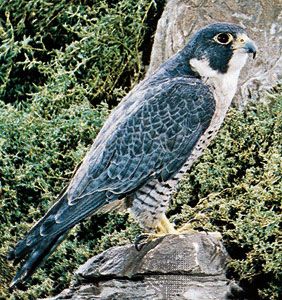
The peregrine falcon is the fastest bird—and indeed the fastest animal—in the world, capable of reaching diving speeds of more than 320 km (200 miles) per hour.123
This extraordinary speed is primarily due to the bird’s specialized physical adaptations:
- Body Shape: Peregrine falcons possess heavy, bullet-shaped bodies that are aerodynamically designed to minimize drag during high-speed descents.2
- Wing Structure: They have long, pointed wings that, combined with their high wing loading (the ratio of body weight to wing area), allow for rapid, controlled dives.2
- Hunting Strategy: By flying high and then entering a vertical dive, the falcon utilizes gravity to achieve these tremendous velocities, enabling it to strike prey midair with its clenched talons.12
This hunting prowess allows the peregrine to overtake other birds that would otherwise easily evade it in standard flapping flight.2
What adaptations do peregrine falcons have for high-speed flight?
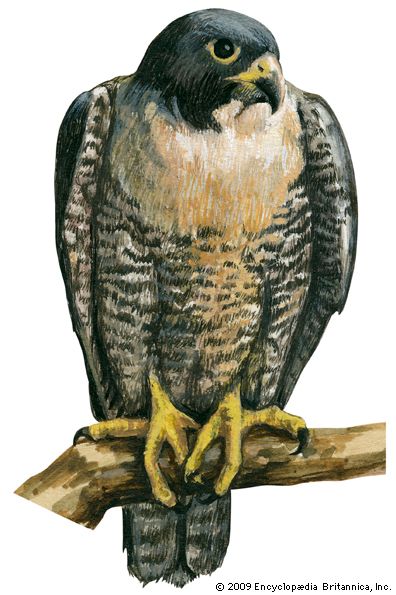
The peregrine falcon is the fastest animal on Earth, capable of reaching speeds exceeding 320 km (200 miles) per hour during a dive. This remarkable velocity is achieved through several specialized physical adaptations:12
- Body Morphology: Peregrine falcons possess heavy, bullet-shaped bodies that are aerodynamically optimized to reduce drag during high-speed descents.2
- Wing Structure: They are equipped with long, pointed wings that facilitate rapid, controlled movement through the air.2
- High Wing Loading: Their high ratio of body weight to wing area—known as wing loading—is a critical adaptation that enables them to achieve and maintain extreme diving speeds.2
- Hunting Strategy: By flying at high altitudes and transitioning into a vertical dive, the falcon utilizes gravity to accelerate, allowing it to strike prey midair with its talons.31
These combined traits allow the peregrine to overtake other birds that would otherwise be able to evade them during standard flapping flight.2
Where are peregrine falcons found, and what types of habitats do they prefer?
The peregrine falcon (Falco peregrinus) is the most widely distributed bird of prey in the world, with breeding populations found on every continent except Antarctica, as well as on many oceanic islands.24
These birds are highly adaptable and thrive in a variety of climates and environments. Their preferred natural habitat is rocky, open country located near water where prey—such as songbirds, shorebirds, and ducks—is plentiful.24
Regarding nesting sites, peregrine falcons typically favor high, inaccessible locations. In the wild, they commonly build their nests on high ledges on cliffs. However, they have also successfully adapted to human-altered environments, frequently nesting on skyscrapers and bridges in urban areas. While they primarily use these high-altitude ledges, some populations have been known to utilize tree nests originally built by other bird species.246
What is the life cycle of a peregrine falcon, from egg to adult?
The life cycle of a peregrine falcon follows a sequence of reproduction, incubation, and development that prepares the young for independence.
- Reproduction and Nesting: Peregrine falcons often pair for life. Rather than building a traditional nest, they typically create a “scrape”—a simple depression—on a high cliff ledge, though they may also utilize city skyscrapers or abandoned nests of other birds.78
- Incubation: The female usually lays a clutch of three or four reddish-brown eggs at intervals of two to four days. Incubation lasts approximately one month, with the female performing the majority of the task.78
- Development: Upon hatching, the chicks are covered in down. During the fledging period, which lasts about five to six weeks, the young grow rapidly and develop feathers. Parents provide food, but as the nestlings grow, they learn to tear up prey on their own.78
- Independence: After their first flight, the young remain near the nest for several weeks or months, continuing to receive food from their parents while refining their hunting skills.7
Sources
- How Much Does a Falcon Eat Each Day? — Encyclopædia Britannica
- Peregrine falcon — Encyclopædia Britannica
- Falconiform - Flapping, soaring , and diving — Encyclopædia Britannica
- Where Do Falcons Typically Live? — Encyclopædia Britannica
- Locomotion - Wings of birds and bats — Encyclopædia Britannica
- Did you know? — Merriam-Webster
- Falconiform - Reproduction — Encyclopædia Britannica
- Falconiform - The breeding adult — Encyclopædia Britannica
- Falconiform - Life history — Encyclopædia Britannica
- Falconiform - The fledging period — Encyclopædia Britannica
Published on · 3 min read