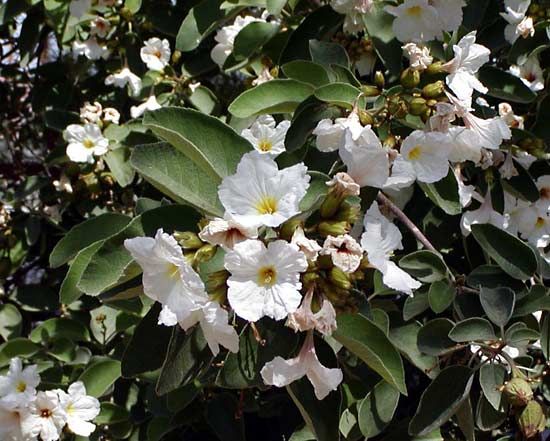
Mertensia
Mertensia is a genus of approximately 50 species of herbs belonging to the Boraginaceae family. These plants are native to temperate regions of North America…
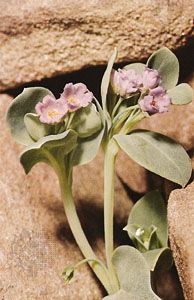
What is Mertensia?
Mertensia is a genus of approximately 50 species of herbs belonging to the Boraginaceae family. These plants are native to temperate regions of North America and Eurasia and are characterized by their funnel-shaped blue or purple flowers.12
Notable species include:
- Virginia cowslip (M. virginica): Also known as the Virginia bluebell, this popular wildflower features drooping, bell-shaped flowers that transition from pink to blue.1
- Northern shorewort (M. maritima): Often called the oyster plant or sea-lungwort, this fleshy, grayish-leaved plant thrives along the pebbly coasts of northern North America and Europe.1
- Languid ladies (M. paniculata): A smaller, hairy species native to western North America that produces nodding blooms during the summer.1
The genus was named in honor of the German botanist Franz Karl Mertens.2
What other plants belong to the Boraginaceae family?
The Boraginaceae family, commonly known as the borage or forget-me-not family, is a diverse group comprising 148 genera and over 2,700 species. While these plants are often herbaceous and hairy, the family also includes shrubs, trees, vines, and even some parasitic species.3
Beyond the genus Mertensia, the family includes several well-known garden ornamentals and medicinal plants:
- Ornamentals:
- Heliotropium (heliotrope)
- Myosotis (forget-me-not)
- Phacelia (scorpion weed)
- Pulmonaria (lungwort)
- Medicinal and Useful Plants:
Additionally, the family now encompasses groups formerly classified as separate families, such as the Lennooideae (root parasites) and the Hydrophylloideae, which includes genera like Hydrophyllum (waterleaf) and Wigandia.3
Why do some flowers change color as they bloom?
Flowers may change color as they bloom primarily as a mechanism to manage their development and interact with pollinators.
The color of many flowers is determined by anthocyanins, a class of water-soluble flavonoid pigments found in cell vacuoles. These pigments are highly sensitive to the acidity or alkalinity of the cell sap; for instance, the same anthocyanin can appear red in an acidic environment, violet in a neutral one, and blue in an alkaline solution. As a flower matures, shifts in the chemical composition of its tissues can alter these pH levels, resulting in a visible change in petal color.56
Beyond internal chemistry, color changes serve as vital interspecific signals. By altering their appearance, plants can effectively communicate their status to pollinators like bees and birds, which rely on coloration and nectar guides to locate food sources. Some flowers gain or lose pigment content as they reach maturity, ensuring they remain attractive to the specific visitors that implement fertilization.756
How do plants adapt to living in coastal environments?
Plants in coastal environments have evolved specialized physiological and structural adaptations to survive in saline, waterlogged, and unstable soils.
Salinity Tolerance
Many coastal plants are halophytic, meaning they are specifically adapted to saline habitats. High salt concentrations in soil can cause dehydration because water naturally moves from plant roots into the soil via osmosis. To counter this, some species, such as glassworts, accumulate salts within their stems and leaves to maintain internal osmotic balance.910
Structural Adaptations
Coastal trees and shrubs, particularly mangroves, utilize unique root systems to thrive in saturated, anaerobic mud:
- Pneumatophores: These specialized “knee roots” project above the mud, allowing the plant to absorb oxygen through small openings called lenticels.1112
- Prop and Stilt Roots: These exposed, arched roots provide essential structural support in shifting sediments and assist in aeration.1112
- Buttress Roots: Common in some coastal species, these planklike extensions stabilize trees in shallow, saturated soils and provide tension resistance against wind.12
Reproductive Strategies
Some coastal plants exhibit unique reproductive behaviors. For example, the red mangrove produces a long embryonic root that grows while the fruit is still attached to the parent tree. When the propagule falls, it is already positioned to anchor itself into the mud, ensuring the survival of the next generation in a challenging environment.11
Sources
- Mertensia — Encyclopædia Britannica
- Mertensia — Merriam-Webster
- Boraginaceae — Encyclopædia Britannica
- Boraginaceae — Merriam-Webster
- coloration - Interspecific signals — Encyclopædia Britannica
- coloration - Anthocyanins — Encyclopædia Britannica
- pollination - Birds — Encyclopædia Britannica
- anthocyanin — Encyclopædia Britannica
- Salt marsh — Encyclopædia Britannica
- mangrove — Encyclopædia Britannica
- Wetland - Salt marshes — Encyclopædia Britannica
- salinity — Encyclopædia Britannica
- tree - Tree roots — Encyclopædia Britannica
- Biosphere - Salinity — Encyclopædia Britannica
Published on · 3 min read