Millet
Millet refers to several species of cereal grasses that have served as vital food staples for thousands of years, particularly in Asia and Africa. While…
How is millet used in different cuisines around the world?
Millet refers to several species of cereal grasses that have served as vital food staples for thousands of years, particularly in Asia and Africa. While often relegated to livestock feed or birdseed in Western nations, these hardy grains remain essential to diets in many developing regions.12
In culinary practice, millet is valued for its versatility and nutritional profile, which includes carbohydrates, protein, and fat. Its preparation methods are diverse:1
- Flatbreads and Porridges: Due to their somewhat strong taste, millet grains are frequently ground or processed into flatbreads and porridges.1
- Rice-like Preparation: Millet is commonly cooked and consumed in a manner similar to rice.1
- Regional Staples:
- In India, pearl millet, known as bajra, and little millet are significant food crops.1
- China and other Asian countries rely on foxtail millet as an important food source.1
- Finger millet is a key grain in parts of southern Asia and Africa.1
- Proso millet is consumed as a cereal food throughout Asia and eastern Europe.1
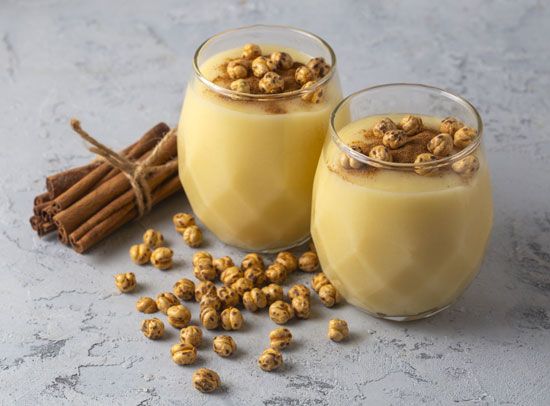
What role does millet play in food security for developing nations?
Millet plays a critical role in food security for developing nations, particularly in regions like India and sub-Saharan Africa, where changing temperature and rainfall patterns threaten traditional agriculture.1
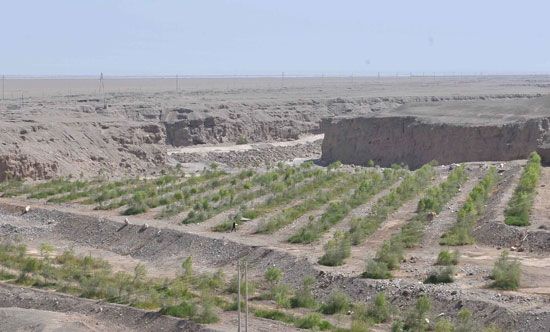
Recognized by the United Nations for its importance to the global food supply, millet is valued for its exceptional hardiness. Compared to other grains, these cereal grasses are highly tolerant of drought and poor soil conditions, often requiring fewer inputs such as fertilizers and pesticides. Beyond their nutritional value—providing essential carbohydrates, protein, and fat—certain deep-rooted varieties help combat erosion and mitigate desertification, making them a sustainable tool for maintaining agricultural stability in harsh environments.1
We could dive deeper into the specific nutritional profiles of different millet varieties or explore how these grains compare to other staple crops like rice and wheat in terms of climate resilience.
How is millet cultivated and what are its growing conditions?
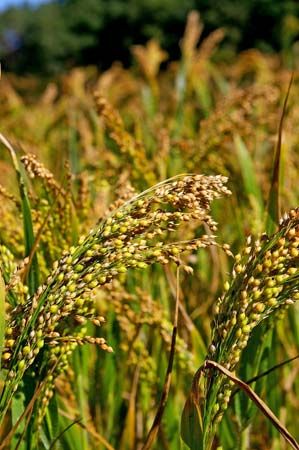
Millet refers to various cereal grasses in the family Poaceae that have been cultivated for over 4,000 years. These plants are typically grown as annuals and vary in height from 30 to 130 cm (1 to 4 feet), though pearl millet can reach heights of 1.5 to 3 metres (5 to 10 feet).1
Growing Conditions
Millet is highly valued for its ability to thrive in harsh environments where other crops might fail. Key growing characteristics include:
- Soil Tolerance: These grains are notably tolerant of poor soils and low-fertility conditions.1
- Drought Resistance: Millet is exceptionally resilient to drought and limited moisture, making it a reliable staple in arid regions.1
- Low Input Requirements: Compared to many other grains, millet often requires fewer fertilizers and pesticides.1
- Environmental Benefits: Certain deep-rooted varieties help prevent erosion and assist in mitigating desertification.1
Depending on the variety, such as proso millet, the crop can ripen quickly, often within 60–80 days after sowing.1
How is millet processed for various food products?
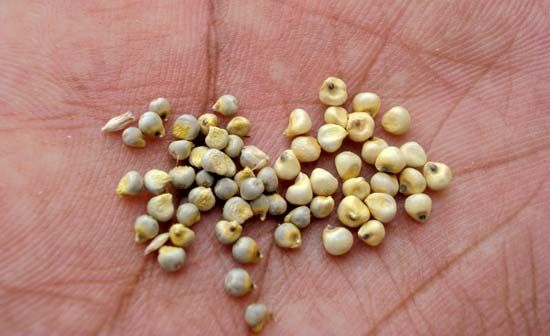
Millet processing primarily involves the removal of the outer hull, as the seeds of most species remain enclosed in their hulls even after threshing. Once the hull is removed, the resulting grain is typically creamy white in color.1
Because of their distinct, somewhat strong taste, processed millet is most commonly prepared in the following ways:
- Flatbreads: The grain is often ground into flour to create traditional flatbreads.1
- Porridges: Millet is frequently cooked into porridges, a common method of consumption in many developing nations.1
- Rice-like dishes: The grain can be prepared and eaten in a manner similar to rice, serving as a versatile base for various meals.1
While millet is a vital food staple in parts of Asia and Africa, its processing in Western countries is often focused on different applications, such as its use in birdseed mixtures or as livestock feed.12
Sources
- Millet — Encyclopædia Britannica
- Cereal processing - Millet — Encyclopædia Britannica
- Asia - Cereals and grains — Encyclopædia Britannica
Published on · 3 min read