Millipede
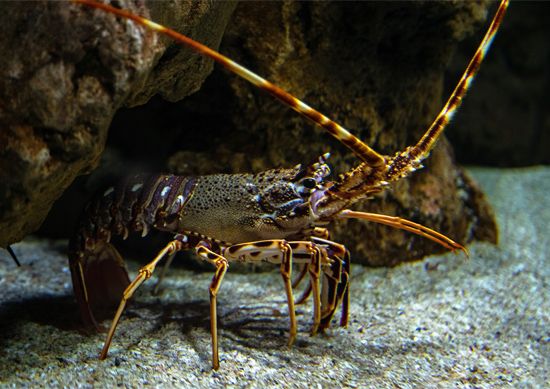
Millipedes are classified as arthropods because they share the fundamental characteristics that define the phylum Arthropoda. These defining features include:
What are the key characteristics that define millipedes as arthropods?
Millipedes are classified as arthropods because they share the fundamental characteristics that define the phylum Arthropoda. These defining features include:
- Jointed Exoskeleton: Like all arthropods, millipedes possess a rigid, nonliving exoskeleton composed of chitin bound to protein. This skeleton covers both the body and the appendages, providing protection and a surface for muscle attachment.12
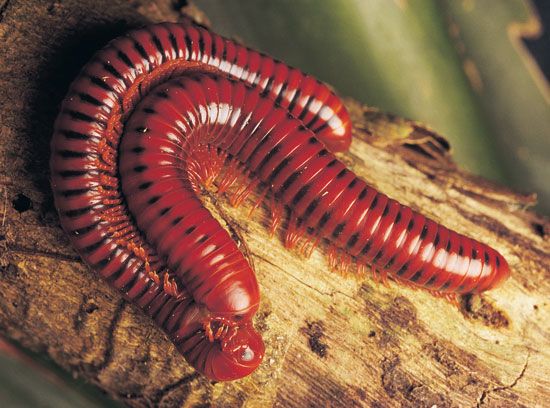
- Segmented Body: Their bodies are divided into segments, a hallmark of the phylum. In millipedes, this is specifically expressed through the presence of diplosomites—double trunk segments formed by the fusion of two individual segments.32
- Jointed Appendages: The name “arthropod” means “jointed feet.” Millipedes possess paired, jointed appendages adapted for locomotion, which are a primary characteristic of the group.14
- Absence of Cilia: Arthropods, including millipedes, lack locomotory cilia throughout their life cycles, a trait attributed to the presence of their external skeleton.14
What are some of the largest and smallest known species of millipedes?
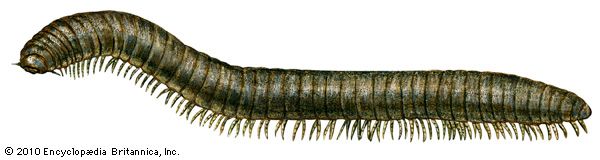
Millipedes exhibit a significant range in physical size, with lengths spanning from 2 mm to 280 mm (0.08 to 11 inches).1
Size Extremes
- Largest Extant Species: The giant African millipede (Archispirostreptus gigas) holds the title for the largest living millipede, reaching lengths of up to 280 mm (11 inches).1
- Smallest Species: While specific names for the smallest species are less commonly highlighted in general literature, the lower end of the millipede size spectrum begins at approximately 2 mm (0.08 inches).1
Historical Context
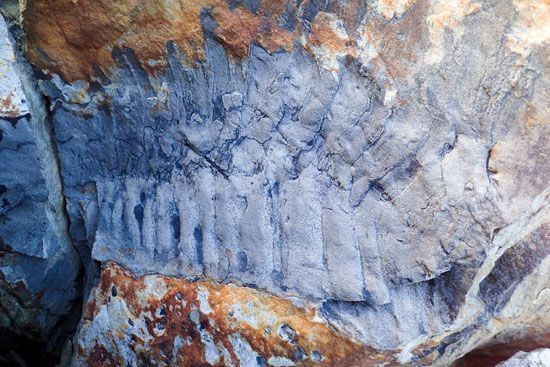
It is worth noting that prehistoric relatives of millipedes were significantly larger than any modern species. The extinct Arthropleura, which lived during the Carboniferous Period, is estimated to have grown to more than 2 meters (6.6 feet) in length based on fossilized armor segments.1
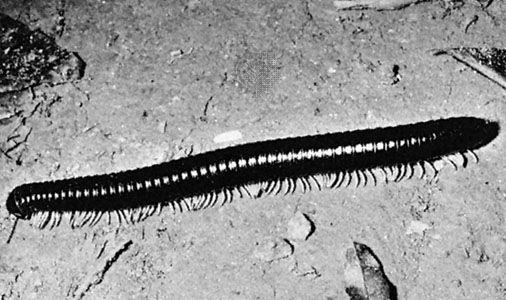
What is the significance of the name ‘millipede’ and how many legs do they actually have?
The name “millipede” is derived from the Latin mille, meaning “thousand,” and ped- or pes, meaning “foot,” literally translating to “thousand-foot”. Despite this etymological implication, no known millipede actually possesses 1,000 legs.6
In reality, the number of legs on a millipede is far lower. These arthropods are characterized by diplosomites—double trunk segments formed by the fusion of two individual segments. Most of these segments bear two pairs of legs each. Specifically, the leg arrangement is as follows:16
- Head segment: Legless.1
- Next three segments: Each contains one pair of legs.1
- Remaining diplosomites: Each contains two pairs of legs.1
Depending on the species, which can have anywhere from 11 to more than 100 segments, millipedes typically have as many as 200 pairs of legs.1
How do millipedes move and why do they have so many legs?
Millipedes move through a highly coordinated process that relies on the generation of metachronal waves—rhythmic, sequential patterns of limb movement that pass from the posterior to the anterior of the body. Because each leg is positioned slightly ahead of the one behind it, they touch down and lift off in a precise, staggered sequence. This coordination is essential to ensure that the numerous legs do not interfere with one another during locomotion.6
The reason millipedes possess so many legs is tied to their unique body structure, known as diplosomites. These are double trunk segments formed by the fusion of two individual segments, with each diplosomite typically bearing two pairs of legs. While the name “millipede” suggests a thousand feet, no species actually reaches that number; instead, they typically have up to 200 pairs of legs depending on the number of segments, which can range from 11 to over 100. This high number of legs provides the necessary surface contact and leverage for these arthropods to navigate their environments effectively.716
Sources
- millipede — Encyclopædia Britannica
- arthropod — Encyclopædia Britannica
- arthropod - Muscles , appendages , and locomotion — Encyclopædia Britannica
- arthropod - Annotated classification — Encyclopædia Britannica
- Big Bugs and Colossal Crabs: 7 Invertebrates of Unusual Size — Encyclopædia Britannica
- millipede — Merriam-Webster
- Locomotion - Cycle of limb movements — Encyclopædia Britannica
Published on · 3 min read