Arthropleura
Arthropleura is a genus of extinct, millipede-like arthropods that lived from the Carboniferous Period to the Permian Period, approximately 346.7 million to…
What is Arthropleura?
Arthropleura is a genus of extinct, millipede-like arthropods that lived from the Carboniferous Period to the Permian Period, approximately 346.7 million to 293.52 million years ago. Known as the largest arthropods in Earth’s history, they could exceed 2.6 meters (8.5 feet) in length.1
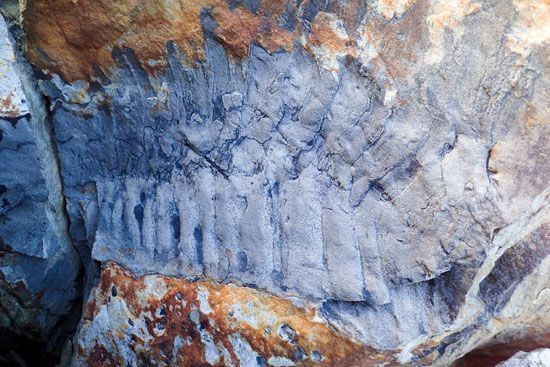
The name Arthropleura is Greek for “rib joint,” reflecting their appearance: an exoskeleton composed of about 30 jointed segments, each covered by three plates. They possessed between 32 and 64 legs. While traditionally associated with humid coal swamps, fossil evidence—such as the 2018 discovery at Howick Bay, England—suggests they also inhabited open woodlands near rivers and coastal areas.1
Their diet remains a subject of scientific debate; while often considered herbivores that consumed plant debris, some researchers argue their massive size may have required the consumption of other invertebrates or amphibians.1
When and where did Arthropleura live?
Arthropleura lived from the Viséan Age of the Carboniferous Period to the Asselian Age of the Permian Period, spanning approximately 346.7 million to 293.52 million years ago.2
Fossilized remains have been recovered from 60 sites across 13 countries, primarily in North America, continental Europe, and the U.K.. During these periods, these regions were located in the tropics. While early research suggested they inhabited humid coal swamps, more recent discoveries—such as the specimen found at Howick Bay in England—indicate they also lived in open woodlands near rivers and coastal areas. Evidence of their presence, including trackways, has been identified in sedimentary rocks across Canada, France, Scotland, and the U.S. and the U.S..21
What did Arthropleura look like?
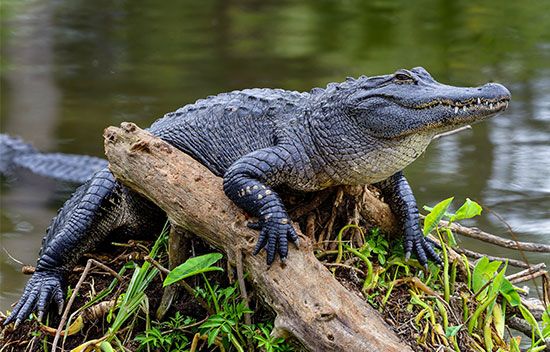
Arthropleura resembled a modern millipede but reached massive proportions, making it the largest known arthropod in Earth’s history. It could grow to lengths exceeding 2.6 meters (8.5 feet), a size comparable to an adult female American alligator or the width of a school bus.1
Its body was protected by an exoskeleton consisting of approximately 30 jointed segments. Each segment was covered by three distinct plates: one on each side and one spanning the center. The animal moved on between 32 and 64 legs, with roughly eight pairs of jointed legs for every six body segments. The name Arthropleura is derived from Greek, meaning “rib joint,” which describes its segmented, armored appearance.1
Beyond its physical body, evidence of its size is preserved in wide fossilized trackways that measure more than 50 cm (20 inches) across.1
How big could Arthropleura grow?
Arthropleura holds the distinction of being the largest known arthropod in Earth’s history. Estimates suggest these creatures could reach lengths exceeding 2.6 meters (8.5 feet), a size comparable to the width of a school bus or the length of an adult female American alligator.1
Evidence of their massive scale is also found in their fossilized trackways, which measure more than 50 cm (20 inches) across. A notable specimen discovered in 2018 at Howick Bay, England, provides further insight into their proportions: a partial fossil consisting of 12–14 segments measured 76 cm (30 inches) long by 36 cm (14 inches) wide and weighed over 80 kg (176 pounds). Paleontologists believe this specimen represents only the upper half of the animal’s exoskeleton.11
While high atmospheric oxygen levels during the Carboniferous Period were once thought to be the primary driver of this growth, the discovery of older specimens in environments with lower oxygen levels suggests that other biological or environmental factors also played a role in their development.1
Sources
- Arthropleura — Encyclopædia Britannica
- Arthropleura — Merriam-Webster
Published on · 3 min read