Symphylan
A symphylan (class Symphyla) is a small, soft-bodied arthropod often grouped with centipedes and millipedes in the superclass Myriapoda. It is important to…
What is symphylan?
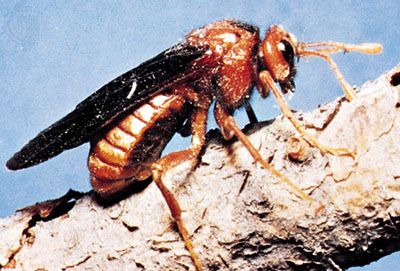
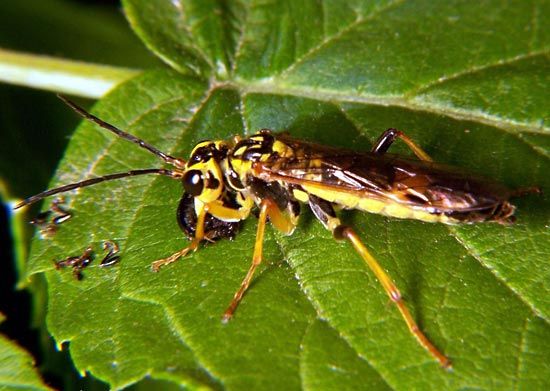
A symphylan (class Symphyla) is a small, soft-bodied arthropod often grouped with centipedes and millipedes in the superclass Myriapoda. It is important to distinguish this group from the Symphyta, a suborder of insects that includes sawflies and wood wasps, which are entirely different organisms.12
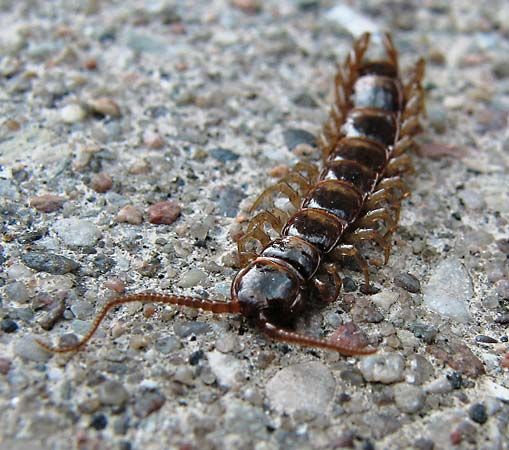
Symphylans are minute, typically measuring less than 10 mm in length. They possess long, many-jointed antennae and a body divided into 14 segments, 12 of which feature pairs of hooklike legs that move in a characteristic twisting, turning motion. While most species inhabit soil and feed on decaying plant matter, some, such as the garden centipede (Scutigerella immaculata), can cause agricultural damage to crops like beets, celery, and lettuce.1
How do symphylans differ from centipedes and millipedes?
Symphylans, centipedes, and millipedes are all members of the superclass Myriapoda, but they differ significantly in their physical structure and biological characteristics.
Key Differences
Feature
Symphyla
Chilopoda
(Centipedes)
Diplopoda
(Millipedes)
Body Segments
12 leg-bearing segments
Many segments
Many diplosegments (fused pairs)
Legs per Segment
1 pair
1 pair
2 pairs
Mouthparts
Mandibles and 2 pairs of maxillae
Mandibles, 2 pairs of maxillae, and poison claws
Mandibles and 1 pair of fused maxillae
Size
1–8 mm
5 mm – 30 cm
2 mm – 28 cm
Gonopore Location
4th segment
Last segment
3rd segment
Distinctive Traits
- Symphylans: These small, soft-bodied arthropods are often mistaken for centipedes due to their appearance, but they are distinct in their anatomy. They possess long, many-jointed antennae and a terminal segment that features a pair of spinnerets.15
- Centipedes: These are characterized by their elongate bodies and the presence of a large pair of poison claws, which are modified from the first pair of trunk appendages.5
- Millipedes: Their bodies are composed of diplosegments, where each segment bears two pairs of legs. Their mouthparts are unique, featuring a single pair of maxillae fused into a plate called a gnathochilarium.5
Why are some symphylans considered agricultural pests?
While symphylans are generally harmless organisms that consume decaying plant matter, some species are considered agricultural pests because they feed on the tender, living parts of plants.
The most notable example is the garden centipede (Scutigerella immaculata), which is found in North America, Europe, and Hawaii. This minute symphylan is known to infest the underground portions of various truck and greenhouse crops, including beets, celery, and lettuce, causing significant damage to these plants.17
It is important to note that these pests are distinct from the Symphyta suborder of insects—which includes sawflies and wood wasps—as those insects are also known to be highly destructive to food crops and timber, but through entirely different biological mechanisms.14
What is the role of myriapods in an ecosystem?
Myriapods—a group that includes centipedes, millipedes, pauropods, and symphylans—serve several critical functions within their ecosystems, particularly in forested regions.8
Ecological Contributions
- Decomposition: Most myriapods are phytosaprophagous, meaning they subsist on dead plant material. By fragmenting leaf litter and other vegetable matter, they create a suitable substrate for primary decomposers, such as fungi and bacteria, to further break down organic material into simpler chemical compounds.89
- Nutrient Cycling: Through their role in the breakdown of organic matter, myriapods act as essential catalysts in natural cycles, helping to release stored nutrients back into the soil in forms that living plants can utilize.89
- Environmental Indicators: Because they have evolved little over geological time and depend on stable moisture and shelter, myriapods serve as important indicators of land-water relationships. Their presence and distribution provide researchers with valuable insights into evolutionary history and geographic dispersal.8
While some species are primarily carnivorous—such as many centipedes that feed on other organisms—they remain vital components of the life, death, and decay processes that rejuvenate the environment.89
Sources
- symphylan — Encyclopædia Britannica
- symphylan — Merriam-Webster
- Symphyla — Merriam-Webster
- Symphyta — Encyclopædia Britannica
- arthropod - Annotated classification — Encyclopædia Britannica
- symphilid — Merriam-Webster
- garden centipede — Merriam-Webster
- myriapod — Encyclopædia Britannica
- soil organism — Encyclopædia Britannica
Published on · 3 min read