Dwarf Crocodile
The dwarf crocodile (Osteolaemus tetraspis) is the world’s smallest living crocodile species. Typically reaching a maximum length of 1.8 meters (5.9 feet)…
What is a dwarf crocodile?
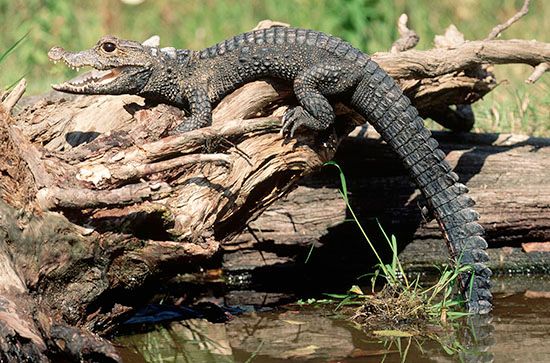
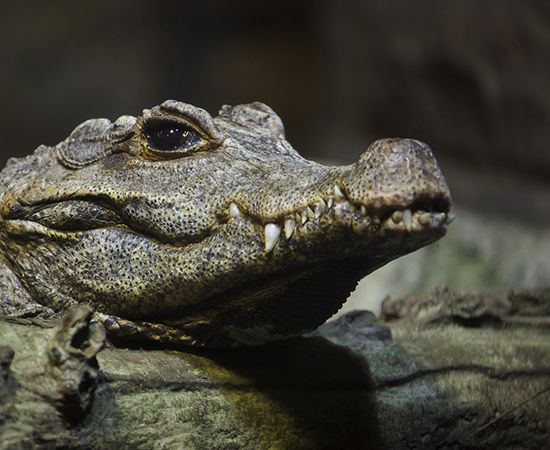
The dwarf crocodile (Osteolaemus tetraspis) is the world’s smallest living crocodile species. Typically reaching a maximum length of 1.8 meters (5.9 feet) and weighing up to 45.4 kg (100 pounds), these reptiles inhabit swamps and freshwater streams across sub-Saharan western and central Africa.1
Characterized by their dark, charcoal-colored skin and thick keratin scales, dwarf crocodiles are primarily nocturnal hunters. Their diet consists largely of invertebrates, though they also consume small mammals, amphibians, and fishes. They are known for their unique behavior of resting in the lower branches of trees for safety.1
Currently, the International Union for Conservation of Nature (IUCN) classifies the species as vulnerable. Their populations face significant threats from habitat loss due to logging and agriculture, as well as hunting for their meat and hides.1
Where do dwarf crocodiles live?
The dwarf crocodile (Osteolaemus tetraspis) is native to sub-Saharan western and central Africa. Its range extends from Guinea in the west, eastward to the Central African Republic and the Democratic Republic of the Congo, and as far south as northern Angola.1
Within these regions, they primarily inhabit swamps and small freshwater streams. They are also found in the rivers of forest regions throughout West Africa. While they are aquatic animals that spend much of their day resting in the water, they are also known to forage on land and may occasionally climb trees to rest in lower branches.12
How big does a dwarf crocodile grow?
The dwarf crocodile (Osteolaemus tetraspis) and the closely related Osborn’s dwarf crocodile (Osteolaemus osborni) are the smallest living crocodile species. Their size can be summarized as follows:
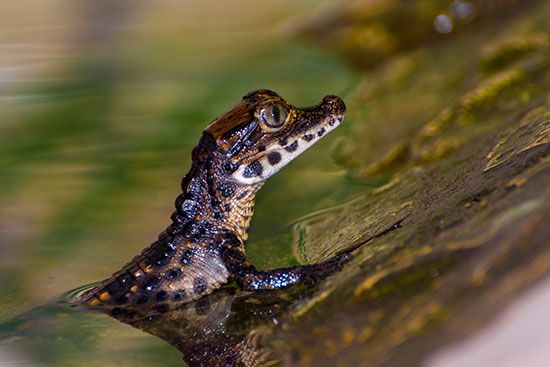
- Maximum Size: Both species can reach a maximum length of approximately 1.8 meters (5.9–6 feet) and a maximum weight of 45.4 kg (100 pounds).13
- Variation: While 1.8 meters is the upper limit, many individuals are smaller. For example, some adult female Osborn’s dwarf crocodiles have been measured at just 1 meter (3.3 feet) in length, weighing as little as 13.6 kg (30 pounds).3
- Sexual Dimorphism: These crocodiles exhibit sexual dimorphism, meaning that males generally grow to be heavier and larger than females.13
In comparison to other crocodilians, such as the Nile crocodile which can reach lengths of up to 7 meters, the dwarf crocodile remains quite small, with few individuals growing larger than a medium-sized dog.14
What do dwarf crocodiles eat?
Dwarf crocodiles are primarily nocturnal hunters that forage for prey on land. Their diet consists largely of invertebrates, such as beetles, other insects, and millipedes. They also consume small mammals and amphibians.1
While they spend most of their day resting in the water, they take advantage of opportunities to hunt there as well. When in the water, their diet includes fishes, insect larvae, and various other small animals.1
Sources
- dwarf crocodile — Encyclopædia Britannica
- crocodile - Ecology — Encyclopædia Britannica
- crocodile - Size range and diversity of structure — Encyclopædia Britannica
- Osborn’s dwarf crocodile — Encyclopædia Britannica
Published on · 2 min read