Milwaukee Depth
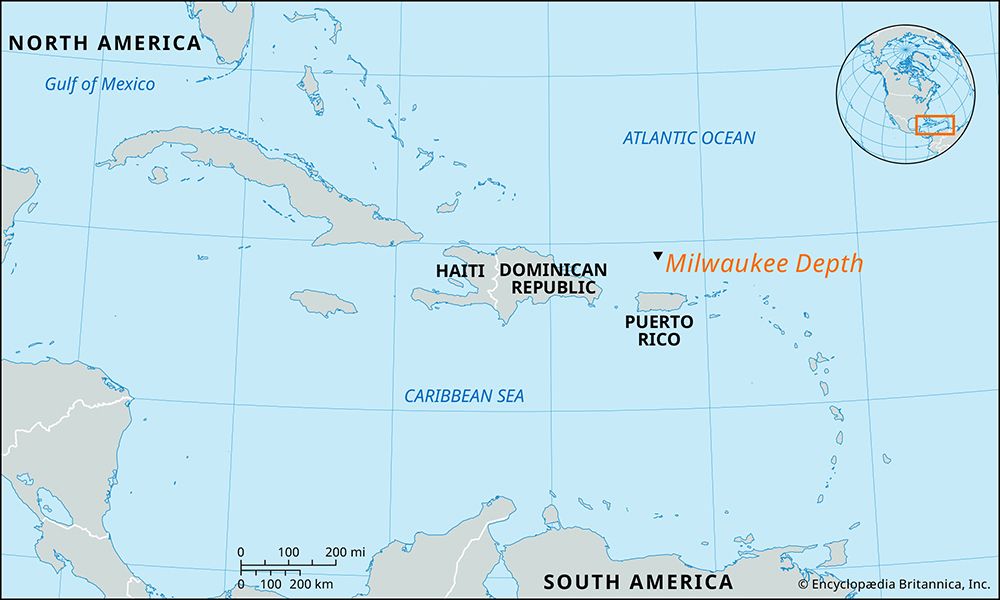
The Milwaukee Depth is the deepest point in the Atlantic Ocean, reaching a depth of 27,493 feet (8,380 meters). It is situated within the Puerto Rico Trench…
What is Milwaukee Depth?
The Milwaukee Depth is the deepest point in the Atlantic Ocean, reaching a depth of 27,493 feet (8,380 meters). It is situated within the Puerto Rico Trench, a submarine depression located approximately 100 miles (160 km) northwest of the island of Puerto Rico.123
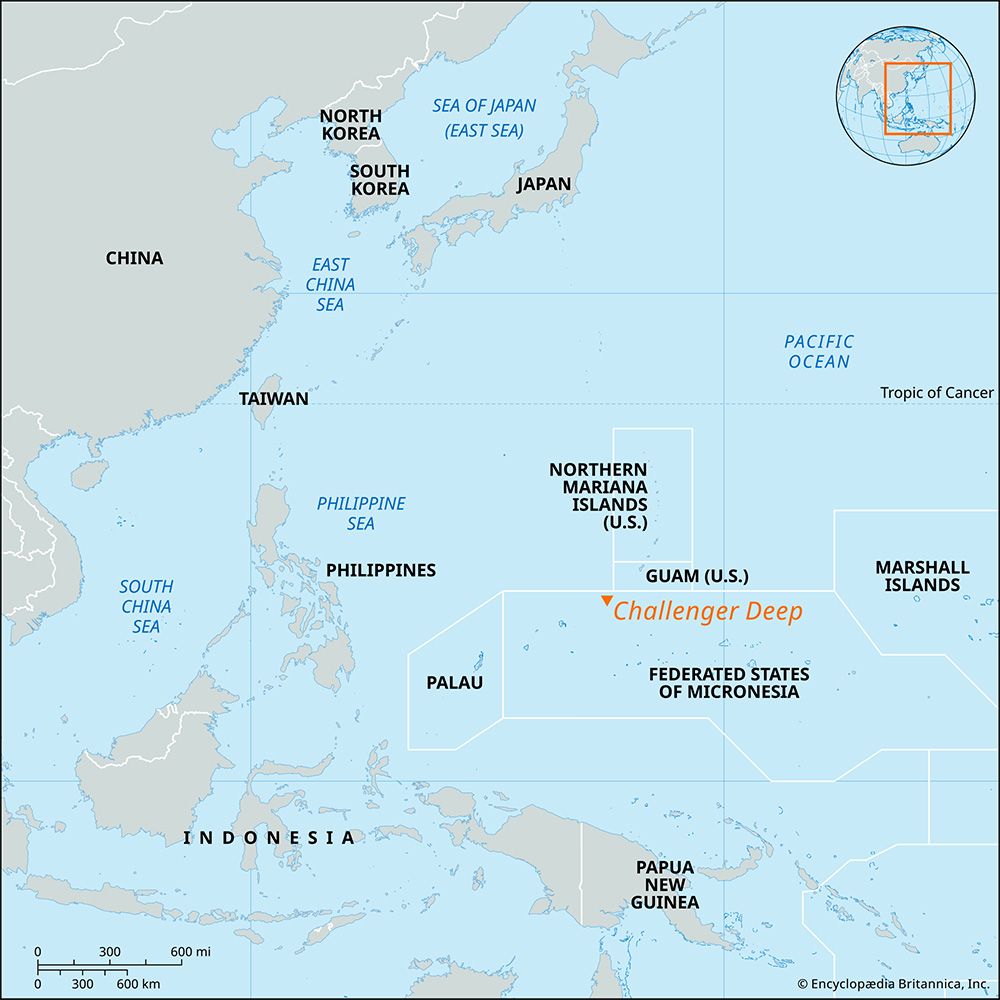
The area is characterized by a seafloor covered in mud, sand, rock, and shells. While the Milwaukee Depth represents the lowest point in the Atlantic, it is significantly shallower than the Challenger Deep in the Pacific Ocean, which is the deepest known point in the world’s oceans at approximately 36,070 feet (10,994 meters) below sea level. The Milwaukee Depth derives its name from the first ship that sounded the location.13
How do scientists measure the depth of the ocean floor?
Scientists employ several methods to measure the depth of the ocean floor, a field of study known as bathymetry.
- Historical Techniques: Early efforts relied on lowering a weighted rope or cable to the seafloor. This method was often inaccurate, as currents could deflect the line, and it only provided depth at a single point rather than a continuous profile.4
- Echo Sounding and Sonar: Modern mapping primarily uses echo sounding and sonar. These systems calculate depth by measuring the time it takes for an acoustic pulse to travel from a ship to the seafloor and back. By multiplying half of this elapsed time by the speed of sound in seawater, researchers can determine the distance to the bottom. Advanced systems like multibeam echo sounders (e.g., Seabeam) provide detailed topographic records.45
- Satellite Radar Altimetry: Satellites equipped with radar altimeters measure the distance between the satellite and the sea surface. Because massive seafloor features like seamounts or deep-sea trenches exert gravitational pull, they cause the ocean surface to bulge or dip. By mapping these surface variations, scientists can infer the topography of the seafloor below.65
What is the difference between a trench and a basin?
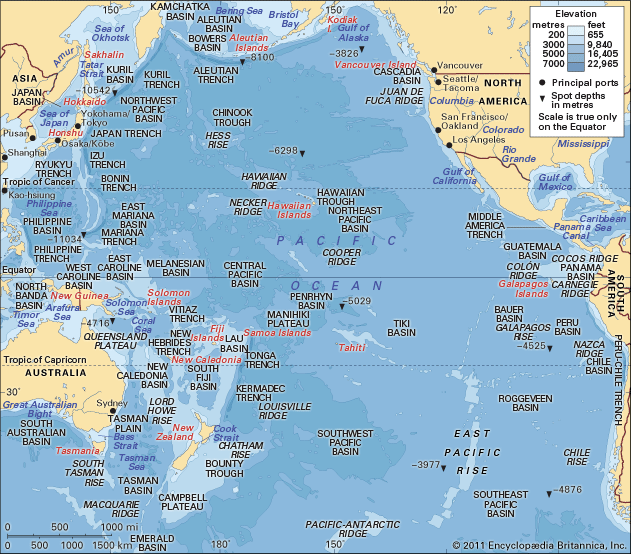
An ocean basin is a vast, expansive submarine region that covers nearly three-quarters of Earth’s surface, containing the majority of the planet’s water with an average depth of about 4 km (2.5 miles). In contrast, a deep-sea trench is a specific, localized, and striking feature of the seafloor characterized by a narrow, V-shaped cross-section.78
The primary differences between them include:
- Scale and Scope: Ocean basins are the large-scale containers of the world’s oceans, whereas trenches are specific, linear depressions within or at the edges of these basins.78
- Formation: Ocean basins are transient features shaped by plate tectonics, including spreading centers where new crust is created. Trenches typically form at subduction zones, where one tectonic plate slides beneath another and is recycled into the mantle.98
- Topography: While basins contain various features like abyssal hills, seamounts, and oceanic ridges, trenches are defined by their steep, V-shaped slopes and deep, narrow axes.78
Some smaller basins, known as back-arc basins, can form behind volcanic island arcs as a direct result of the subduction processes that create trenches.810
How does the Challenger Deep compare to the Milwaukee Depth?
The Challenger Deep and the Milwaukee Depth represent the deepest points of the Pacific and Atlantic Oceans, respectively, though they differ significantly in their extreme depths and geological settings.3
- Challenger Deep: Located in the Mariana Trench in the western Pacific, it is the deepest known point on Earth, reaching approximately 36,070 feet (10,994 meters) below sea level. It consists of three distinct seafloor basins formed by the subduction of the Pacific Plate beneath the Philippine Plate.311
- Milwaukee Depth: Situated in the Puerto Rico Trench in the Atlantic, it reaches a depth of 27,493 feet (8,380 meters) below sea level. While it is the deepest point in the Atlantic, it is roughly 8,500 feet shallower than the Challenger Deep.31
While both are profound submarine depressions associated with tectonic activity, the Challenger Deep is significantly more extreme, reflecting the overall greater depth of the Pacific Ocean compared to the Atlantic.3
Sources
- Milwaukee Depth — Encyclopædia Britannica
- Puerto Rico Trench — Encyclopædia Britannica
- Which ocean is deeper: The Atlantic or the Pacific? — Encyclopædia Britannica
- bathymetry — Encyclopædia Britannica
- geoid - Radar altimetry of the ocean surface — Encyclopædia Britannica
- ocean basin - Exploration of the ocean basins — Encyclopædia Britannica
- ocean basin - General features — Encyclopædia Britannica
- ocean basin — Encyclopædia Britannica
- deep-sea trench - Structure — Encyclopædia Britannica
- back-arc basin — Encyclopædia Britannica
- Challenger Deep — Encyclopædia Britannica
- deep-sea trench - Types — Encyclopædia Britannica
Published on · 3 min read