Mimidae
The Mimidae family, commonly known as mimic thrushes or mimids, consists of approximately 35 species of songbirds native to the Western Hemisphere. These…
Which well-known bird species belong to the Mimidae family?
The Mimidae family, commonly known as mimic thrushes or mimids, consists of approximately 35 species of songbirds native to the Western Hemisphere. These birds are well-regarded for their vocal abilities and mimicry.1
Well-known species within this family include:
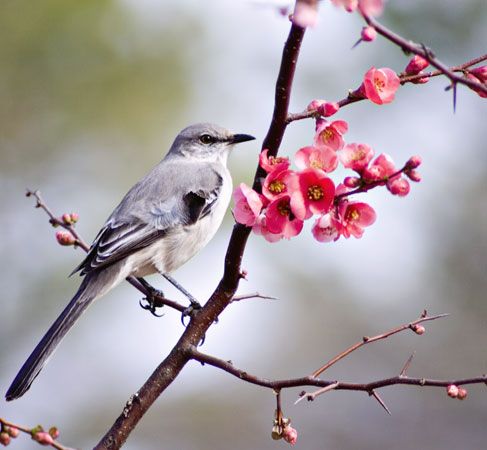
- Mockingbirds: The northern mockingbird (Mimus polyglottos) is perhaps the most famous, noted for its ability to imitate the songs of many other species. Other notable members include the blue mockingbird and the Galapagos mockingbird3.12
- Catbirds: The gray catbird (Dumetella carolinensis) is a prominent North American species known for its singing and mimicry.1
- Thrashers: The brown thrasher (Toxostoma rufum) is a recognized singer, though it mimics other birds less frequently than mockingbirds.1
These birds are generally characterized by their slender, often downward-curved bills, strong feet, and long tails.1
How did the Mimidae family get its name, and what does it mean?
The name Mimidae is derived from New Latin, combining the type genus Mimus with the suffix -idae.2
The term Mimus is rooted in the concept of mimicry, reflecting the family’s well-known reputation as “mimic thrushes” or “mimids”. These birds are celebrated for their exceptional vocal abilities, particularly their tendency to imitate the songs of other bird species. The suffix -idae is a standard taxonomic ending used in zoology to denote a family-level classification.13
What are the main characteristics of birds in the Mimidae family?
The Mimidae family, commonly known as mimic thrushes or mimids, consists of approximately 35 species of songbirds native to the Western Hemisphere. These birds are members of the order Passeriformes and the suborder Passeri.1
Physical Characteristics
Members of this family typically measure between 20 and 30 cm (8 to 12 inches) in length. Their physical features include:
- Bills: Slender and strong, often curved downward.1
- Wings and Tails: Short, rounded wings and long tails.1
- Feet: Strong, adapted for their active lifestyle.1
- Coloration: Generally grayish to brownish, resembling the related wrens (family Troglodytidae).1
Behavior and Diet
Mimids are known for being active and aggressive birds. They forage primarily for insects and fruit within woodland litter. They are most famous for their vocal prowess; many species are excellent songsters and skilled mimics of other birdsong, a trait most notably observed in mockingbirds and catbirds.1
What are the physical features that distinguish Mimidae birds from other bird families?
The Mimidae family, which includes mockingbirds, catbirds, and thrashers, is distinguished by a specific combination of morphological traits that set them apart from other avian groups. While they are closely related to wrens (family Troglodytidae) and share similar grayish to brownish coloration, their physical structure is unique.12
Key physical features of the Mimidae include:
- Bill Structure: They possess slender, strong bills that are frequently curved downward, an adaptation suited for their foraging habits in woodland litter.1
- Body Proportions: Members of this family typically range from 20 to 30 cm (8 to 12 inches) in length. They are characterized by short, rounded wings paired with notably long tails.1
- Locomotion: They are equipped with strong feet, which support their active and often aggressive behavioral patterns.1
These features, combined with their specialized vocal capabilities, help define the family within the Passeriformes order.1
Sources
- Mimidae — Encyclopædia Britannica
- Mimidae — Merriam-Webster
- Mockingbird — Encyclopædia Britannica
- Mimallonidae — Merriam-Webster
- Apodiform - Size range and diversity of structure — Encyclopædia Britannica
Published on · 2 min read