Minnesota River
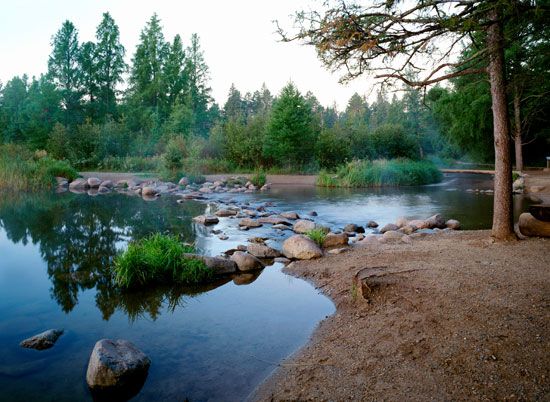
The Minnesota River is a 335-mile-long (540 km) waterway that rises at the southern tip of Big Stone Lake on the border of Minnesota and South Dakota. The…
What is Minnesota River?
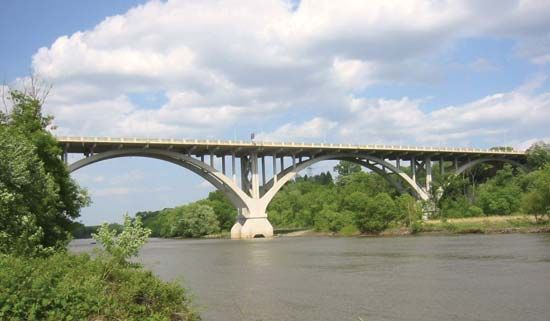
The Minnesota River is a 335-mile-long (540 km) waterway that rises at the southern tip of Big Stone Lake on the border of Minnesota and South Dakota. The name is derived from a Sioux term meaning “sky-tinted water”.12
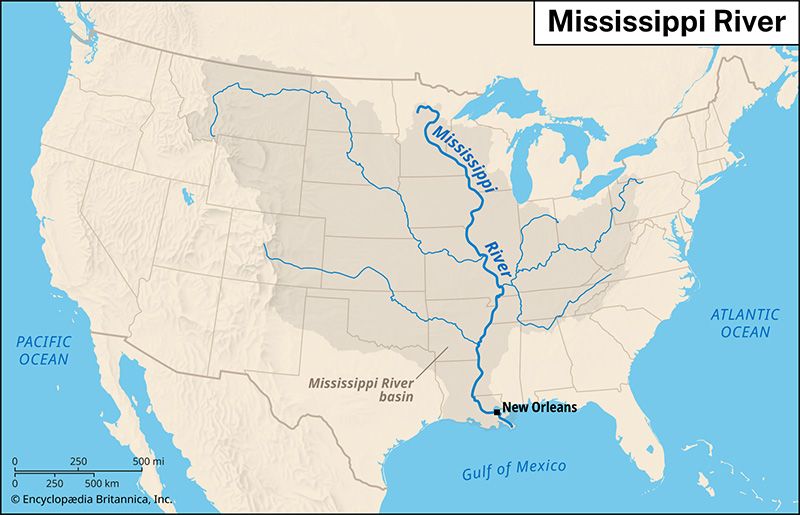
Flowing primarily through agricultural land, the river travels southeast and then northeast from Mankato, eventually joining the Mississippi River at Mendota, near St. Paul. Its basin drains approximately 17,000 square miles (44,000 square km).1
Historically, the river was known as the St. Peter or St. Pierre and served as a vital route for early explorers and fur traders. In 1819, the first permanent U.S. settlement in the region was established at Fort Snelling, which overlooks the confluence of the Minnesota and Mississippi rivers. Today, the river is managed in part by flood-control projects, including the Big Stone Lake Dam.13
What is the history of the fur trade along the Minnesota River?
The fur trade was a significant driver of early European exploration and economic activity in the region surrounding the Minnesota River. Historically known as the St. Peter or St. Pierre River, the waterway served as a vital transportation route for early explorers and fur traders who navigated the area to harvest and transport pelts.3
While the North West Company established a massive commercial empire centered at Grand Portage near Lake Superior, the influence of the fur trade extended into the interior river systems of present-day Minnesota. The trade relied heavily on the expertise of French-Canadian voyageurs, who navigated complex river networks to facilitate the exchange of goods.1
The strategic importance of the river junction where the Minnesota meets the Mississippi River eventually led to the establishment of Fort Snelling in 1819, marking the first permanent U.S. settlement in the area and signaling a shift toward broader American expansion.1
How do the Mississippi and Minnesota rivers meet at Fort Snelling?
The Minnesota River and the Mississippi River converge at a geographic junction located near Mendota, just south of St. Paul.1
This confluence is historically significant because it served as the site for Fort Snelling, which was established in 1819 as the first permanent U.S. military outpost in the region. The fort was strategically positioned on the high ground overlooking the meeting point of the two rivers, allowing the military to oversee the waterway and the surrounding territory. Today, the site of this historic junction has been restored as a state park, preserving the area where these two major river systems unite.1
What are some other major rivers in the state of Minnesota?
Minnesota is defined by its extensive network of waterways, which drain into three different directions: toward Hudson Bay, the Atlantic Ocean, and the Gulf of Mexico. Beyond the Minnesota River, several other major rivers play a vital role in the state’s geography and history:1
- Mississippi River: Rising from Lake Itasca in northwestern Minnesota, this iconic river flows southward through the state, serving as a primary drainage artery for the region.51
- Red River of the North: Formed by the confluence of the Bois de Sioux and Otter Tail rivers, this river flows northward along the Minnesota–North Dakota border toward Canada, eventually emptying into Lake Winnipeg.2
- Saint Croix River: This river forms a significant portion of the boundary between Minnesota and Wisconsin before joining the Mississippi River south of St. Paul.6
- Rainy River: Located along the northern border, this river is part of the drainage system that flows toward Hudson Bay.1
Sources
- Minnesota River — Encyclopædia Britannica
- Minnesota — Encyclopædia Britannica
- Minnesota - European settlement — Encyclopædia Britannica
- Mississippi River - Physiography — Encyclopædia Britannica
- Lake Itasca — Encyclopædia Britannica
- Saint Croix River — Encyclopædia Britannica
- Red River of the North — Encyclopædia Britannica
- Saint Croix River — Encyclopædia Britannica
- Minnesota - Drainage — Encyclopædia Britannica
- Minnesota - Territory and statehood — Encyclopædia Britannica
Published on · 3 min read