Mistletoe
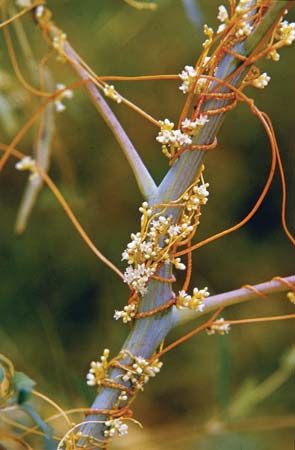
Mistletoes are parasitic plants belonging to the families Loranthaceae, Misodendraceae, and Santalaceae. As hemiparasites, they contain chlorophyll and can…
What is mistletoe and how does it grow?
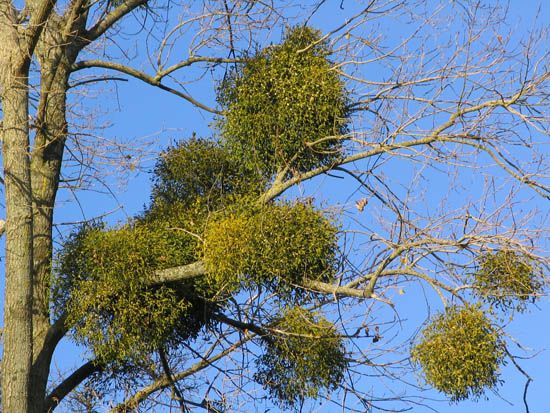
Mistletoes are parasitic plants belonging to the families Loranthaceae, Misodendraceae, and Santalaceae. As hemiparasites, they contain chlorophyll and can produce some of their own food, but they rely on a host tree for water and nutrients.12
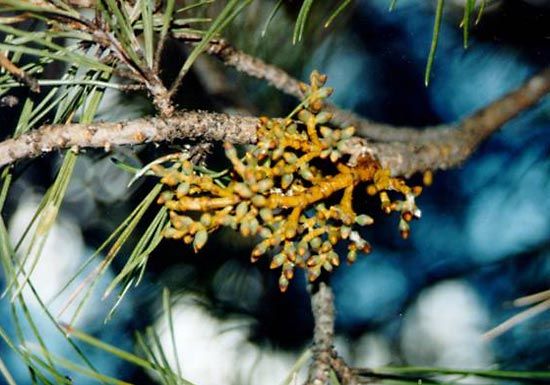
Mistletoe growth begins when seeds are deposited on a host branch, often by birds that either ingest the fruit or wipe sticky seeds from their beaks onto the bark. Dwarf mistletoes utilize a more aggressive method, using hydrostatic pressure to launch sticky seeds at high speeds onto nearby trees. Once a seed germinates, it develops a specialized root called a haustorium that penetrates the host’s bark to establish a connection for nutrient extraction.23
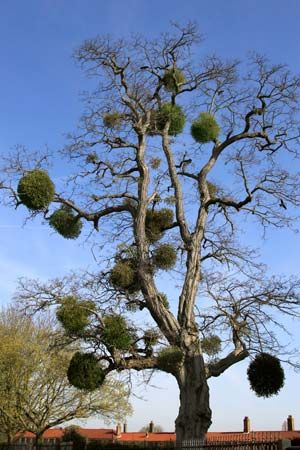
These plants are slow-growing but persistent, often causing deformities known as witches’ brooms that can harm the host’s health. While some species are popular as festive decorations, they are generally considered pests in forestry and ornamental gardening.213
What are the potential harmful effects of mistletoe on host trees?
Mistletoe acts as a hemiparasite, extracting water and nutrients from its host through specialized root structures called haustoria that penetrate the tree’s inner bark. While mistletoe alone rarely kills a healthy tree, it can cause significant harm, particularly when infestations are heavy or the host is already stressed by insects or disease.123
The potential harmful effects on host trees include:
- Structural Deformities: Mistletoe often causes the development of witches’ brooms—abnormal, dense clusters of branches that deform the tree’s crown.12
- Growth and Reproductive Decline: Infected trees may become stunted, and the parasite can decrease the host’s overall reproductive ability.12
- Increased Vulnerability: The wounds created by the parasite can serve as entry points for canker and wood-rotting fungi.2
- Severe Damage to Conifers: Dwarf mistletoes are particularly destructive to coniferous forests, where they can stunt, deform, or kill young trees and seedlings.2
Because these plants are persistent, the only effective way to protect an individual tree is the complete removal of the infected branches.12
How has mistletoe been used in traditional medicine and folklore?
Mistletoe has a long history of cultural and spiritual significance, dating back to well before the Christian era. Because it remains evergreen while its host trees appear leafless and dormant during winter, it was historically viewed as a symbol of life, vitality, and fertility.21
Folklore and Traditions
Ancient Druids performed sacrificial ceremonies involving mistletoe, and remnants of these practices, such as the midsummer burning of bonfires, persist in some parts of Europe today. Over time, the plant became associated with romantic customs. By the 18th century in England, it became a tradition to kiss under a sprig of mistletoe, a practice that eventually spread to the United States. Early versions of this custom suggested that a kiss under the mistletoe would inevitably lead to marriage.21
Medicinal and Toxic Properties
Historically, mistletoe was believed to possess magical and medicinal powers. However, it is important to note that the berries of both European mistletoe and its North American counterparts contain toxic compounds. While the American variety is generally considered less poisonous, these plants should be treated with caution as they are toxic to humans and many animals.25
What chemical compounds are found in mistletoe and what are their properties?
Mistletoe contains various chemical compounds, most notably those responsible for its toxicity. While the provided search results confirm that the berries of both European mistletoe (Viscum album) and North American species like oak mistletoe (Phoradendron serotinum) contain toxic compounds poisonous to humans and many animals, the specific chemical names are not detailed in the available Britannica records.21
The toxicity levels can vary significantly depending on the specific species of the mistletoe and the host tree it parasitizes. Generally, European mistletoe is considered more poisonous than its North American counterparts, which are often unlikely to cause lethal poisoning in humans and may cause no symptoms at all if ingested. Due to these risks, it is essential to treat all mistletoe berries with caution.12
The Britannica knowledge base does not currently provide a comprehensive list of the specific chemical constituents or their individual pharmacological properties.
Sources
- mistletoe: Top Questions — Encyclopædia Britannica
- mistletoe — Encyclopædia Britannica
- dwarf mistletoe — Encyclopædia Britannica
- Plant disease - Mistletoe — Encyclopædia Britannica
- Why Do People Kiss Under the Mistletoe? — Encyclopædia Britannica
- mistletoe — Merriam-Webster
Published on · 3 min read