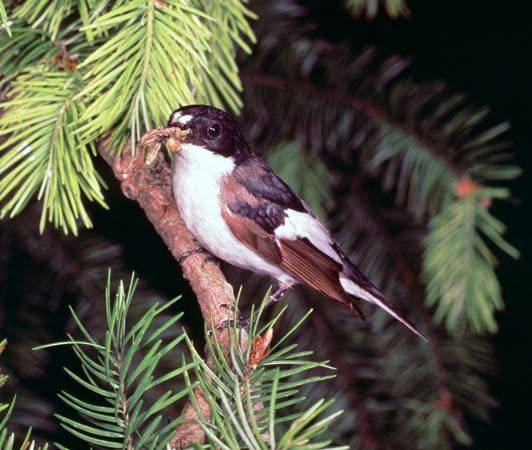
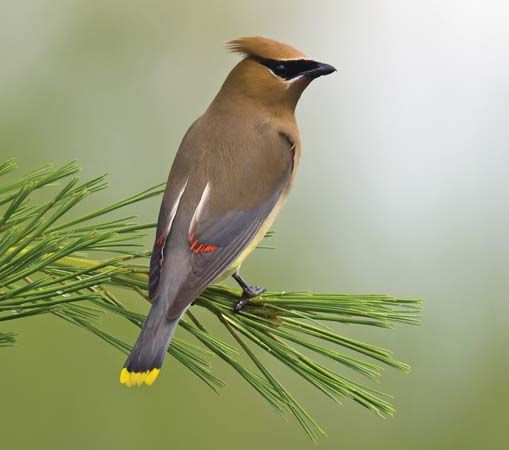
Silky Flycatcher
A silky flycatcher is any of four species of arboreal birds belonging to the family Ptilogonatidae. These birds are characterized by their silky feathers…
What is Silky flycatcher?
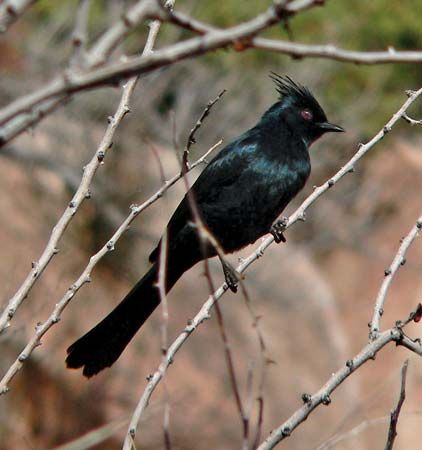
A silky flycatcher is any of four species of arboreal birds belonging to the family Ptilogonatidae. These birds are characterized by their silky feathers, prominent crests, and broad bills, typically measuring about 19 cm (7.5 inches) in length. They inhabit dry, brushy regions ranging from Nevada down to Panama.1
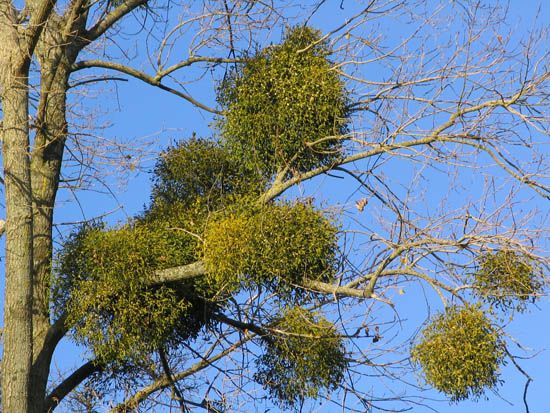
Despite their name, they are not related to true flycatchers (family Tyrannidae); instead, they are more closely related to waxwings. Their diet primarily consists of mistletoe berries, though they also supplement this by catching insects while darting from perches. The most well-known member of this group is the phainopepla.1
How are silky flycatchers related to waxwings?
Silky flycatchers and waxwings are related through their classification within the same songbird family, Bombycillidae (order Passeriformes).2
While some classifications place silky flycatchers in their own family, Ptilogonatidae, they share significant evolutionary and physical traits with waxwings that distinguish them from unrelated groups like the tyrant flycatchers (family Tyrannidae). Both groups are arboreal and exhibit similar morphological characteristics, including:1
- Physical features: Most members possess tapering crests, distinctive wing markings, and short, broad bills.21
- Dietary habits: Both groups rely heavily on fruit and berries, though silky flycatchers are more prone to catching insects on the wing.21
- Parental care: Both groups catch insects specifically to feed their nestlings.2
Despite these shared traits, their geographic distributions differ; waxwings are found across the Northern Hemisphere, whereas silky flycatchers are restricted to North and Central America.2
What is the phainopepla’s unique role in its ecosystem?
The provided search results do not contain information regarding the specific ecological role of the phainopepla. While the text discusses general seed dispersal by various bird species, it does not mention the phainopepla or its unique contributions to its environment.
Why are they called flycatchers if they are not true flycatchers?
The term “flycatcher” is applied to several groups of birds based on a shared behavioral trait: the habit of darting from a perch to capture insects on the wing. Because this behavior evolved independently in different lineages, the name does not necessarily indicate a close evolutionary relationship.145
For example, the silky flycatchers (family Ptilogonatidae) are named for this hunting style, yet they are not “true” flycatchers. They are actually more closely related to waxwings (family Bombycillidae) than they are to the tyrant flycatchers (family Tyrannidae) or the Old World flycatchers (family Muscicapidae). While silky flycatchers do supplement their diet by catching insects in flight, they are primarily fruit-eaters, whereas the term “flycatcher” is more traditionally associated with the families Muscicapidae and Tyrannidae, which are defined by their specialized insect-hunting behavior.154
Sources
- Silky flycatcher — Encyclopædia Britannica
- Bombycillidae — Encyclopædia Britannica
- Seed - Dispersal by birds — Encyclopædia Britannica
- flycatcher — Merriam-Webster
- Flycatcher — Encyclopædia Britannica
- ostariophysan - Annotated classification — Encyclopædia Britannica
- tetraodontiform - Annotated classification — Encyclopædia Britannica
Published on · 2 min read