Parasitic Plant
Parasitic plants are defined by their use of a specialized organ called a haustorium, which penetrates a host plant to form a vascular union for nutrient and…
What are the different types of parasitism in plants (e.g., hemiparasites, holoparasites)?
Parasitic plants are defined by their use of a specialized organ called a haustorium, which penetrates a host plant to form a vascular union for nutrient and water extraction. These plants are categorized based on their level of host dependence and their ability to photosynthesize:12
- Hemiparasites: These plants retain some ability to photosynthesize. They primarily rely on their hosts to supply water and mineral nutrients.1
- Holoparasites: These are nonphotosynthetic plants that depend entirely on their hosts for all nutrition. Because they lack the capacity to produce their own food, they are obligate parasites.1
Parasitic plants are further distinguished by their life cycle requirements:
- Obligate parasites: These have an absolute requirement for a host to complete their life cycle.1
- Facultative parasites: These are capable of living and reproducing even in the absence of a host.1
Additionally, parasites are often classified by the site of attachment, such as root parasites or stem parasites, depending on whether they attack the roots or stems of the host.1
What are some common examples of parasitic plants found in nature?
Parasitic plants exhibit a wide range of forms and strategies to obtain nutrients from their hosts. Some of the most notable examples found in nature include:
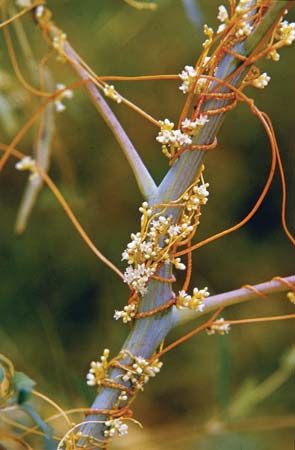
- Dodder (Cuscuta): A genus of leafless, stem-parasitic plants that appear as a tangled web of yellow, orange, or pink stems. As a holoparasite, it lacks chlorophyll and relies entirely on its host, using haustoria to extract water and nutrients from the host’s vascular system.13
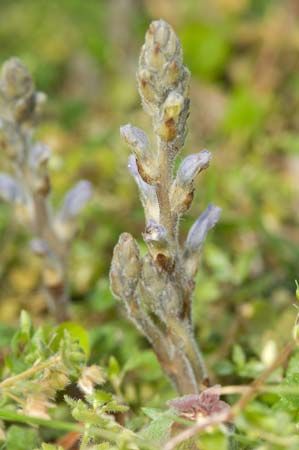
- Witchweeds (Striga): These members of the Orobanchaceae family are notorious agricultural pests that parasitize cereal crops like corn, sorghum, and rice. They are known for their ability to detect chemical signals from host roots to trigger their own germination.1
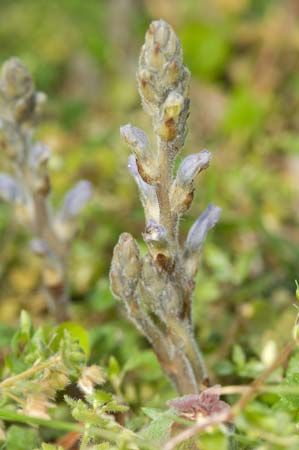
- Broomrapes (Orobanche and Phelipanche): Also part of the Orobanchaceae family, these plants typically attack broadleaf crops, including legumes and various solanaceous plants like tomatoes and potatoes.1
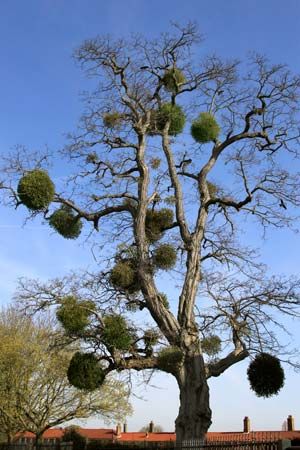
- Dwarf Mistletoes (Arceuthobium): These small-flowered plants are parasitic on coniferous trees. They have evolved a unique method of seed dispersal where pressure within the fruit causes it to rupture, shooting sticky seeds onto the branches of nearby trees.14
- Rafflesia: Famous for producing massive flowers, this genus grows endophytically—meaning its vegetative body exists entirely within the tissues of its host vine, Tetrastigma, emerging only to bloom.1
- Stemsuckers (Pilostyles): Similar to Rafflesia, these plants live within the stems of members of the pea family (Fabaceae) and are only visible when they flower.1
What adaptations have parasitic plants developed to survive without photosynthesis?
Parasitic plants have evolved a variety of specialized adaptations to survive without the ability to photosynthesize, transitioning from autotrophy to complete heterotrophy. Because they do not need to produce their own food, these plants have undergone significant morphological and physiological changes.1
Key Adaptations
- Haustorium Development: The defining structural adaptation is the haustorium, a specialized organ that penetrates the host plant to form a vascular union, allowing the parasite to extract water and nutrients directly from the host.1
- Morphological Reduction: Since photosynthesis is unnecessary, holoparasites often exhibit reduced or absent root systems. Similarly, leaves are frequently reduced to scales, and the plants often lack chlorophyll, resulting in colors ranging from cream to yellow or purple.1
- Host Detection Mechanisms: To ensure survival, parasitic plants have evolved sophisticated ways to locate hosts. Some use volatile chemicals or color cues to orient their growth toward a host. Others, particularly in the Orobanchaceae family, remain dormant in the soil until they detect specific chemical signals (such as strigolactones) exuded from host roots, which trigger germinationones) exuded from host roots, which trigger germination.1
- Endophytic Growth: Some species, such as Rafflesia, have evolved to live entirely within the tissues of their host, emerging only to produce flowers.1
What are parasitic plants and how do they differ from regular plants?
A parasitic plant is a plant that derives all or part of its nutrition from another plant, known as the host, without providing any benefit in return and often causing the host significant harm.1
The defining structural feature that distinguishes parasitic plants from other species is the haustorium. This specialized organ penetrates the host’s tissues to form a vascular union, allowing the parasite to extract water and nutrients directly.1
Parasitic plants differ from other plant types in several key ways:
- Vs. Climbing Plants/Epiphytes: While plants like vines or epiphytes use other plants for physical support, they do not extract nutrients from them and are therefore not parasitic.1
- Vs. Mycoheterotrophs: Mycoheterotrophs may lack chlorophyll and photosynthetic ability, but they obtain nutrition through a symbiotic association with fungi rather than by directly parasitizing other plants.1
- Nutritional Dependence: Parasitic plants exist on a spectrum of heterotrophy. Hemiparasites retain some ability to photosynthesize, while holoparasites are entirely nonphotosynthetic and rely completely on their host.1
Sources
- Parasitic plant — Encyclopædia Britannica
- Haustorium — Encyclopædia Britannica
- Dodder — Encyclopædia Britannica
- dwarf mistletoe — Encyclopædia Britannica
- horizontal gene transfer — Encyclopædia Britannica
- gene-for-gene coevolution — Encyclopædia Britannica
Published on · 4 min read