Loranthaceae
Loranthaceae is a family of parasitic flowering plants, primarily found in the tropics, that reproduce through the production of bisexual flowers and…
How do Loranthaceae plants reproduce and disperse their seeds?
Loranthaceae is a family of parasitic flowering plants, primarily found in the tropics, that reproduce through the production of bisexual flowers and one-seeded berries.1
These plants are semiparasitic, meaning they possess chlorophyll to manufacture their own food but rely on haustoria—specialized rootlike structures—to extract water and mineral nutrients from the vascular tissue of their host trees.21
Seed dispersal is primarily achieved through birds, which consume the berries. The seeds are often distributed by specialized birds, such as flowerpeckers, which possess a gizzard that allows the seeds to pass through their digestive tract undamaged. The seeds are then deposited onto tree branches either through droppings or when birds wipe their bills on bark. To ensure successful colonization, the seeds are coated in a sticky substance called a viscidium, which allows them to adhere firmly to the host tree’s bark, where they subsequently germinate and penetrate the host’s vascular system.312
How have Loranthaceae plants adapted to their parasitic lifestyle?
Loranthaceae plants have evolved several specialized adaptations to thrive as parasitic organisms:
- Nutrient Acquisition: They utilize specialized rootlike structures called haustoria to penetrate the tissues of a host tree. These structures form a vascular union with the host, allowing the parasite to siphon off water and mineral nutrients directly from the host’s system.41
- Photosynthetic Capability: Unlike some fully parasitic plants, Loranthaceae are hemiparasites. Their leaves contain chlorophyll, enabling them to manufacture their own food through photosynthesis while supplementing their needs via the host.4
- Dispersal Mechanisms: To ensure they reach suitable hosts, their seeds are encased in a sticky substance known as a viscidium. This coating allows the seeds to adhere firmly to the bark of trees after being deposited by birds, facilitating successful germination and attachment.4
- Morphological Traits: Many species feature thick, leathery, or fleshy leaves, which are often arranged in opposite pairs, an adaptation that helps them survive in various tropical environments while maintaining their parasitic lifestyle.45
What are the main characteristics of plants in the Loranthaceae family?
The Loranthaceae family consists of approximately 77 genera and 950 species of parasitic flowering plants, primarily found in tropical regions. These plants are classified within the sandalwood order (Santalales) and are a major group of mistletoes.47
Key characteristics include:
- Growth Habit: They range from small herbs to trees reaching up to 10 meters. Smaller species typically grow as woody parasites on branches, while larger species may act as root parasites.4
- Parasitism: As hemiparasites, they possess chlorophyll to produce their own food but rely on specialized rootlike structures called haustoria to extract water and nutrients from their host’s vascular system.47
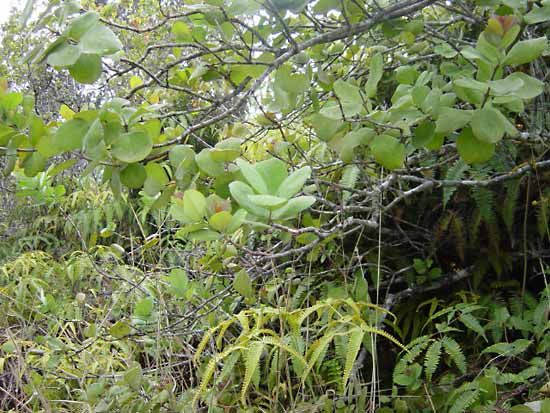
- Foliage: The leaves are typically evergreen, unlobed, and arranged in opposite pairs. They are often thick and leathery.45
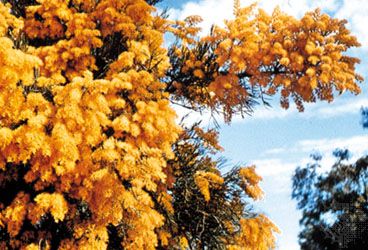
- Reproduction: The flowers are generally bisexual and often brightly colored. The fruits are typically one-seeded berries containing a sticky substance called a viscidium, which helps seeds adhere to host bark after being dispersed by birds.4
What types of trees are commonly parasitized by Loranthaceae plants?
Loranthaceae plants are not restricted to a single type of host; rather, they are known to parasitize a wide variety of ornamental, timber, and crop trees.
Because these plants are primarily dispersed by birds that deposit their seeds onto the bark of various woody plants, they can establish themselves on many different species within their tropical habitats. While they are considered pests in agricultural and forestry contexts due to their ability to siphon water and nutrients through haustoria, they are persistent and capable of surviving on a broad range of host trees.14
Sources
- mistletoe: Top Questions — Encyclopædia Britannica
- Plant disease - Mistletoe — Encyclopædia Britannica
- seed - Dispersal by birds — Encyclopædia Britannica
- Loranthaceae — Encyclopædia Britannica
- Loranthaceae — Merriam-Webster
- haustorium — Encyclopædia Britannica
- mistletoe — Encyclopædia Britannica
Published on · 3 min read