Mongoose
There are nearly three dozen species of mongooses, small predatory carnivores primarily found in Africa, with some species native to southern Asia and…
What are some of the most well-known mongoose species?
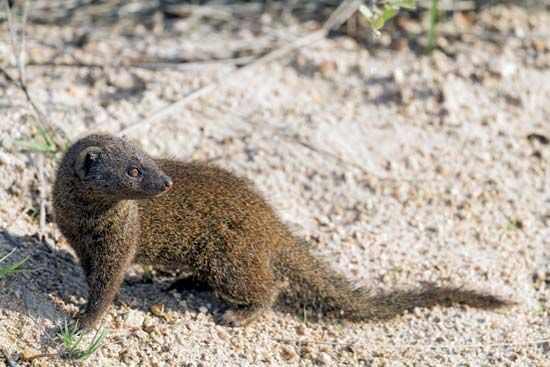
There are nearly three dozen species of mongooses, small predatory carnivores primarily found in Africa, with some species native to southern Asia and Europe. Some of the most well-known include:
- Indian gray mongoose: Famous as the character Rikki-tikki-tavi in Rudyard Kipling’s The Jungle Books.1
- Egyptian mongoose: Also known as the ichneumon, this species is found in Africa and southern Europe.1
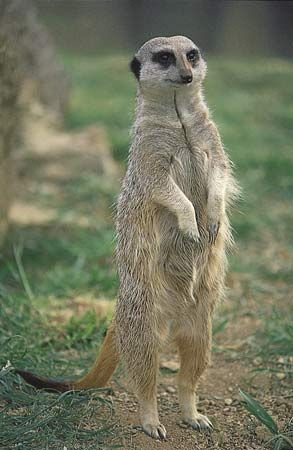
- Meerkat: A highly social, burrowing mongoose species known for its “sentinel” behavior, where individuals stand upright to watch for predators.12
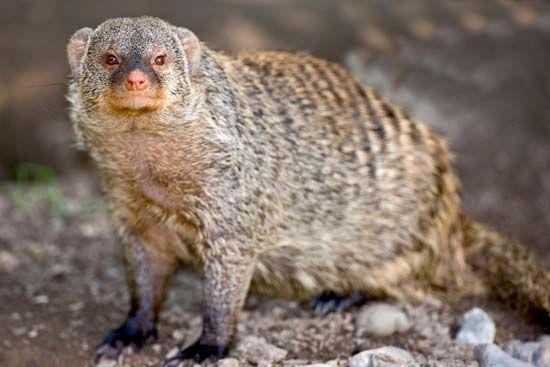
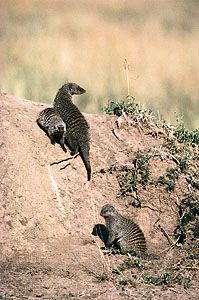
- Banded mongoose: A gregarious African species characterized by dark brown and yellow transverse bands across its back.13
- Dwarf mongoose: Recognized as the smallest mongoose species.1
- White-tailed mongoose: Notable for being the largest species of mongoose.1
While these animals are often admired for their agility and ability to hunt venomous snakes, it is important to note that introducing them to non-native environments—such as Hawaii or Fiji—has historically caused ecological disasters by depleting native wildlife.1
How do mongooses hunt and what is their diet?
Mongooses are bold, predatory carnivores that primarily consume small mammals, birds, reptiles, eggs, and occasionally fruit.41
Hunting Techniques
Mongooses are well-known for their agility and speed when hunting, particularly when attacking venomous snakes. They typically dart at the snake’s head and use a powerful bite to crush the skull. While they may be bitten during these encounters, many species possess a specialized glycoprotein that binds to and deactivates snake venom, rendering it harmless1.1
Specialized Feeding Behaviors
Some species exhibit unique methods for accessing food with hard shells, such as crabs, mollusks, nuts, and eggs:
- Standard Method: The animal stands on its hind legs and strikes the item against the ground.1
- Rock-Throwing: Some mongooses carry eggs to a rock, stand with their back to it, and throw the egg between their legs against the rock until it breaks.1
- Side-Tossing: The Malagasy narrow-striped mongoose performs a similar action while lying on its side, using all four feet to toss the object.1
How do mongooses interact with humans and what is their cultural significance?
The relationship between humans and mongooses is complex, characterized by both historical utility and significant ecological caution.
Human-Mongoose Interactions
In regions where mongooses are native, such as parts of Africa and Asia, they have historically maintained a relationship of reciprocity with humans. They are often welcomed into homes to control unwanted rodents and snakes, acting as natural pest controllers. While these animals may exhibit intelligence and affection toward familiar humans, they remain wild, unpredictable creatures that are not suitable as household pets.56
In many other parts of the world, keeping a mongoose is illegal or strictly regulated. This is due to the disastrous ecological consequences that occurred when they were introduced to non-native environments—such as Hawaii and Fiji—to manage pests, only to decimate local flora and fauna. Furthermore, mongooses can carry rabies, posing a health risk to humans.56
Cultural Significance
The mongoose holds a prominent place in literature, most notably as the title character in the story “Rikki-Tikki-Tavi” from Rudyard Kipling’s The Jungle Book (1894). In this classic tale, the mongoose is celebrated for its courage and its role as a protector of the human family with whom it lives, famously defeating a pair of cobras. Linguistically, the English word “mongoose” itself reflects this cultural history, likely deriving from the Marathi word muṅgūsa.47
Where are mongooses typically found in the wild?
Mongooses are primarily found in the wild across Africa, southern Asia, and southern Europe. Additionally, a group of five species known as Malagasy mongooses is found exclusively on the island of Madagascar.141
While these are their native ranges, certain species—most notably the Javan mongoose and the Indian gray mongoose—have been introduced to various islands, including Hawaii, Fiji, Mauritius, Mafia Island, and islands of Croatia.41
In their natural habitats, mongooses are generally terrestrial animals that live in burrows, though some species, such as the marsh mongoose, are semiaquatic.41
Sources
- mongoose — Encyclopædia Britannica
- banded mongoose — Merriam-Webster
- meerkat — Encyclopædia Britannica
- mongoose: Top Questions — Encyclopædia Britannica
- Do Mongooses Make Good Pets? — Encyclopædia Britannica
- The Jungle Book — Encyclopædia Britannica
- List of English Words from India - Mongoose — Encyclopædia Britannica
Published on · 3 min read