Diplodocus
Diplodocus is a genus of gigantic sauropod dinosaurs from the Late Jurassic Period that is distinguished from other genera primarily by its unique skeletal…
What are the key physical characteristics of Diplodocus that distinguish it from other dinosaur genera?
Diplodocus is a genus of gigantic sauropod dinosaurs from the Late Jurassic Period that is distinguished from other genera primarily by its unique skeletal anatomy.12
The most defining characteristic of Diplodocus is found in its caudal (tail) vertebrae. Unlike other sauropods, Diplodocus possesses “double chevrons”—arched structures beneath the tail vertebrae that feature both anterior and posterior rami. This anatomical feature, which inspired the genus name (meaning “double beam”), likely contributed to the extreme flexibility of its long, whiplike tail.21
Additionally, Diplodocus is characterized by:
- Skull Structure: It possessed an unusually small, light, and elongated skull, similar in shape to that of a horse, which sat atop an extremely long neck.1
- Tail Functionality: Beyond its defensive potential, the tail’s structural transition from spoonlike to canoelike arches suggests it may have served as a prop, potentially allowing the animal to rear up on its hind legs to reach high vegetation.1
- Body Build: While massive, its body was comparatively light and supported by pillarlike legs.1
What significant Diplodocus fossils have been discovered, and where are they displayed today?
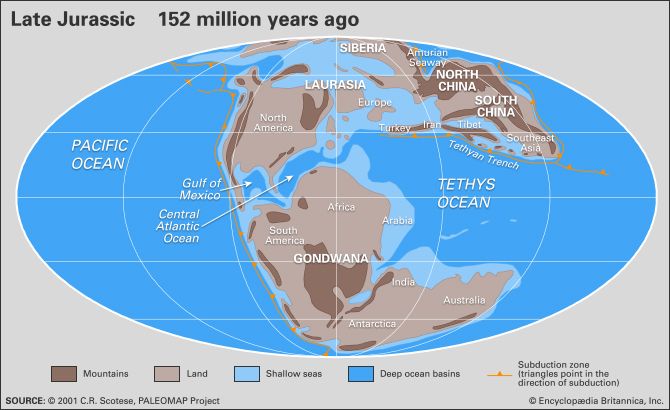
Diplodocus is one of the most frequently displayed dinosaurs in museums worldwide, with its remains primarily sourced from the Late Jurassic Period fossil beds of the American West, including Colorado, Wyoming, Montana, and Utah.15
The initial specimens of Diplodocus were discovered during the late 19th century by the field parties of O.C. Marsh, a pioneer in American paleontology. Key sites that yielded these significant finds include:3
- Morrison, Colorado: This site provided the original specimens used to describe the genus.3
- Como Bluff, Wyoming: A momentous discovery site that produced one of the greatest assemblages of Jurassic dinosaurs, including Diplodocus and other iconic genera like Stegosaurus and Allosaurus.3
Today, the core of the Mesozoic collections containing these historic Diplodocus fossils is housed at major institutions, most notably the National Museum of Natural History of the Smithsonian Institution and the Peabody Museum of Natural History at Yale University.3
How did the long neck of Diplodocus function, and what was its purpose?
The long neck of Diplodocus was a specialized anatomical feature that served essential terrestrial functions, primarily related to feeding. Rather than being an adaptation for aquatic life—a long-disproven theory—the neck allowed this massive sauropod to function as a high-level browser.1
Functional Purpose
- Elevating Feeding Apparatus: The primary purpose of the long neck was to extend the animal’s reach, enabling it to browse on high branches and treetops that were inaccessible to shorter herbivores.17
- Sensory Positioning: Beyond feeding, the neck allowed for the elevation of the eyes, providing a better vantage point for the animal.1
- Thermal Regulation: Similar to the tail, the large surface area of the long neck may have assisted in thermal regulation by improving heat loss.1
Mechanical Constraints
The neck was not designed for a submerged existence. Physical laws regarding hydrostatic pressure indicate that if Diplodocus had attempted to breathe while fully submerged, atmospheric pressure would have been insufficient to expand its lungs. Consequently, these dinosaurs were strictly terrestrial, inhabiting floodplains and forests where they utilized their necks to access vegetation in a manner similar to modern giraffes.1
How did Diplodocus defend itself against predators?
Diplodocus likely utilized a combination of physical size, rapid growth, and specialized anatomy to avoid or defend against predators.
- Size and Growth: The immense bulk of Diplodocus, which could reach 30 to 80 tons, placed the animal out of the reach of many predators. Furthermore, paleontologists suggest that their rapid growth rate was an adaptive strategy for predator avoidance, allowing them to reach a size that made them less vulnerable to attack.19
- Defensive Tail: The tail of Diplodocus was very long and likely extremely flexible. It is widely believed that the tail could have functioned as a defensive weapon, capable of lashing out at predators with great force.1
- Anatomical Support: The tail also served as a critical anchor for the powerful hind leg muscles, which provided the animal with the strength to move its massive weight. Additionally, certain structural features in the tail vertebrae suggest it could act as a prop, potentially enabling the animal to rear up on its hind legs, which may have been a defensive posture or a way to reach higher ground.19
Sources
- Diplodocus — Encyclopædia Britannica
- sauropod — Encyclopædia Britannica
- diplodocus — Merriam-Webster
- Apatosaurus — Encyclopædia Britannica
- Dinosaur Provincial Park — Encyclopædia Britannica
- dinosaur - American hunting expeditions — Encyclopædia Britannica
- dinosaur - Sauropoda — Encyclopædia Britannica
- dinosaur - The plant eaters — Encyclopædia Britannica
- Jurassic Period - Vertebrates — Encyclopædia Britannica
Published on · 3 min read