Néstos River
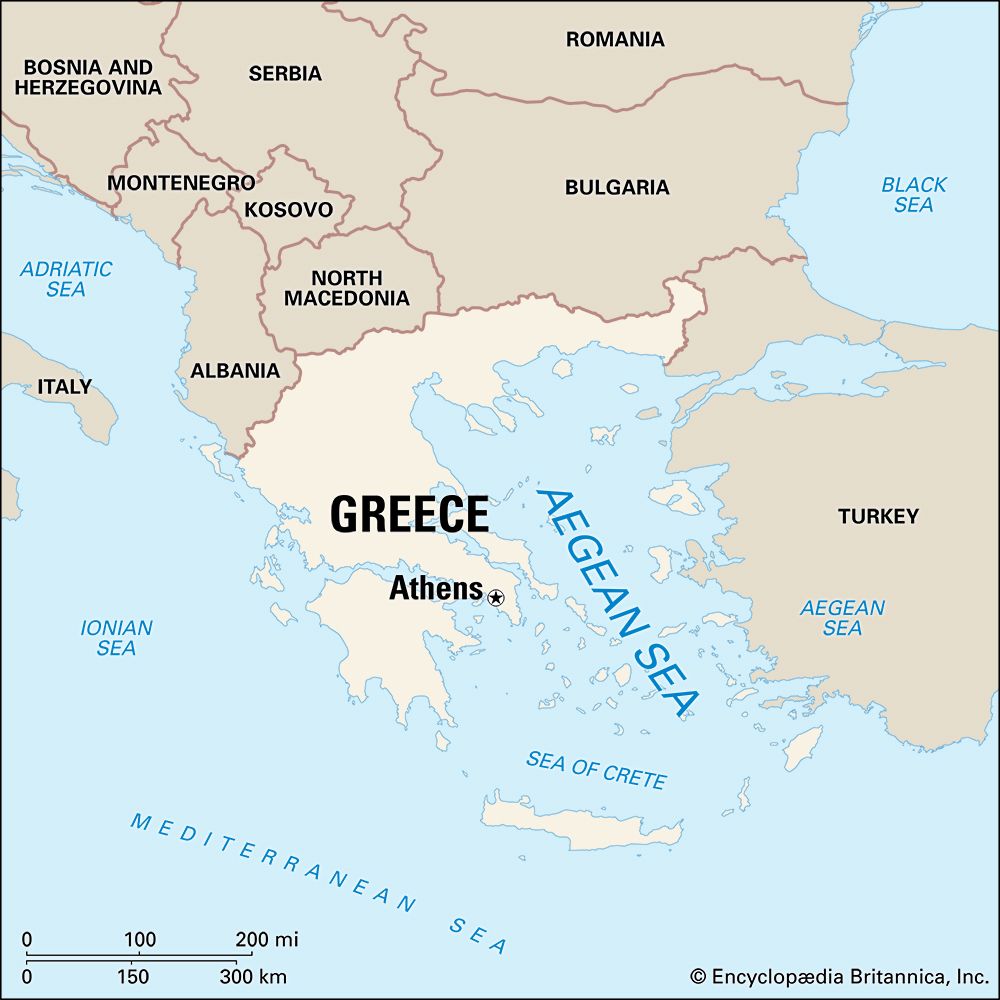
The Néstos River is a significant waterway flowing through southwestern Bulgaria and western Thrace, Greece.
What is Néstos River?
The Néstos River is a significant waterway flowing through southwestern Bulgaria and western Thrace, Greece.1
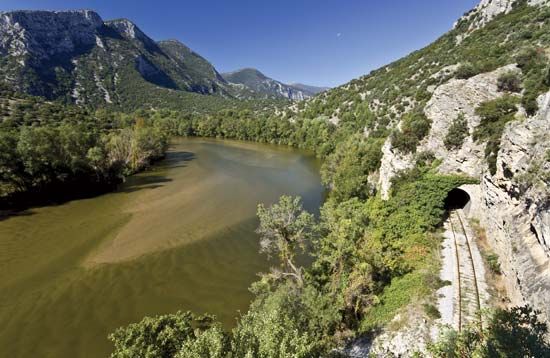
Rising on Kolarov peak in the Rila Mountains, the river serves as a natural divider between the Rila and Pirin ranges and the main Rhodope massif. Upon crossing the border into Greece, it acts as a boundary between Greek Macedonia and Greek Thrace. Spanning approximately 150 miles (240 km) from its source to its mouth on the Aegean Sea, the river traverses rugged, inaccessible gorges in the Dráma department before reaching the marshy, alluvial coastal plain near Khrisoúpolis. Throughout its lower course, it also marks the administrative boundary between the Kaválla and Xánthi departments.1
What are the main tributaries of the Néstos River?
The provided Britannica search results do not contain information regarding the specific tributaries of the Néstos River. While the article mentions that the river has “upper confluents” that separate the Rila and Pirin ranges, it does not name them or provide a list of its tributaries.1
How does the Néstos River impact local ecosystems?
The Néstos River plays a vital role in shaping the landscape and supporting diverse habitats as it flows from the Rila Mountains to the Aegean Sea.
In its upper reaches, the river carves through rugged, inaccessible gorges, creating isolated environments within the mountainous terrain. As it nears its mouth, the river transitions into a marshy, alluvial coastal plain near Khrisoúpolis. These wetlands are critical for local biodiversity, providing essential habitats for various species that thrive in deltaic and riparian ecosystems. By depositing sediment over time, the river has formed these fertile plains, which support unique flora and fauna adapted to the interplay between freshwater and coastal environments.1
We could dive deeper into the general importance of river deltas for biodiversity or explore the geography of the surrounding regions.
What historical events are associated with the Néstos River?
The Néstos River has served as a significant geographical and political marker throughout history, particularly within the region of Thrace.
- Roman Boundary: During the Roman era, the Néstos River functioned as a formal western limit for the Roman province of Thrace. Areas to the west of the river were annexed to the province of Macedonia.1
- Ancient Settlements: The river’s delta was home to the ancient Greek colony of Abdera. This site is historically notable as the home of the philosopher Democritus, who developed an early atomic particle theory, and the philosopher Protagoras, who served as a counselor to Alexander the Great.1
- Modern Borders: Following the Balkan Wars and the conclusion of World War I, the Néstos became a key boundary line establishing the borders between Greece and Bulgaria. These territorial demarcations were formalized by treaties such as the Treaty of Neuilly, the Treaty of Sèvres, and the Treaty of Lausanne, and they have remained largely unchanged since World War II.1
Sources
- Néstos River — Encyclopædia Britannica
- South America - Rivers of South America — Encyclopædia Britannica
- Thrace — Encyclopædia Britannica
- Drina River — Encyclopædia Britannica
Published on · 2 min read