Moss Animal
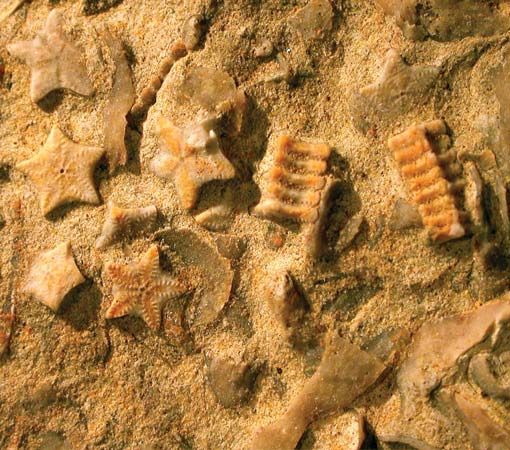
Moss animals, or bryozoans, are a phylum of aquatic invertebrate animals that typically live in colonies composed of many connected units called zooids.…
What are moss animals, and why are they called bryozoans?
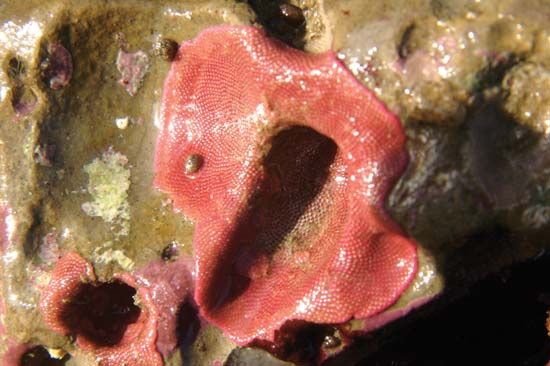
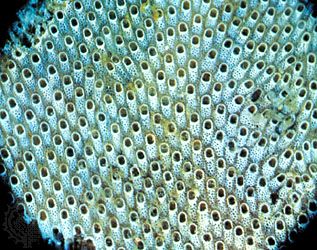
Moss animals, or bryozoans, are a phylum of aquatic invertebrate animals that typically live in colonies composed of many connected units called zooids. These organisms are widely distributed and possess a specialized ring of ciliated tentacles known as a lophophore, which they use to collect food particles from the water.1
They are called “moss animals” because, until the mid-18th century, they were mistakenly classified as plants due to their mossy appearance. The term “bryozoan” is derived from the New Latin Bryozoa, which combines the Greek roots bryo- (moss) and -zoa (animals). While they were once grouped with corals as plants, they were later distinguished as animals once the unique structure of their individual zooids was identified.12
How do moss animals differ from other invertebrates?
Moss animals, or bryozoans, are distinguished from other invertebrates by several unique anatomical and physiological characteristics:
- The Lophophore: Like brachiopods and phoronids, bryozoans possess a lophophore—a specialized ring of ciliated tentacles used to capture food particles suspended in the water.14
- Ectoproct Anatomy: Their digestive tract is arranged in a loop, with the anus located outside the ring of tentacles. This feature is the basis for their alternative name, Ectoprocta, which means “outside anus”.5
- Lack of Complex Systems: Unlike many other complex invertebrates, bryozoans completely lack respiratory, circulatory, and excretory systems.6
- Colonial Organization: While other invertebrates form colonies, bryozoans are unique in their modular structure. Each colony is composed of numerous interconnected units called zooids. These zooids are produced through asexual budding and remain physically linked, often sharing nutrients through pores or specialized tissues like the funiculus.156
- Polymorphism: Within a single colony, bryozoans can exhibit polymorphism, where different types of zooids perform specialized functions, such as feeding, defense (via avicularia or vibracula), or structural support.6
Are there any species of moss animals that have economic or medical significance?
The provided search results do not contain information regarding the economic or medical significance of moss animals (bryozoans). While the search results discuss the economic importance of Sphagnum (peat moss), this is a type of bryophyte, which is a plant, not a moss animal.
It is important to distinguish between these two groups: bryozoans are aquatic invertebrate animals, whereas bryophytes are non-vascular land plants. Because the provided data focuses exclusively on the plant kingdom for economic utility, I cannot provide information on the economic or medical significance of bryozoans based on these sources.
How many species of moss animals are known to exist?
There are approximately 5,000 extant species of moss animals, which belong to the phylum Bryozoa. In addition to these living species, there are about 15,000 species that have been identified solely through the fossil record.1
Sources
- moss animal — Encyclopædia Britannica
- bryozoan — Merriam-Webster
- moss animal - Marine bryozoans — Encyclopædia Britannica
- lophophorate — Encyclopædia Britannica
- moss animal - Reproduction and life cycle — Encyclopædia Britannica
- moss animal - Size range and diversity of structure — Encyclopædia Britannica
- moss animal - Colonies — Encyclopædia Britannica
- moss animal - Zooids — Encyclopædia Britannica
- moss animal - Distribution and abundance — Encyclopædia Britannica
- cnidarian - Reproduction and life cycles — Encyclopædia Britannica
- bryophyte - Importance to humans and ecology — Encyclopædia Britannica
- moss — Encyclopædia Britannica
- bryophyte - Ecology and habitats — Encyclopædia Britannica
- moss animal - Critical appraisal — Encyclopædia Britannica
Published on · 2 min read