Mouflon
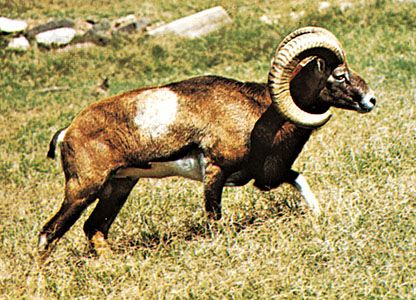
The mouflon (Ovis aries or Ovis orientalis) is a small, wild sheep belonging to the family Bovidae. Standing about 70 cm (28 inches) at the shoulder, these…
What is a mouflon and where is it originally from?
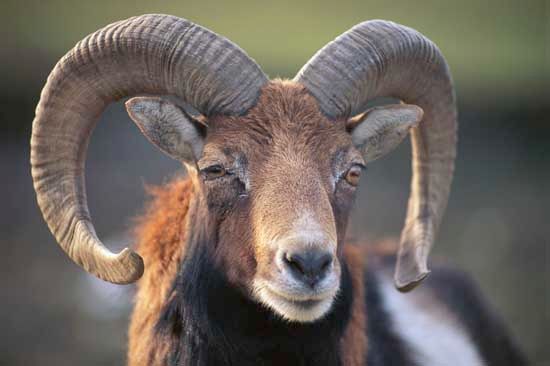
The mouflon (Ovis aries or Ovis orientalis) is a small, wild sheep belonging to the family Bovidae. Standing about 70 cm (28 inches) at the shoulder, these animals are typically brown with white underparts. Males are distinguished by large, downward-curving horns and a light, saddle-shaped mark on their backs, while females are generally hornless, though some populations in Corsica may bear small horns.123
Regarding their origins, the mouflon is believed to have descended from wild sheep native to the mountains of Asia Minor and the Fertile Crescentatolia) and the Fertile Crescent. Approximately 10,000 years ago, these animals were brought down from the mountains by early agrarians and introduced to Mediterranean islands—specifically Corsica, Sardinia, and Cyprus—likely for meat, fur, and milk. There is no fossil evidence of mouflons on these islands prior to this human-assisted introduction. In more recent centuries, they have been introduced to parts of continental Europe for hunting purposes.12
How are mouflon related to domestic sheep breeds?
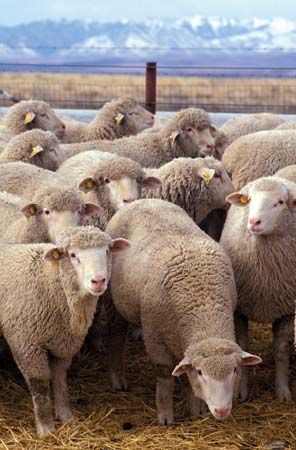
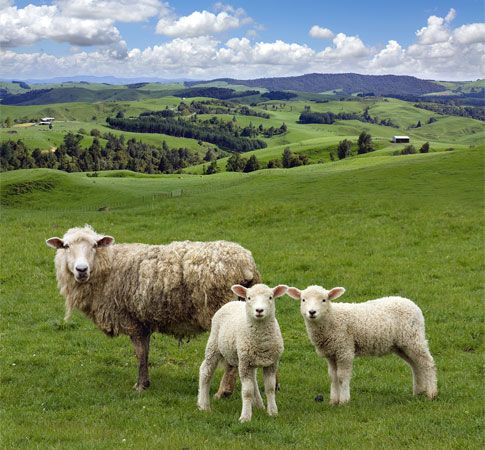
The mouflon (Ovis orientalis or Ovis aries) is widely considered the wild ancestor of the modern domestic sheep (Ovis aries). Approximately 10,000 years ago, early agrarians in the Fertile Crescent began domesticating these wild sheep, initially selecting them for meat, milk, and hides.12
The relationship between the two is defined by thousands of years of selective breeding:
- Evolutionary Link: While the mouflon provided the genetic foundation, the physical characteristics of domestic sheep have diverged significantly over time. For instance, wool-producing varieties did not emerge until several thousand years after the initial domestication, as early efforts focused on subsistence rather than long-term fiber production.2
- Morphological Changes: Domestication has led to a vast diversity among the approximately 200 modern breeds of sheep, ranging from heavy wool producers to tropical varieties. Traits such as the hornless condition often seen in domestic females are considered markers of this long history of human-directed breeding.12
- Behavioral Traits: Both the wild mouflon and domestic sheep share similar grazing behaviors, though domestic sheep have been selectively bred for specific temperaments and herding traits.12
How have mouflon been introduced to areas outside their native range, and what impact has this had?
In recent centuries, mouflon have been intentionally introduced to various regions of continental Europe primarily for the purpose of sport hunting.1
While the mouflon is often associated with the islands of Corsica, Sardinia, and Cyprus, these populations themselves are not native to those islands. Historical evidence suggests that these animals were originally brought to the Mediterranean from Asia Minor by humans during the Neolithic period, likely to serve as a source of meat, fur, and milk. Because there is no fossil record of mouflon on these islands prior to this human-assisted introduction, they are considered feral descendants of early domestic sheep rather than indigenous wild species.1
The provided information does not detail the specific ecological impacts of these introductions in continental Europe.
How did the domestication of the mouflon change human history?
The domestication of the mouflon (the wild ancestor of modern domestic sheep) was a pivotal development in human history, fundamentally altering subsistence strategies and social structures.56
Economic and Social Transformation
- Reliable Resource Management: Unlike hunting wild game, which was subject to seasonal scarcity, the management of sheep herds provided a predictable, year-round source of meat and milk. This stability allowed early human populations to thrive and expand.1
- Foundation of Complex Societies: In the Fertile Crescent, the integration of livestock-based economies with grain-based agriculture created a robust production system. This surplus supported the growth of larger populations and the development of the complex political organizations seen in ancient Mesopotamia.5
- Emergence of Pastoralism: Over time, some groups shifted toward a fully nomadic pastoral way of life. This specialization enabled humans to exploit new ecological niches, such as arid grasslands, and fostered unique social structures, including hierarchical chiefdoms.78
Historical Impact
The mobility and military advantages inherent in pastoral societies often brought them into contact—and conflict—with settled agricultural civilizations. This dynamic stimulated the development of defensive urbanization and the formation of sophisticated legal and governmental institutions in sedentary societies.8
Sources
- mouflon — Encyclopædia Britannica
- 6 Domestic Animals and Their Wild Ancestors — Encyclopædia Britannica
- mouflon — Merriam-Webster
- List of sheep — Encyclopædia Britannica
- Origins of agriculture - Southwest Asia — Encyclopædia Britannica
- the Steppe - Critical developments — Encyclopædia Britannica
- Origins of agriculture - How agriculture and domestication began — Encyclopædia Britannica
- the Steppe - The great dispersal — Encyclopædia Britannica
- Origins of agriculture - The Nile valley — Encyclopædia Britannica
- Primitive culture - Herding societies — Encyclopædia Britannica
Published on · 3 min read