Sika
The sika deer (Cervus nippon), also known as the Japanese deer, is a small, forest-dwelling deer belonging to the family Cervidae. It is native to China…
What is a sika deer and where is it native to?
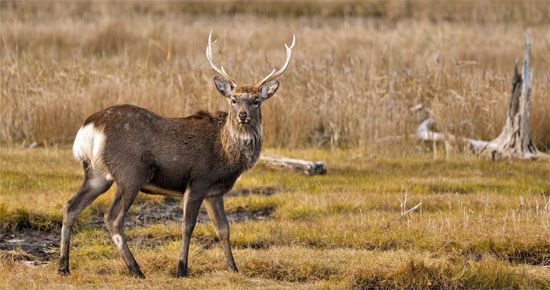
The sika deer (Cervus nippon), also known as the Japanese deer, is a small, forest-dwelling deer belonging to the family Cervidae. It is native to China, Korea, and Japan.12
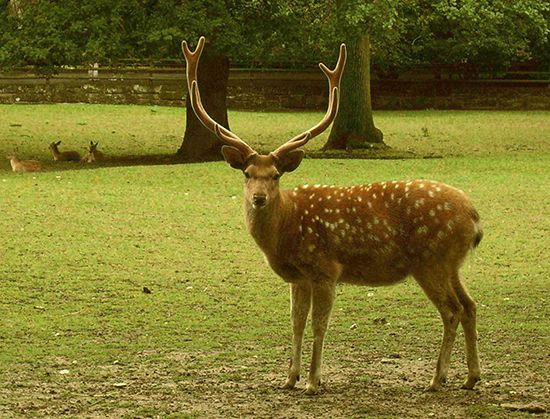
These animals are characterized by their reddish-brown coats, which are typically spotted with white in the summer and turn dark brown or grayish-brown in the winter. They possess a distinctive white rump patch that can be flared when the animal is alarmed. Sika deer are highly adaptable, occupying diverse habitats ranging from various latitudes to altitudes, provided there is sufficient forest cover. While they are native to eastern Asia, they have been introduced to many other regions, including North America, New Zealand, and Europe, where they have occasionally hybridized with red deer. In China, they are also farmed for their antlers, which are utilized in traditional medicine.123
How have sika deer been introduced to non-native habitats, and what impact has this had?
Sika deer have been introduced to various regions outside their native range in East Asia, including parts of Europe, New Zealand, and North America, primarily through human intervention and transplantation. These introductions were often facilitated by the species’ hardiness, disease resistance, and ability to thrive in diverse habitats provided there is sufficient forest cover.23
The impact of these introductions has been significant, particularly regarding ecological competition and genetic integrity. Sika deer are known to compete aggressively for food due to their broad dietary habits, allowing them to subsist on fibrous forages that might otherwise support native species. Furthermore, in regions where they have been introduced, such as Europe, sika deer have been documented hybridizing with red deer. This interbreeding can lead to the blurring of distinct genetic lines between the two species, posing a challenge to the conservation of native deer populations.2
Are there any cultural or historical significance associated with sika deer in their native regions?
In their native regions of China, Korea, and Japan, sika deer have long been held in high regard and were historically considered sacred. The name “sika” itself is derived from the Japanese word for “deer”.2
Beyond their cultural status, these animals hold practical significance in China, where they are farmed for their antlers. These antlers are harvested and utilized in traditional medicine, a practice that has persisted for generations.2
What are the unique behavioral characteristics of sika deer?
Sika deer (Cervus nippon) exhibit several distinct behavioral characteristics, particularly during their mating season in September and October. During this time, males establish territories and vocally advertise their social status and location using shrill rutting calls.2
Their social behavior shares similarities with elk, as both species engage in specific rutting activities:
- Vocal signaling: Males use calls to attract females and warn rivals.2
- Scent marking: They spray their bodies with urine to communicate.2
- Physical displays: Males dig rutting pits and court females in a manner comparable to elk.2
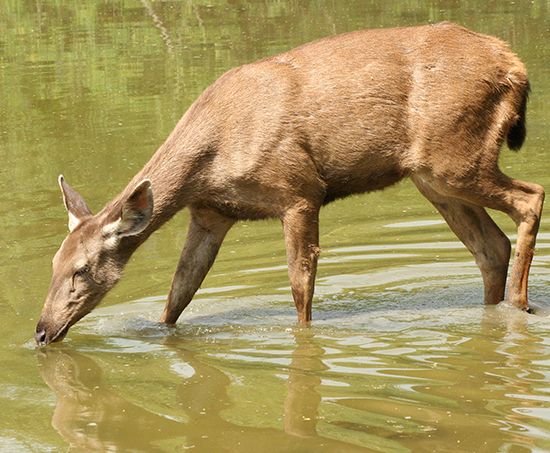
Despite being gregarious, sika deer are notably short-winded and rely on their environment for protection; when alarmed, they often run to hide in thickets, to which they are closely bound. They possess a unique physical alarm signal: a white rump patch rimmed by long white hair that can be flared wide when the animal is startled. Additionally, sika deer are recognized as excellent swimmers and are known for being hardy and disease-resistant.2
Sources
- Japanese deer — Merriam-Webster
- sika — Encyclopædia Britannica
- sika — Merriam-Webster
- Chemoreception - Territorial behavior — Encyclopædia Britannica
Published on · 3 min read