Mount Erebus
Mount Erebus is the world’s southernmost active volcano, situated on Ross Island off the coast of Antarctica. Rising 12,448 feet (3,794 meters) above sea…
What is Mount Erebus?
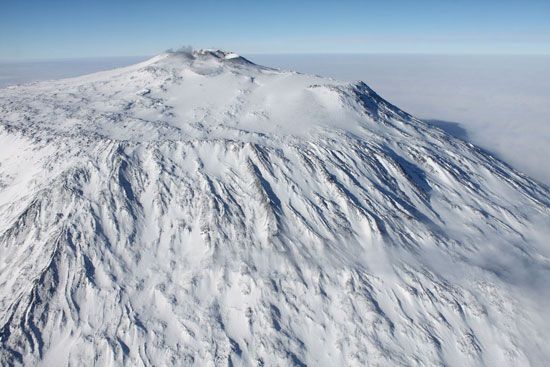
Mount Erebus is the world’s southernmost active volcano, situated on Ross Island off the coast of Antarctica. Rising 12,448 feet (3,794 meters) above sea level, it is the second tallest volcano on the continent.1
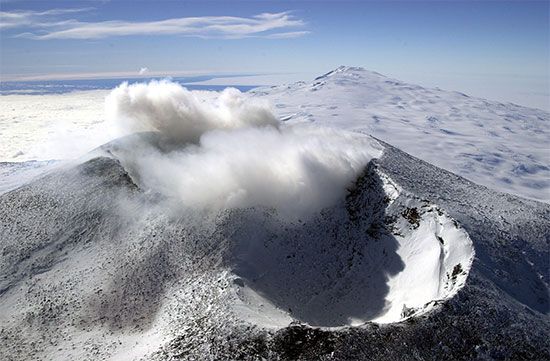
Geologically, it is a glaciated intraplate stratovolcano formed by a hotspot within the West Antarctic Rift System. It is notable for containing a continuously active lava lake, which frequently produces Strombolian eruptions.1
The volcano was first sighted in 1841 by British explorer James Clark Ross, who named it after his ship, HMS Erebus. In Greek mythology, Erebus represents the personification of darkness and a region of the underworld. Beyond its geological significance, the site is known for the 1979 Air New Zealand flight disaster and its proximity to McMurdo Station.1
Where is Mount Erebus located?
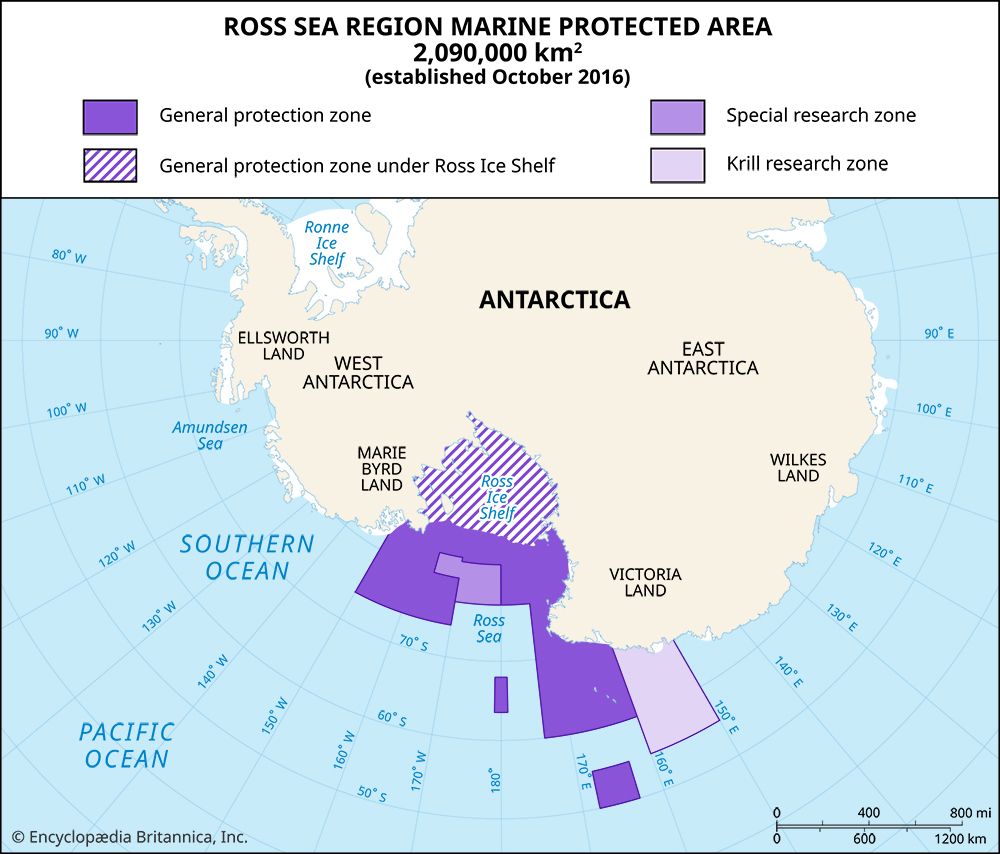
Mount Erebus is located on the western half of Ross Island, which lies off the coast of Antarctica in the Ross Sea.1
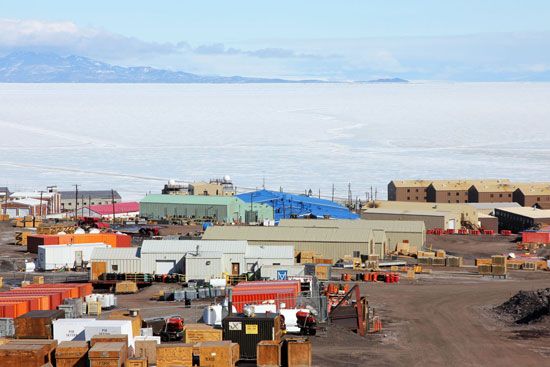
It is situated within the West Antarctic Rift System and serves as a prominent landmark near the United States’ McMurdo Station and New Zealand’s Scott Base. As the world’s southernmost active volcano, it is one of four volcanoes that form Ross Island, standing alongside the extinct peaks of Mount Bird, Mount Terra Nova, and Mount Terror1.123

What makes Mount Erebus special compared to other mountains in Antarctica?
Mount Erebus is distinguished from other mountains in Antarctica by several unique geological and physical characteristics:
- Active Volcanism: It is one of only two volcanoes on the continent currently considered active, the other being Deception Island.1
- Persistent Lava Lake: Mount Erebus is one of the few volcanoes globally that contains a continuously active lava lake, which has been active since at least 1972.1
- Southernmost Location: It holds the title of the world’s southernmost active volcano.1
- Geological Setting: Located on Ross Island, it is a glaciated intraplate stratovolcano formed by a hotspot within the West Antarctic Rift System, where the Earth’s crust has thinned significantly.1
- Strombolian Activity: The volcano frequently produces Strombolian eruptions, ejecting magma and pyroclastic rocks from its summit crater.1
Standing at 12,448 feet (3,794 meters), it is the second tallest volcano in Antarctica, surpassed only by Mount Sidley.1
What type of volcano is Mount Erebus?
Mount Erebus is classified as a glaciated intraplate stratovolcano.
Stratovolcanoes, also known as composite volcanoes, are characterized by their conical shape, which is built up over thousands of years through successive layers of volcanic material, including ash, mud, and solidified lava. Mount Erebus is part of the West Antarctic Rift System, where it was likely formed by a hotspot that allows magma to rise through the Earth’s thinned crust.15
Sources
- Mount Erebus — Encyclopædia Britannica
- Erebus, Mount — Merriam-Webster
- Ross Island — Encyclopædia Britannica
- Antarctica - Relief — Encyclopædia Britannica
- stratovolcano — Encyclopædia Britannica
Published on · 2 min read