Deception Island
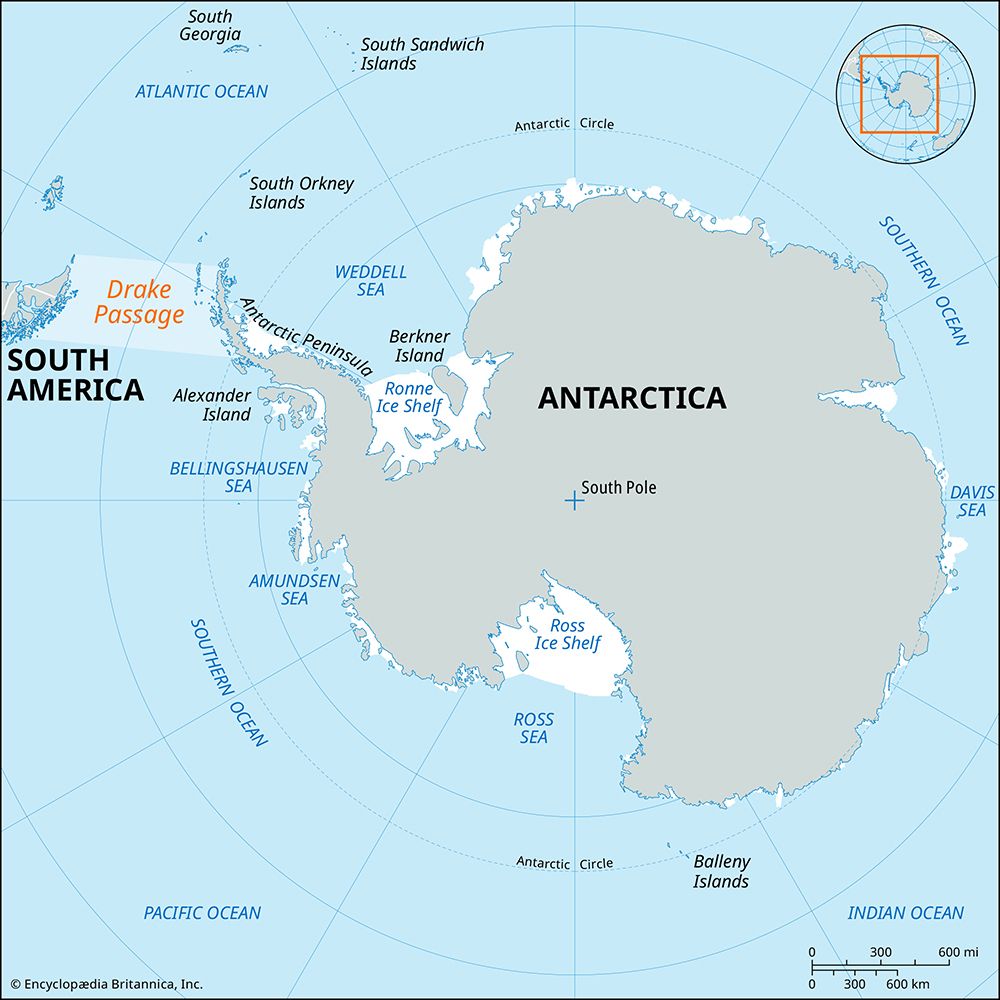
Deception Island is a sunken volcano located in the Drake Passage as part of the South Shetland Islands, off the coast of the Antarctic Peninsula. Its…
What is Deception Island?
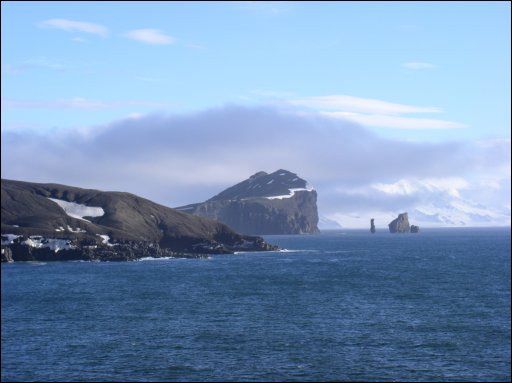
Deception Island is a sunken volcano located in the Drake Passage as part of the South Shetland Islands, off the coast of the Antarctic Peninsula. Its crater, which spans approximately 10 miles (16 km) in diameter, creates one of the most secure anchorages in the Antarctic, known as Port Foster.1
Historically, the island served as a hub for whaling and seal-hunting operations between 1906 and 1931. During World War II, it became a site of geopolitical tension, with the United Kingdom establishing a base there under “Operation Tabarin” to monitor the region and counter competing territorial claims from Argentina and Chile. All three nations have maintained stations on the island, which remains a subject of overlapping sovereignty claims. The island’s landscape has been significantly altered by volcanic eruptions and earthquakes, most notably in 1967 and in subsequent years.12
How does a sunken volcano create a natural harbor like Port Foster?
A sunken volcano creates a natural harbor through the formation of a caldera. This large, bowl-shaped depression occurs when a violent volcanic eruption ejects a massive volume of magma, leaving behind an empty chamber beneath the surface. Unable to support its own weight, the top of the volcanic cone collapses into this void.1
In the case of Deception Island, this collapse created a wide, circular crater that is partially open to the sea. This breach allows water to flood the interior, forming a protected basin known as Port Foster. Because the surrounding high walls of the former volcanic cone shield the interior from harsh winds and rough seas, the caldera functions as a secure, natural anchorage. While subsequent minor eruptions can alter the landscape, the fundamental structure remains a sheltered haven for vessels in the otherwise turbulent waters of the Antarctic.31
What is the Antarctic Treaty and how does it affect territorial claims?
The Antarctic Treaty, signed on December 1, 1959, and enacted in 1961, is a landmark international agreement that reserves the Antarctic continent exclusively for peaceful purposes and scientific research.56
Impact on Territorial Claims
The treaty addresses the complex issue of sovereignty through an innovative approach defined in Article IV:6
- Non-Abrogation: The treaty does not renounce or invalidate the territorial claims that existed prior to its signing.56
- Freezing of Claims: It prohibits the assertion of any new territorial claims or the expansion of existing ones while the treaty is in force.6
- Neutrality of Activities: No activities conducted while the treaty is in effect can be used as a basis for asserting, supporting, or denying a claim to territorial sovereignty.6
By effectively “freezing” the status quo, the treaty prevents disputes over sovereignty from hindering international cooperation. It mandates that the continent remain a demilitarized zone, banning military bases, maneuvers, and weapons testing. Furthermore, it establishes the region as the world’s first nuclear weapon-free zone and promotes the free exchange of scientific data and personnel.65
What kind of wildlife can be found in the South Shetland Islands?
The South Shetland Islands, located within the cold Antarctic zone, support a variety of wildlife that relies heavily on the region’s rich marine resources. Because these islands are situated south of the Antarctic Convergence, they maintain only primitive plant communities, such as lichens, mosses, and algae, rather than complex flora.7
Bird Life
The islands serve as a habitat for numerous seabirds and shorebirds. Common species include:
- Penguins: The gentoo penguin (Pygoscelis papua ellsworthi) is a notable inhabitant of the Antarctic Peninsula and its nearby islands, including the South Shetlands.8
- Other Seabirds: The region is home to various petrels, gulls, terns, skuas, and sheathbills.7
Marine Life
The surrounding waters are highly productive, supporting a diverse array of marine animals:
- Seals and Whales: The region hosts several species of seals and whales. While human predation historically reduced these populations, they remain a key part of the ecosystem.7
- Fish: Nearly 100 species of fish are found in the waters south of the Antarctic Convergence.7
The wildlife in this area is primarily dependent on the sea for food, foraging for crustacea, squid, and fish.97
Sources
- Deception Island — Encyclopædia Britannica
- Antarctica - National rivalries and claims — Encyclopædia Britannica
- Did you know? — Merriam-Webster
- guyot — Encyclopædia Britannica
- Antarctic Treaty — Encyclopædia Britannica
- Antarctica - The Antarctic Treaty — Encyclopædia Britannica
- Antarctica - Birds — Encyclopædia Britannica
- Gentoo penguin — Encyclopædia Britannica
- Shetland Islands — Encyclopædia Britannica
- Scotia Sea — Encyclopædia Britannica
- bearded seal — Encyclopædia Britannica
Published on · 3 min read