Ross Sea
The Ross Sea is characterized by unique environmental conditions that play a critical role in sustaining its diverse marine life. The region is strongly…
How do the unique environmental conditions of the Ross Sea affect its marine life?
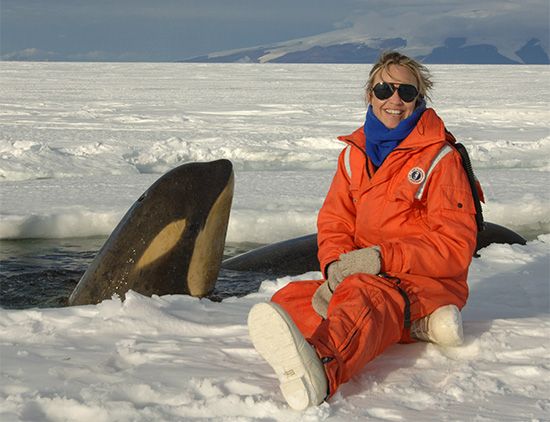
The Ross Sea is characterized by unique environmental conditions that play a critical role in sustaining its diverse marine life. The region is strongly influenced by the coastal East-Wind Drift, which generates a vast clockwise gyre and promotes deepwater upwelling. This process brings nutrient-rich water to the surface, supporting abundant planktonic life that forms the foundation of the local food web.1
These nutrient concentrations are essential for the productivity of the ecosystem, providing a vital food source for primary consumers and, subsequently, higher-level predators such as fish, seals, whales, and various seabirds. The area is particularly noted for its large rookeries of Adélie and emperor penguins.12
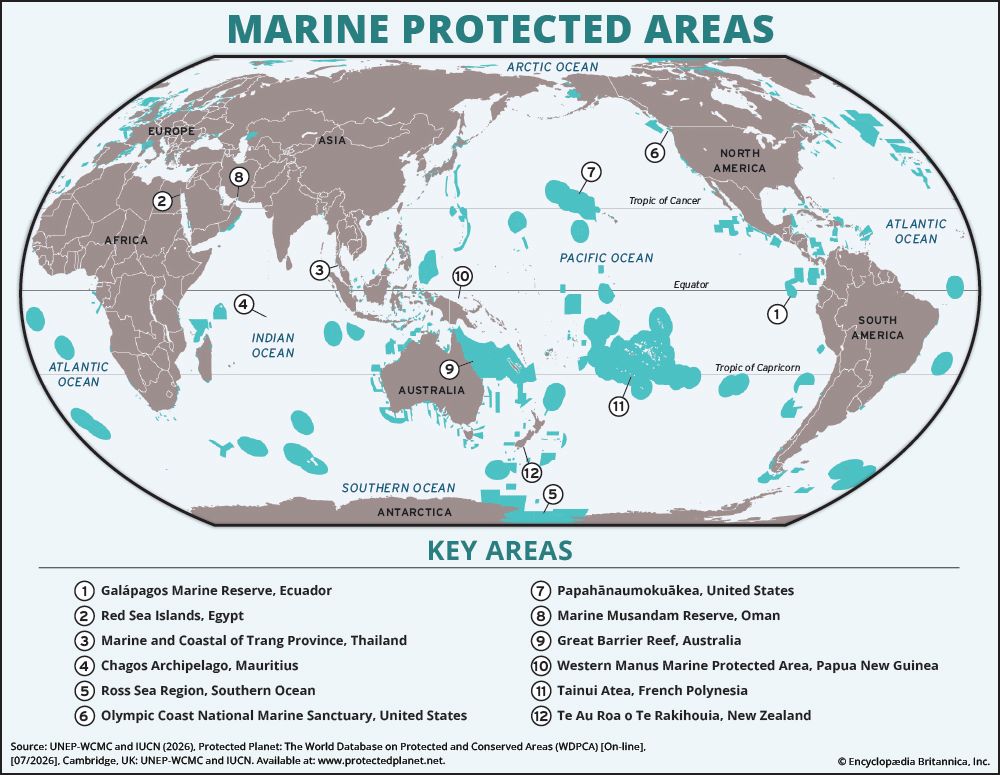
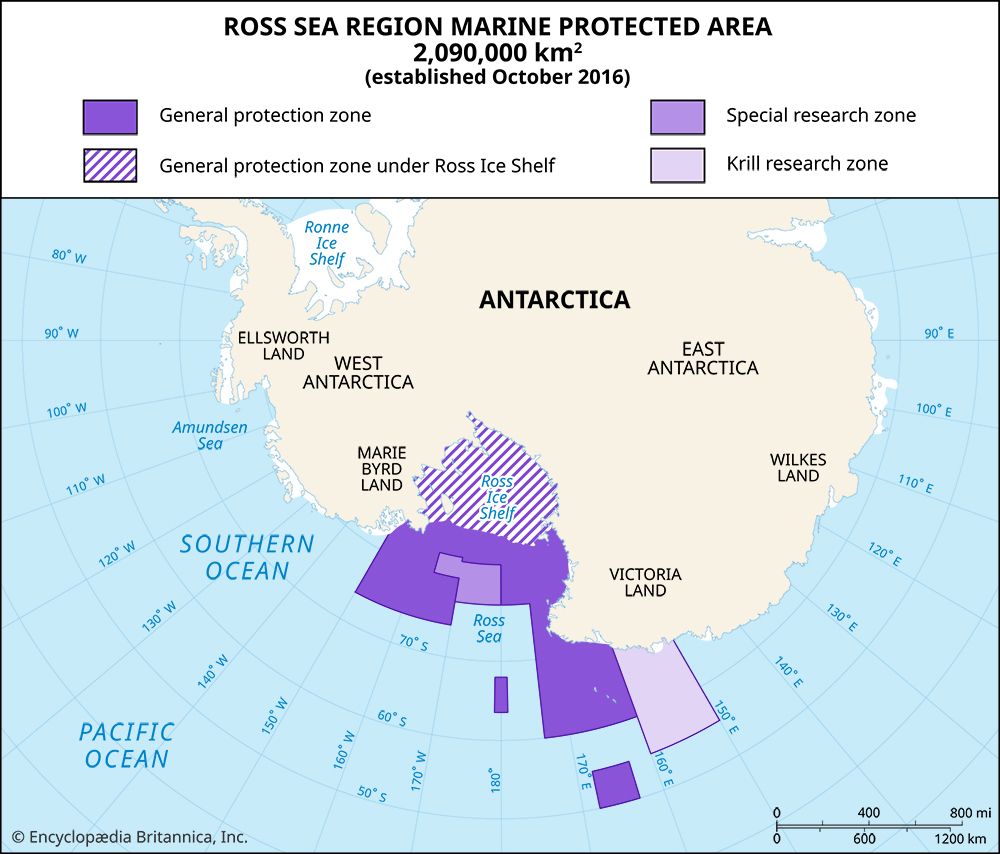
To preserve this fragile environment, 24 countries and the European Union established the world’s largest marine protected area in the Ross Sea in 2016. This agreement, which took effect in 2017, prohibits commercial fishing across 600,000 square miles to safeguard the region’s ecological integrity.13
Where is the Ross Sea located, and what are its geographical boundaries?
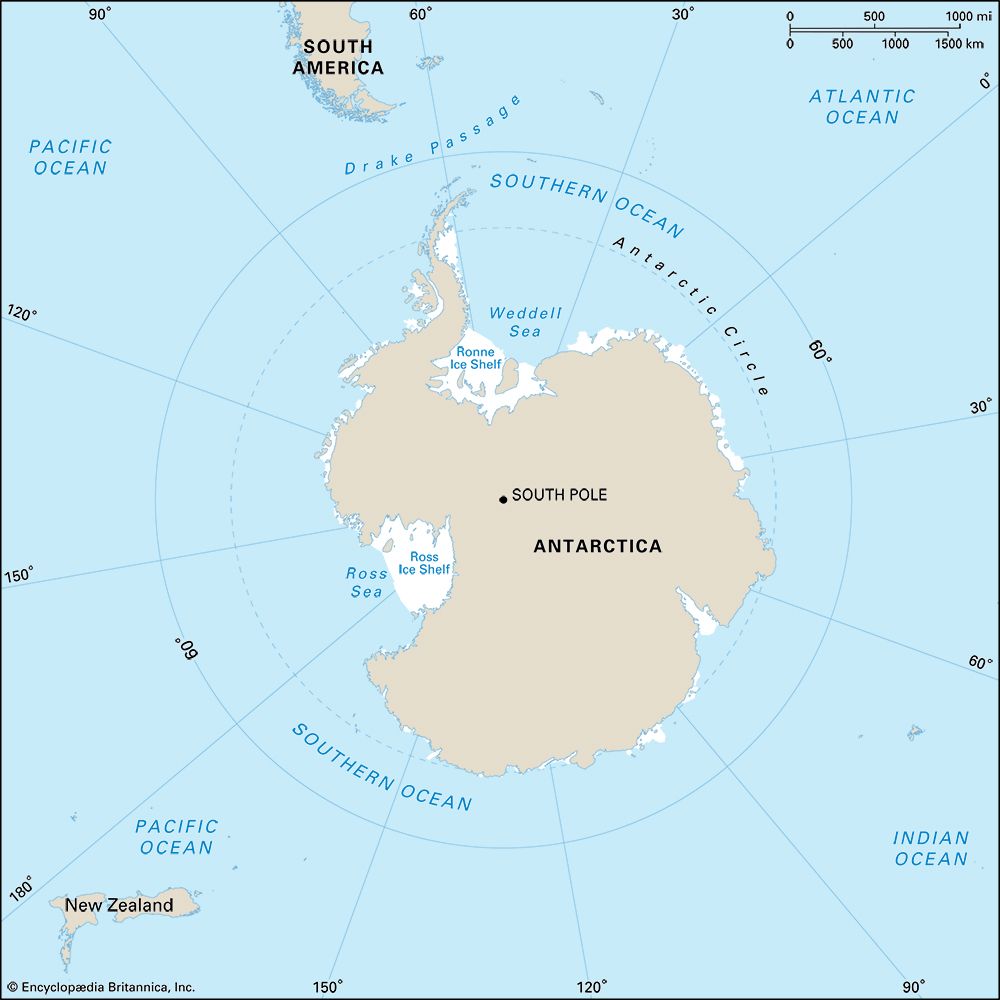
The Ross Sea is a southern extension of the Southern Ocean that creates a deep indentation in the coastline of Antarctica. Centered at approximately 75° S and 175° W, it covers an area of about 370,000 square miles (960,000 square km).1
Its geographical boundaries are defined as follows:
- West: The sea is bounded by Cape Adare in northern Victoria Land.1
- East: It is bounded by Cape Colbeck on the Edward VII Peninsula.1
- South: The southern limit is marked by the front of the Ross Ice Shelf, a massive barrier of floating ice.16
- North: The northern limit generally follows the edge of the continental shelf, where the sea floor plunges into the deeps of the Southeast Pacific Basin.1
How does the Ross Sea contribute to global ocean circulation patterns?
The Ross Sea contributes significantly to global ocean circulation by serving as a key site for the formation of Antarctic Bottom Water. This process is a fundamental component of the thermohaline circulation, the “global conveyor belt” that regulates the Earth’s climate by transporting heat, nutrients, and dissolved gases across the world’s oceans.81
The formation of this dense water occurs primarily during the winter season. As sea ice forms, salt is largely excluded from the ice, which increases the salinity of the underlying water. This cold, highly saline water becomes exceptionally dense and sinks to the seafloor, where it spreads northward into the deep basins of the global ocean.98
By producing this dense, cold water, the Ross Sea helps maintain the deep-ocean structure and compensates for the upwelling of warmer, less dense waters elsewhere. This continuous vertical movement of water is essential for ventilating the deep ocean and ensuring the long-term cycling of marine nutrients.891
What is the significance of the Ross Ice Shelf in relation to the Ross Sea?
The Ross Ice Shelf is fundamentally significant to the Ross Sea as its primary southern boundary, forming a massive, stationary-appearing barrier wall that defines the head of the sea.71
Its relationship to the sea is characterized by several key factors:
- Geographic Gateway: The ice shelf serves as the most accessible surface approach into the Antarctic interior. Historically, the regions along the shelf’s edge, such as McMurdo Sound, have functioned as the primary headquarters for major polar expeditions, including those of Robert F. Scott and Roald Amundsen.71
- Physical Dynamics: The shelf is fed by giant glaciers transporting ice from the polar ice sheet. It undergoes continual change through the calving of massive tabular icebergs and bottom melting, which influences the local marine environment.7
- Environmental Protection: The Ross Sea and the Ross Ice Shelf are central to the world’s largest marine protected area, established in 2016 to ban commercial fishing and preserve the region’s unique ecological integrity.1
Sources
- Ross Sea — Encyclopædia Britannica
- Marine ecosystem - The pelagic food chain — Encyclopædia Britannica
- Arctic Ocean - Sea ice — Encyclopædia Britannica
- Antarctica - Post-Protocol Developments — Encyclopædia Britannica
- sea ice - The emerging impacts of recent changes to sea ice — Encyclopædia Britannica
- Ross Sea — Merriam-Webster
- Ross Ice Shelf — Encyclopædia Britannica
- ocean current - Thermohaline circulation — Encyclopædia Britannica
- subpolar gyre — Encyclopædia Britannica
- Southern Ocean — Encyclopædia Britannica
- seawater - Density of seawater and pressure — Encyclopædia Britannica
- ocean current - The subpolar gyres — Encyclopædia Britannica
- thermohaline circulation — Encyclopædia Britannica
- Antarctica - The surrounding seas — Encyclopædia Britannica
Published on · 3 min read