Mount Fuji
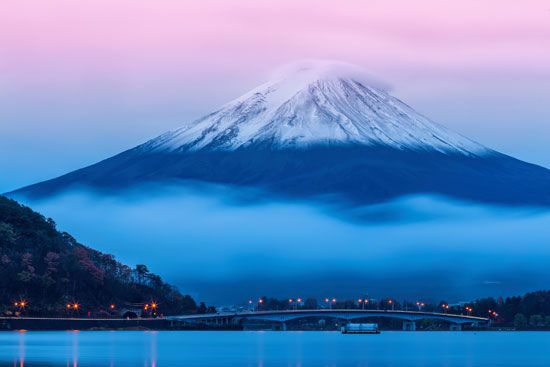
Mount Fuji rises to an elevation of 12,388 feet (3,776 meters), making it the highest mountain in Japan.
How tall is Mount Fuji and how does it compare to other mountains in Japan?
Mount Fuji rises to an elevation of 12,388 feet (3,776 meters), making it the highest mountain in Japan.123
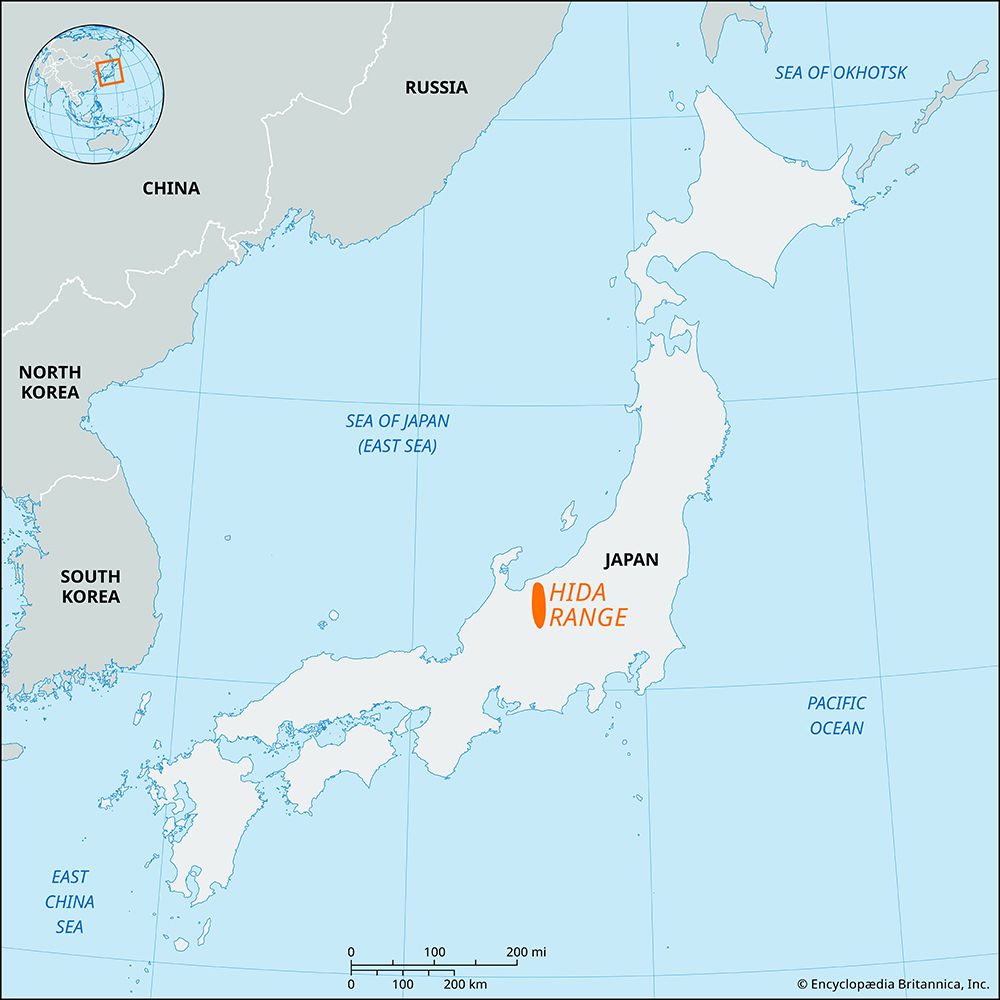
While it stands as the country’s tallest peak, it is distinct from other major mountain groups in Japan, such as the Hida Range (often referred to as the Northern Alps). The Hida Range is characterized by rugged, granite-based landforms and deep river gorges, with its highest peaks—such as Mount Hotaka (10,466 feet/3,190 meters) and Mount Yariga (10,433 feet/3,180 meters)—reaching significant heights but remaining lower than Mount Fuji.4
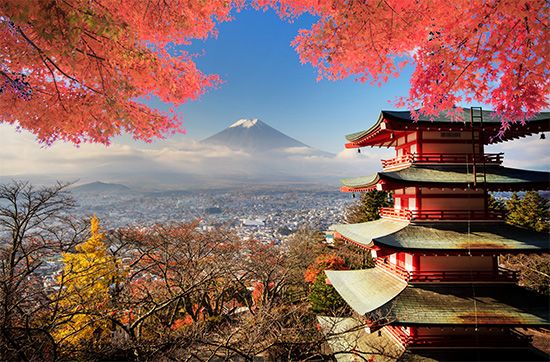
Unlike the jagged, complex topography of the Japanese Alps, Mount Fuji is a stratovolcano renowned for its nearly symmetrical, conical form. It serves as a singular, iconic symbol of the nation, whereas other ranges like the Hida are primarily recognized as centers for mountaineering and skiing within the Chūbu region.34
How has Mount Fuji influenced Japanese art and literature throughout history?
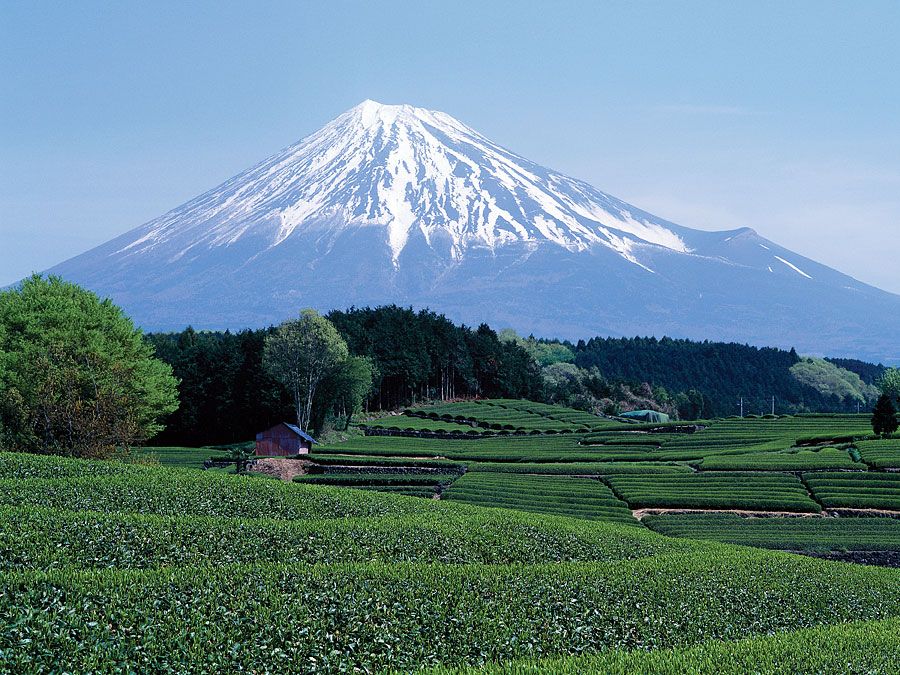
Mount Fuji has long served as an essential symbol of Japan, deeply embedded in the nation’s cultural, religious, and artistic identity. Its graceful, symmetrical form has inspired countless works of Japanese art throughout history.3
Perhaps the most iconic representation is the series of woodblock prints titled Thirty-six Views of Mount Fuji by the artist Hokusai, published between 1826 and 1833. These works cemented the mountain’s status as a visual icon both within Japan and internationally.3
Beyond fine art, the mountain has been a focal point of spiritual and literary life for centuries:
- Religious Devotion: Long considered sacred, the mountain is associated with the Shintō goddess Konohanasakuya-hime. Shrines were established to honor this deity and to placate the volcano’s power, leading to the development of traditional pilgrimage routes.3
- Asceticism: From the Heian period (794–1185) onward, the mountain became central to Shugen-dō, a practice of mountain asceticism that blended Buddhism with indigenous beliefs.3
- Pilgrimage Culture: During the Tokugawa period (1603–1867), the Fuji-kō religious movement promoted organized pilgrimages to the summit, further integrating the mountain into the social and cultural fabric of the era.3
What type of volcano is Mount Fuji, and when was its last eruption?
Mount Fuji is a stratovolcano that has been formed over the past 2.6 million years through the activity of three successive volcanoes: Komitake, Ko Fuji, and the most recent, Shin Fuji.3
Although it has been dormant since its last major eruption in December 1707, geologists still classify the mountain as an active volcano. That 1707 event, which was triggered by a magnitude-8.4 earthquake, was significant enough to bury nearby dwellings and temples in ash and darken the sky as far away as Edo (modern-day Tokyo).3
What is the geological history of Mount Fuji and how was it formed?
Mount Fuji is a stratovolcano that has developed over the past 2.6 million years, with its formation driven by the subduction of the Pacific and Philippine plates beneath the Eurasian Plate.13
The mountain is a composite structure formed by three successive volcanic stages:
- Komitake: The oldest base, which forms the mountain’s northern slope.51
- Ko Fuji (“Old Fuji”): This stage began approximately 100,000 years ago, with its lava and ejecta covering most of the Komitake cone.51
- Shin Fuji (“New Fuji”): The most recent stage, which became active about 10,000 years ago. It filled in the slopes of its predecessors and added the summit zone, creating the mountain’s signature symmetrical, tapered form.1
While tradition once attributed its creation to an earthquake, geological evidence confirms it is a complex, evolving volcanic system. It remains part of the active Fuji Volcanic Zone, with its last major eruption occurring in 1707.51
Sources
- Mount Fuji: Top Questions — Encyclopædia Britannica
- Fuji, Mount — Merriam-Webster
- Mount Fuji — Encyclopædia Britannica
- Hida Range — Encyclopædia Britannica
- Japan - Geologic framework — Encyclopædia Britannica
Published on · 3 min read