Mount Ruang
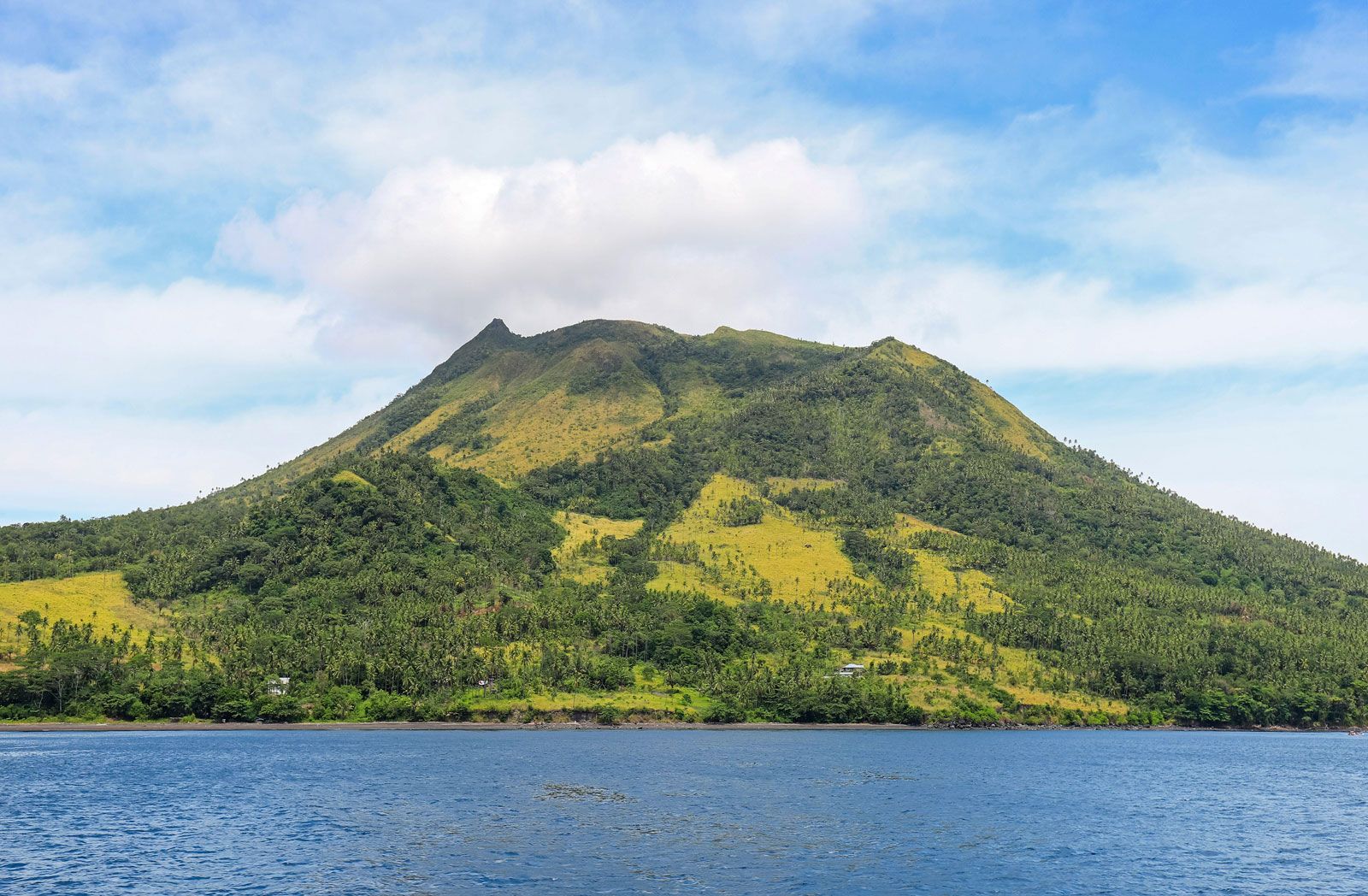
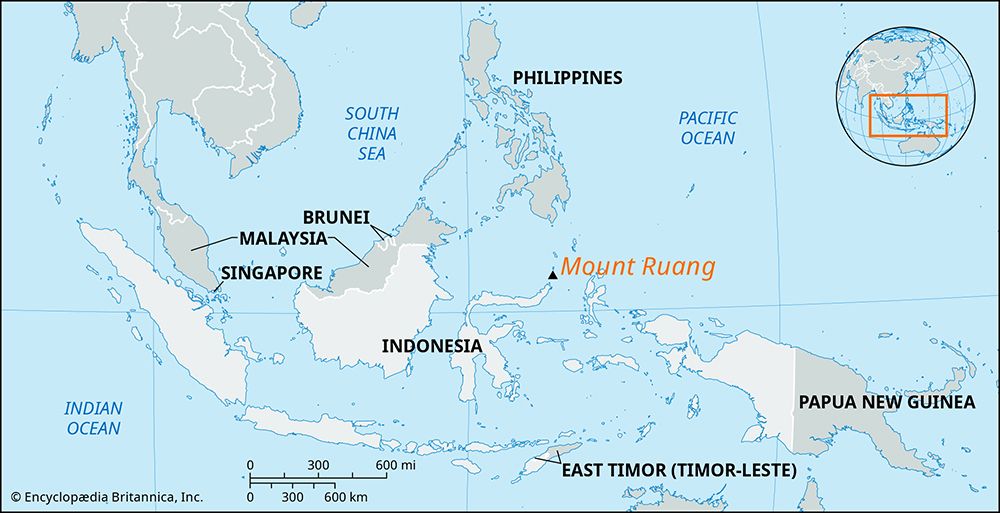
Mount Ruang is an active stratovolcano situated on Ruang Island in the Sangihe arc of Indonesia, north of Sulawesi. Rising 2,378 feet (725 meters) above sea…
What is Mount Ruang?
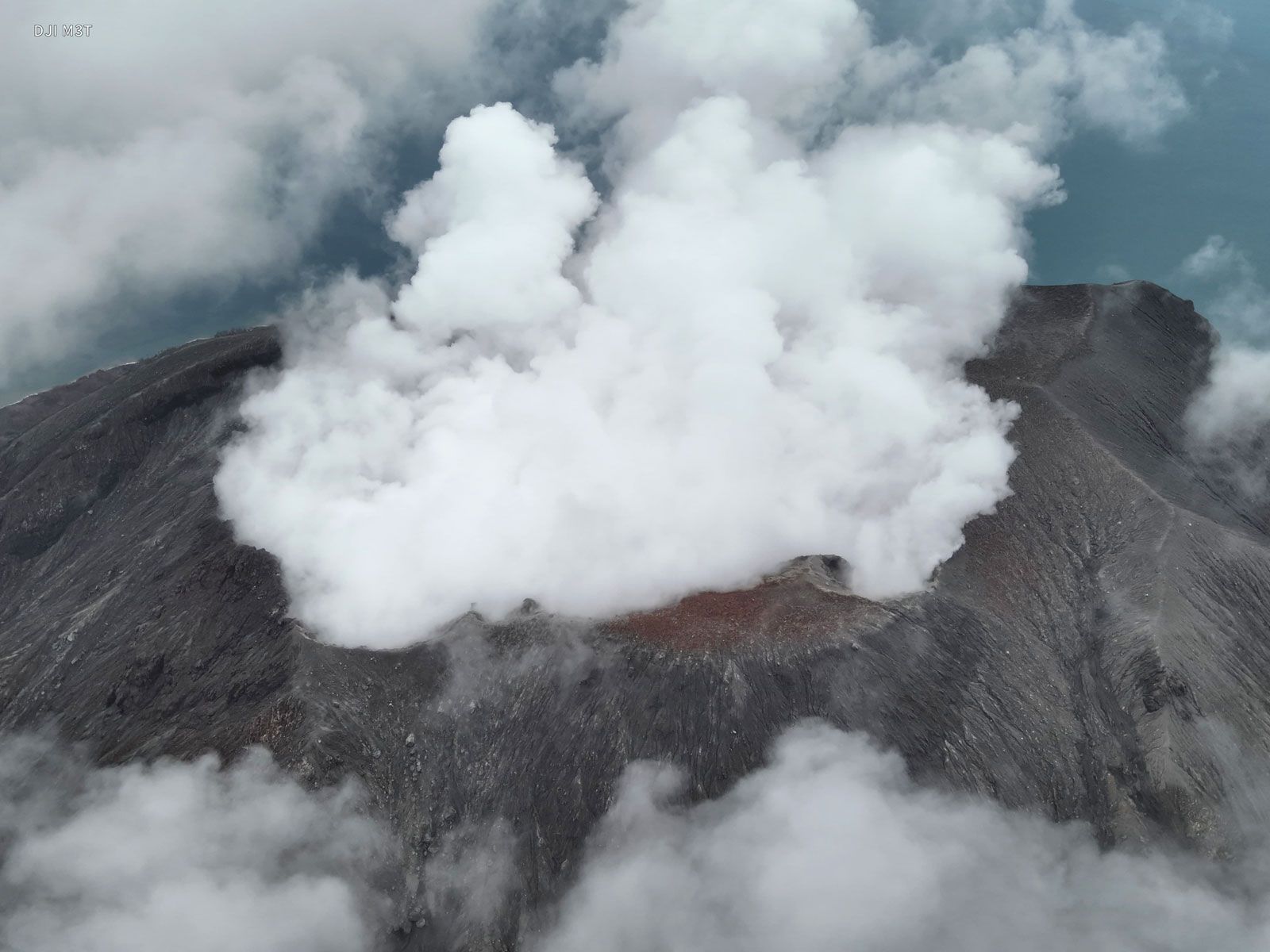
Mount Ruang is an active stratovolcano situated on Ruang Island in the Sangihe arc of Indonesia, north of Sulawesi. Rising 2,378 feet (725 meters) above sea level, the volcano features a caldera containing a lava dome. Its location near a subduction zone within the Ring of Fire makes it prone to explosive eruptions.1
It is important to distinguish this volcano from Mount Raung, which is located on the island of Java.1
Mount Ruang has a history of significant activity, including an 1871 eruption that triggered a devastating tsunami. In the 21st century, it produced major explosive events in 2002 and 2024. The 2024 eruption sequence, the most powerful since 1871, generated a massive ash plume and necessitated the evacuation of approximately 16,000 people, leading officials to initiate the permanent relocation of nearly 10,000 residents to North Sulawesi.1
What is the Ring of Fire?
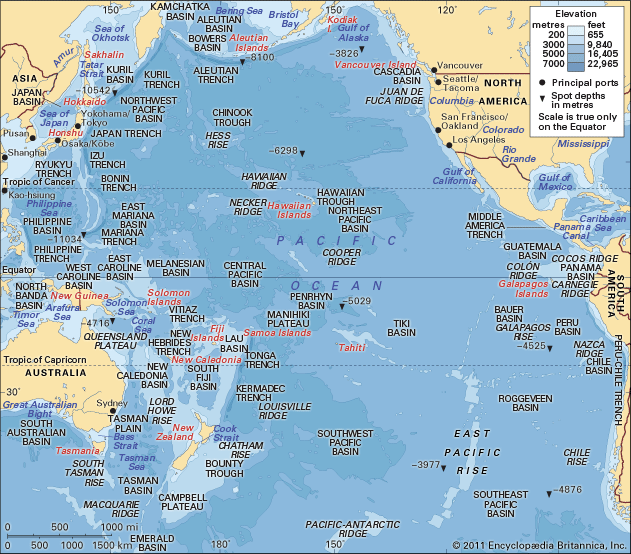
The Ring of Fire is the world’s largest seismically active belt, forming a 40,000-km (24,900-mile) horseshoe-shaped path that fringes the Pacific basin. It is characterized by a high concentration of earthquakes, volcanoes, and tectonic plate boundaries.2
Geological Context
The belt coincides with various island arcs and arc-shaped geomorphic features, including the Andes Mountains, the Philippines, Japan, and the western coast of North America. This region is geologically dynamic because oceanic plates frequently subduct under continental plates. The resulting compression generates intense seismic activity, while the melting of subducting plates produces magma that fuels volcanic eruptions.23
Approximately 75 percent of the world’s volcanoes and the vast majority of its strongest earthquakes occur within this belt. Notable historical events include the eruptions of Mount Tambora and Mount Pinatubo, as well as massive seismic events like the Chile earthquake of 1960.2
How do volcanic eruptions trigger tsunamis?
Volcanic eruptions can trigger tsunamis through several distinct geological processes that displace large volumes of water.45
- Caldera Collapse: When a volcano erupts and empties its magma chamber, the summit may collapse inward. If this collapse occurs in a submarine or coastal environment, the sudden displacement of the seafloor and the surrounding water column can generate powerful waves.67
- Pyroclastic Flows: Massive pyroclastic flows—high-velocity avalanches of hot gas, ash, and rock—can trigger tsunamis when they rapidly enter the sea. The force and volume of the material entering the water displace it, creating outward-propagating wave trains.67
- Volcanic Avalanches: Large-scale landslides or avalanches of rock and ice from a volcano’s flank can also displace water if they occur along a coastline or on an island, acting similarly to a rock falling into a pool to initiate a tsunami.65
These events are particularly dangerous because they can occur with little warning, sending waves that shorten in wavelength and increase in height as they approach shallow coastal waters.45
What is a stratovolcano?
A stratovolcano, also frequently referred to as a composite volcano, is a steep, cone-shaped volcanic landform built up over thousands of years by repeated eruptions of lava, ash, and other volcanic materials.89
Key Characteristics
- Structure: These volcanoes are characterized by a conical shape that slopes gently at the base but becomes significantly steeper—up to 35°—near the summit. Because they are composed of overlapping, uneven layers (strata) of ash, mud, and solidified lava flows, geologists often use the term “composite volcano” to describe them.89
- Composition: They are typically formed from andesite and dacite rocks, which produce thick, highly viscous lava. This viscosity prevents the lava from flowing far, causing it to pile up around the vent and contribute to the volcano’s tall, peaked structure.89
- Eruptive Nature: Stratovolcanoes are often associated with subduction zones and are known for being dangerously explosive. Their eruptions often begin with intense ash explosions and can include the rapid movement of pyroclastic material.8910
With over 700 identified, they are the most common type of volcano on Earth and include many famous peaks such as Mount Fuji, Mount Pinatubo, and Mount St. Helens.911
Sources
- Mount Ruang — Encyclopædia Britannica
- Ring of Fire — Encyclopædia Britannica
- Ring of Fire: Top Questions — Encyclopædia Britannica
- How Do Scientists Predict Tsunamis After Earthquakes? — Encyclopædia Britannica
- volcano - Avalanches, tsunamis, and mudflows — Encyclopædia Britannica
- What Causes Tsunamis? — Encyclopædia Britannica
- volcano - Four of the worst eruptions in history — Encyclopædia Britannica
- volcano - Stratovolcanoes — Encyclopædia Britannica
- stratovolcano — Encyclopædia Britannica
- volcano - Major types — Encyclopædia Britannica
- igneous rock - Convergent plate boundaries — Encyclopædia Britannica
- volcano - Subduction volcanoes — Encyclopædia Britannica
- mountain - Volcanic structures along subduction zones — Encyclopædia Britannica
Published on · 3 min read