Mount Nyiragongo
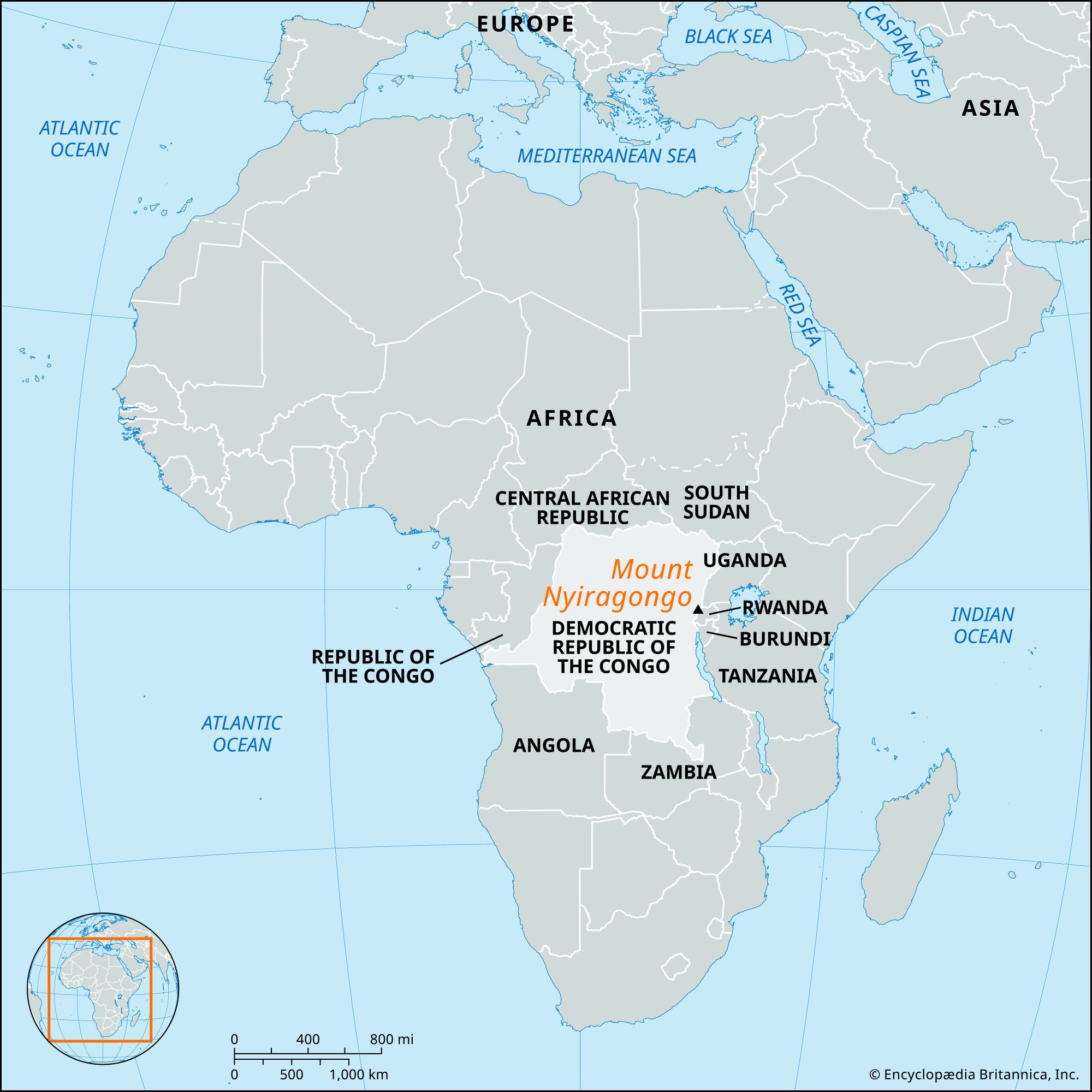
Mount Nyiragongo is an active volcano located in the Virunga Mountains of the Democratic Republic of the Congo, situated within Virunga National Park near…
What is Mount Nyiragongo?
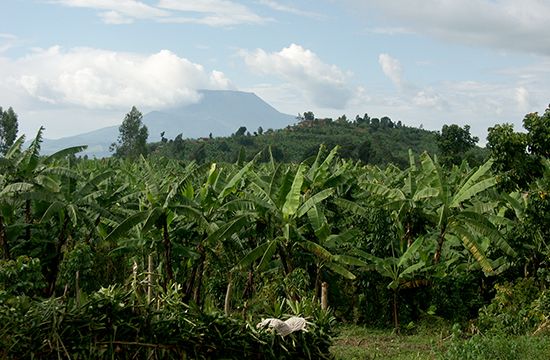
Mount Nyiragongo is an active volcano located in the Virunga Mountains of the Democratic Republic of the Congo, situated within Virunga National Park near the border with Rwanda. Rising to an elevation of 11,385 feet (3,470 metres), the mountain features a massive crater that contains a persistent liquid lava pool.12
The volcano is recognized for its history of devastating eruptions that pose significant threats to nearby populations, particularly the city of Goma, which lies just 12 miles to the south. Notable events include the 1977 eruption, which resulted in approximately 2,000 deaths, and the 2002 eruption, which destroyed much of Goma and displaced over 100,000 people. A more recent eruption in 2021 caused further casualties and the destruction of several villages.1
What are the different types of volcanoes?
While there are over 1,500 potentially active volcanoes worldwide, they are generally categorized into nine distinct types based on their form and eruptive characteristics.4
Major Volcano Types
- Stratovolcanoes (Composite Volcanoes): These are steep, symmetrical cones built by alternating layers of lava flows and pyroclastic material. They are the most common type, often erupting with ash explosions followed by thick, viscous lava.54
- Shield Volcanoes: Named for their resemblance to a warrior’s shield, these are large, dome-shaped mountains with gentle slopes. They are formed over long periods by numerous effusive eruptions of fluid, basaltic lava.46
- Pyroclastic Cones (Cinder Cones): These are relatively small, conical hills formed by the accumulation of loose pyroclastic fragments around a volcanic vent. They often feature a bowl-shaped crater at the summit.74
- Submarine Volcanoes: These volcanoes are located beneath the ocean surface, where they can build massive structures that may eventually emerge as islands.4
- Volcanic Fields: These consist of clusters of small volcanic vents or cones spread across a specific area rather than a single central mountain.4
- Calderas: These are large, basin-shaped depressions formed when a volcano collapses, often following a massive eruption.46
- Complex and Compound Volcanoes: These structures feature multiple vents or eruptive centers, resulting in a more irregular or multifaceted shape.4
- Lava Domes: Formed by the extrusion of highly viscous lava, these structures grow slowly as lava piles up around the vent.4
- Fissure Vents and Crater Rows: These occur when lava erupts from elongated cracks or linear series of vents in the Earth’s crust.4
Would you like to discover more about the differences between active, dormant, and extinct volcanoes?8
How do lava lakes form inside a crater?
Lava lakes form within volcanic craters or depressions when molten rock, or magma, accumulates and remains in a liquid state. These features are typically associated with active volcanism, where the continuous supply of lava from beneath the surface prevents the material from solidifying completely.
While the provided search results detail how various lake basins are formed through tectonic and volcanic processes—such as the collapse of magma chambers to form calderas—they do not explicitly describe the specific fluid dynamics or thermal conditions required to maintain a persistent liquid lava lake, such as the one found at Mount Nyiragongo. Generally, these lakes are sustained by a delicate balance between the heat provided by rising magma and the rate of cooling at the surface.
What makes the Virunga Mountains unique?
The Virunga Mountains are a unique volcanic range in east-central Africa, spanning the borders of the Democratic Republic of the Congo, Rwanda, and Uganda. Their distinct characteristics include:
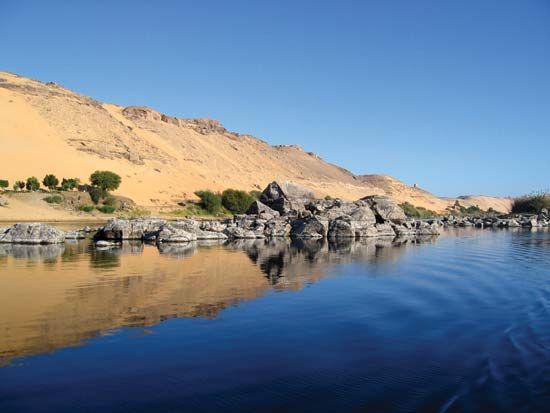
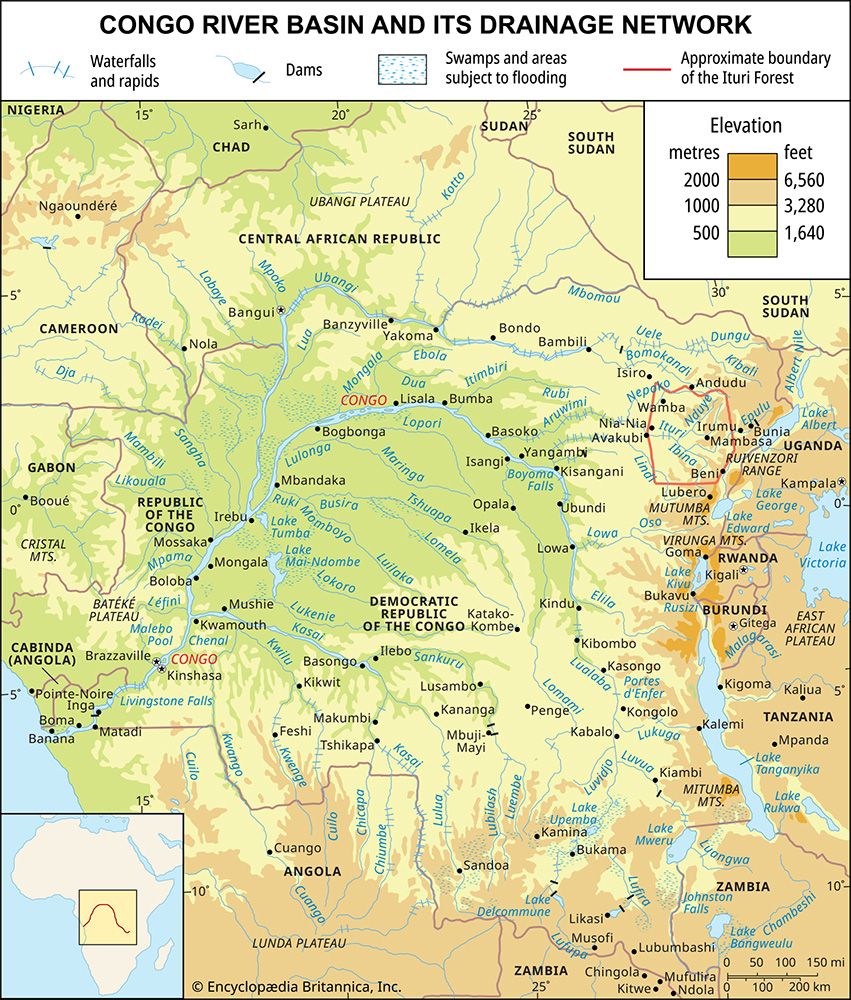
- Continental Divide: They are the only East African mountains that form a divide of continental stature, separating the basins of the Nile and Congo rivers.12
- Volcanic Diversity: The range features eight major peaks with varying activity levels. While the central and eastern volcanoes are extinct, the western end includes Nyiragongo and Nyamulagira, which remain highly active. Notably, Nyiragongo contains a persistent liquid lava pool within its crater.13
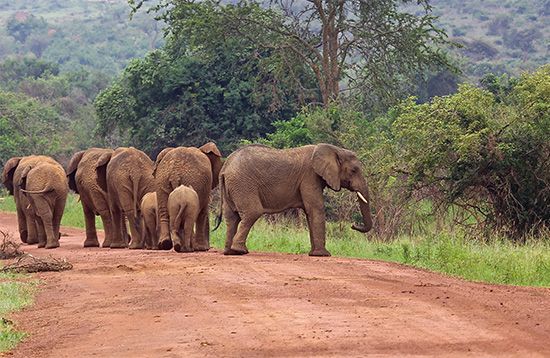
- Ecological Significance: The mountains are protected within national parks, such as Virunga National Park, which preserves diverse habitats ranging from alpine vegetation and cloud forests to lava plains. These areas are vital for wildlife, including the rare mountain gorilla and the golden monkey.133
Sources
- Mount Nyamulagira — Encyclopædia Britannica
- Mount Nyiragongo — Encyclopædia Britannica
- Goma: Top Questions — Encyclopædia Britannica
- cinder cone — Encyclopædia Britannica
- volcano - Stratovolcanoes — Encyclopædia Britannica
- volcano - Major types — Encyclopædia Britannica
- volcano - Shield volcanoes — Encyclopædia Britannica
- Are Volcanoes Dangerous When They’re Not Erupting? — Encyclopædia Britannica
- lava cave — Encyclopædia Britannica
- East African mountains - Geology — Encyclopædia Britannica
- lake - Basins formed by tectonism , volcanism, and landslides — Encyclopædia Britannica
- Virunga Mountains — Encyclopædia Britannica
- Virunga National Park — Encyclopædia Britannica
- East African mountains - Drainage of the East African mountains — Encyclopædia Britannica
Published on · 3 min read