Mount Nyamulagira
Mount Nyamulagira is a volcano located within the Virunga Mountains in the Democratic Republic of the Congo. Situated in the Virunga National Park, it…
What is Mount Nyamulagira?
Mount Nyamulagira is a volcano located within the Virunga Mountains in the Democratic Republic of the Congo. Situated in the Virunga National Park, it reaches an elevation of approximately 10,023 feet (3,055 metres).1
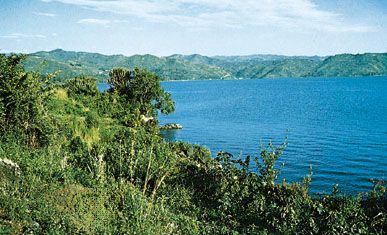
Recognized as the most active volcano in Africa, Nyamulagira has recorded over 40 eruptions since 1882. While these events frequently involve the emission of lava and ash, fatalities are uncommon. Notable historical activity includes a 1938 eruption that sent lava as far as Lake Kivu, and a 1998 event that impacted local forests and refugee camps. Geological study of the site has occasionally been complicated by regional conflict.1
What are the other volcanoes in the Virunga Mountains?
The Virunga Mountains consist of eight major volcanic peaks spanning the borders of the Democratic Republic of the Congo, Rwanda, and Uganda. In addition to Nyamulagira, the range includes the following volcanoes:2
- Karisimbi: The highest peak in the range, reaching 14,787 feet (4,507 metres).2
- Nyiragongo: Located at the western end of the chain, it is known for its large crater containing a liquid lava pool.2
- Mikeno: One of the older, extinct volcanoes in the central and eastern section.2
- Sabinio: An extinct volcano characterized by a jagged relief due to erosion.2
- Muhavura: An extinct volcano whose summit crater contains a small lake.2
- Visoke: An extinct volcano that appeared during the later part of the Pleistocene Epoch.2
- Mgahinga: An extinct volcano that also emerged during the later Pleistocene.2
These mountains are protected within various national parks, including Virunga National Park, which serve as vital habitats for wildlife such as the mountain gorilla. such as the mountain gorilla.2
How do shield volcanoes like Nyamulagira differ from other types?
Shield volcanoes, such as Nyamulagira, are distinct from other volcanic types primarily due to their unique shape and eruptive style.
Characteristics of Shield Volcanoes
Shield volcanoes are large, dome-shaped mountains named for their resemblance to a warrior’s shield lying face-up. They are typically composed of basalt, a dark volcanic rock formed from fluid lava. Key features include:34
- Gentle Slopes: Their slopes are very gradual, rarely exceeding 6°.3
- Effusive Eruptions: They are generally characterized by effusive eruptions, where fluid lava flows steadily from summits or rift zones where fluid lava flows steadily from summits or rift zones.34
- Formation: Larger shields are built over approximately 1 million years through hundreds of thousands of these lava flows.3
Comparison to Other Types
While shield volcanoes are built by fluid, basaltic lava, other types of volcanoes often exhibit different structures and behaviors:
- Stratovolcanoes: Unlike the gentle slopes of shield volcanoes, stratovolcanoes (such as Mount Fuji) typically form steep, symmetrical cones. They are often associated with more explosive activity than the typical effusive eruptions of shield volcanoes.5
- Variations in the East African Rift: While shield volcanoes are usually basaltic, some in the East African Rift also eject silica-rich lavas like trachyte or rhyolite. This more viscous magma can trap gas, leading to explosive eruptions, as seen in the 2025 eruption of Hayli Gubbi.4
What is the role of Virunga National Park in protecting wildlife?
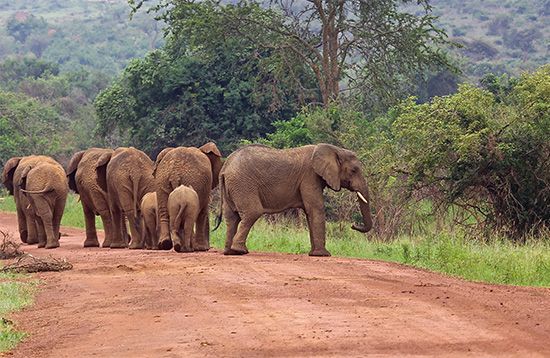
Virunga National Park serves as a critical sanctuary for a vast diversity of wildlife, including elephants, lions, hippopotamuses, okapis, and the rare mountain gorilla. By encompassing a wide range of habitats—from tropical rainforests and bamboo forests to savannas, marshes, and alpine vegetation—the park provides the necessary environmental conditions for these species to survive.728
However, the park faces significant challenges in its conservation mission. Since the late 20th century, the growth of permanent human settlements, the influx of refugees, and increased poaching have threatened the park’s biodiversity and disrupted natural animal migration patterns. Consequently, the site was designated as a World Heritage site in 1979 and later placed on the List of World Heritage in Danger in 1994. Protecting these ecosystems remains an essential ethical imperative to ensure the survival of endangered species and the preservation of the region’s unique natural heritage.72
Sources
- Mount Nyamulagira — Encyclopædia Britannica
- Virunga Mountains — Encyclopædia Britannica
- volcano - Shield volcanoes — Encyclopædia Britannica
- volcano - Major types — Encyclopædia Britannica
- Hayli Gubbi — Encyclopædia Britannica
- East African mountains - Geology — Encyclopædia Britannica
- Virunga National Park — Encyclopædia Britannica
- Goma: Top Questions — Encyclopædia Britannica
Published on · 3 min read