Mount Pangaion
Mount Pangaion, located in northeastern Greece, is characterized by a rich environment featuring extensive forests and numerous streams. While specific…
How does Mount Pangaion’s ecosystem and biodiversity contribute to the local environment?
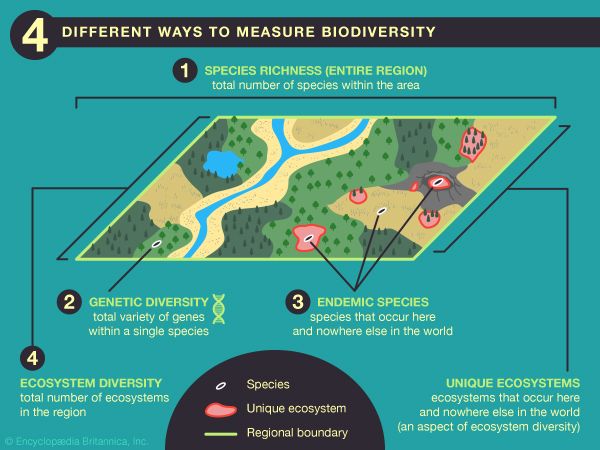
Mount Pangaion, located in northeastern Greece, is characterized by a rich environment featuring extensive forests and numerous streams. While specific biodiversity data for this mountain is limited, its ecosystem plays a vital role in supporting the surrounding fertile alluvial plain of the Struma River. This lowland area relies on the mountain’s environmental contributions to sustain intensive cultivation of crops such as tobacco, cotton, rice, and olives.1
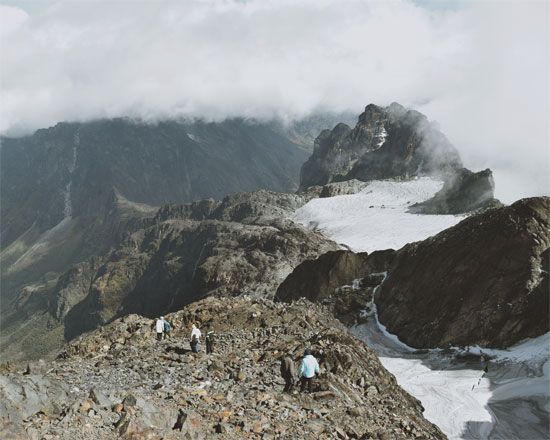
Generally, mountain ecosystems are recognized as centers of high biodiversity due to their diverse topographic and climatic conditions. They often serve as refuges for various species and can harbor distinct biota adapted to specific elevations. Furthermore, mountainous regions often remain less affected by human activity than surrounding lowlands, allowing them to act as critical habitats for plants and animals that may have been displaced elsewhere. The rapid evolution of species in isolated mountain environments significantly contributes to global biodiversity and overall biological importance.23
What role did Mount Pangaion play in ancient Thracian history and culture?
Mount Pangaion held significant importance in ancient Thracian history and culture, primarily due to its abundant natural resources and religious significance.
Economic Significance
The mountain was renowned for its rich deposits of gold and silver, which the ancient Thracians actively exploited. These precious metals served as a vital economic engine, allowing the Thracians to engage in trade with neighboring populations, such as the Amphipolitans and Neapolitans. However, this immense wealth also made the region a site of constant conflict, as various powers sought to control the mines. This struggle eventually culminated in the 4th century BCE when Philip II of Macedonia seized control of the area, notably capturing the site of Crenides—which he renamed Philippi—to secure the mountain’s mineral resources for his own expansion.14
Cultural and Religious Role
Beyond its economic value, Mount Pangaion served as a spiritual center. In ancient times, the peak was home to a cult of Dionysus, the god of wine and fertility, highlighting the mountain’s role as a sacred landscape within Thracian religious life.1
How has Mount Pangaion been historically connected to gold and silver mining?
Mount Pangaion has been historically significant for its rich mineral deposits, particularly gold and silver, which are located at the mountain’s lower elevations.1
In ancient times, the Thracians actively exploited these resources, using the metals as a foundation for trade with neighboring populations, including the Amphipolitans and Neapolitans. The mountain’s immense wealth made it a focal point of regional conflict, as various powers sought to control the mines. This strategic importance was solidified in the 4th century BCE when Philip II of Macedonia captured the region, specifically taking the site of Crenides—which he renamed Philippi—to secure the mountain’s gold and silver for his own expansion.15
The extraction of these precious metals was part of a broader tradition of ancient metallurgy, where techniques such as cupellation were employed to refine ores and separate silver and gold from other materials.4
Where is Mount Pangaion located in Greece, and what is its significance in Greek geography?
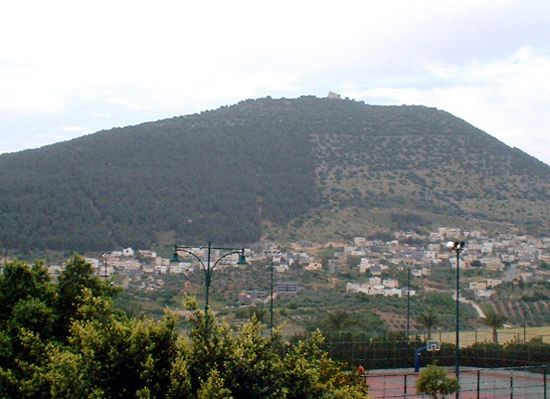
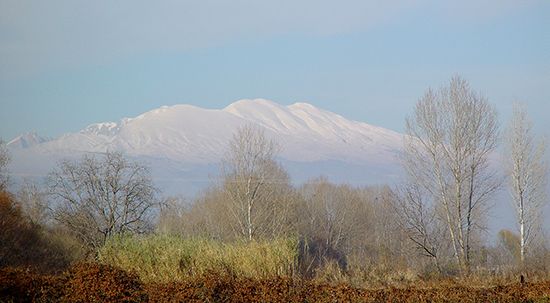
Mount Pangaion is located in the northeastern Kavála nomós (department) of Macedonia, Greece, situated at the mouth of the Struma (Strymónas) River.1
The mountain is a significant geographical feature, reaching an elevation of 6,417 feet (1,956 m). Its upper slopes are characterized by fractured marble, while its lower elevations contain valuable gold and silver deposits. The surrounding landscape is defined by the fertile alluvial plain of the Struma, which supports intensive cultivation of crops such as cotton, tobacco, rice, and olives. Beyond its natural resources, the mountain is rich in forests and streams, and it serves as a site of historical and religious interest, including the 6th-century church of Zoodochos Pighi and the monastery of Eikosiphoiníssis.1
Sources
- Mount Pangaion — Encyclopædia Britannica
- Mountain ecosystem - Fauna — Encyclopædia Britannica
- Mountain ecosystem - Origin — Encyclopædia Britannica
- Philip II - Macedonian expansion — Encyclopædia Britannica
- metallurgy - Precious metals — Encyclopædia Britannica
- Greece - Eastern Greece: Thessalía and Attikí — Encyclopædia Britannica
Published on · 3 min read