Mount Semeru
Mount Semeru is an active stratovolcano located in eastern Java, Indonesia. Standing at 12,060 feet (3,676 meters) above sea level, it is the highest…
What is Mount Semeru?
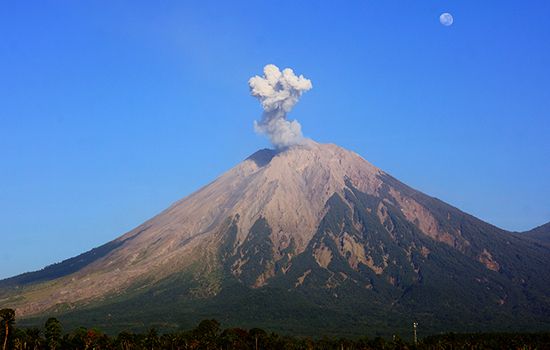
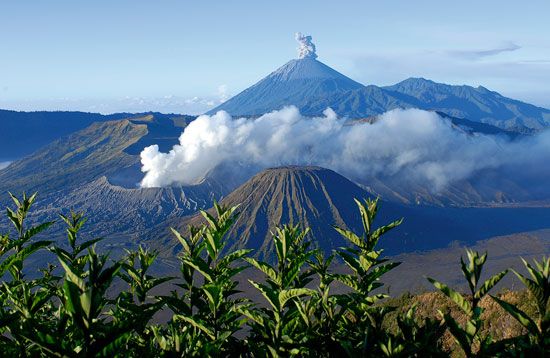
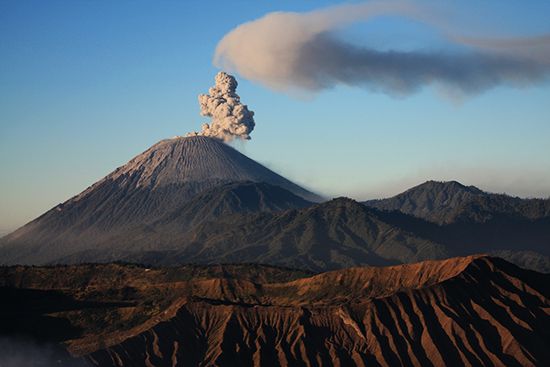
Mount Semeru is an active stratovolcano located in eastern Java, Indonesia. Standing at 12,060 feet (3,676 meters) above sea level, it is the highest mountain and volcano on the island.1
As one of the world’s most active volcanoes, Semeru has erupted nearly continuously since 1967, sometimes at intervals of 20–30 minutes. It is part of a massif that includes the Tengger caldera. Throughout its history, the volcano has caused significant loss of life through lahars and pyroclastic flows. While activity in the early 21st century resulted in fewer casualties, a major eruption in December 2021 caused dozens of deaths and widespread property damage.1
What is a stratovolcano?
A stratovolcano, also frequently referred to as a composite volcano, is a steep, cone-shaped volcanic landform built over thousands of years by repeated eruptions of lava, ash, and pyroclastic material.23
Key Characteristics
- Structure: These volcanoes typically have a gentle slope at the base that becomes significantly steeper—up to 35°—near the summit. They are composed of overlapping lobes of ash, mud, and solidified lava flows rather than uniform layers.23
- Composition: While they contain a variety of volcanic rocks ranging from basalt to rhyolite, their composition is predominantly andesite. This results in cooler, more viscous lava compared to the faster-moving flows of shield volcanoes.243
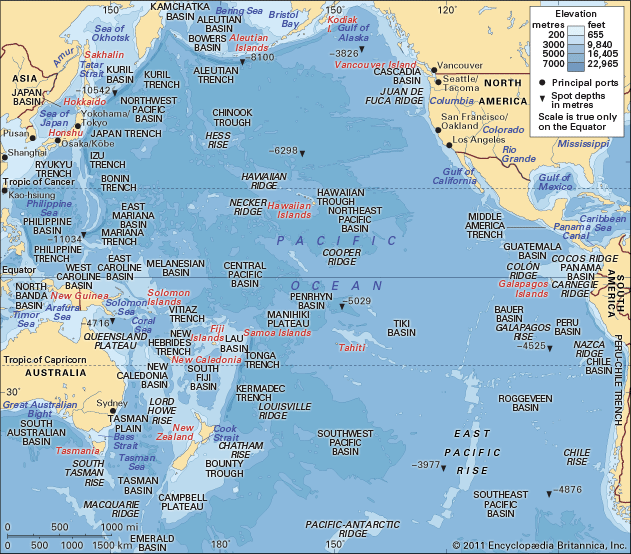
- Location: Stratovolcanoes are typically found above subduction zones and are common along the Ring of Fire that frames the Pacific Ocean.3
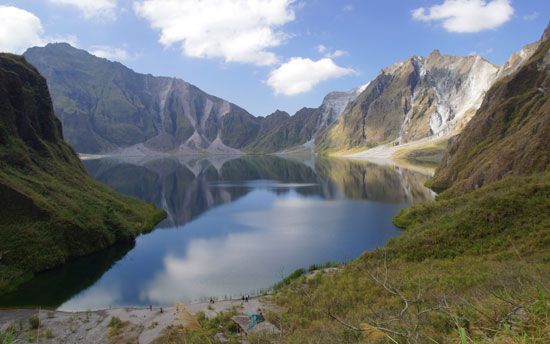
With over 700 known examples, they are the most common type of volcano. Because of their complex structure and steep flanks, they are particularly prone to dangerous lahars and landslides, and they have been responsible for some of history’s most destructive eruptions, including those of Mount Vesuvius and Mount Pinatubo.3
How do lahars and pyroclastic flows differ?
While both lahars and pyroclastic flows are hazardous phenomena associated with volcanic activity, they differ significantly in their composition, temperature, and origin.
Pyroclastic Flows
A pyroclastic flow is a high-speed, fluidized mixture of hot rock fragments, gases, and entrapped air that hugs the ground as it moves.6
- Origin: They are generated during explosive volcanic eruptions when expanding gases shred magma into small particles.6
- Characteristics: These flows are extremely hot, with temperatures reaching 600 to 700 °C (1,100 to 1,300 °F), and can travel at speeds exceeding 160 km (100 miles) per hour.6
- Movement: Their mobility is maintained by the turbulence of internal gases, which creates a nearly frictionless, gas-rich environment that allows them to travel rapidly downslope and even over obstacles.6
Lahars
A lahar is a mudflow composed of volcanic material, ranging in size from fine ash to large boulders.7
- Origin: Unlike pyroclastic flows, lahars are primarily water-based. They form when volcanic debris mixes with river water, or when eruptions melt snow and ice, or when heavy rain falls on loose volcanic ash.74
- Characteristics: While some can be hot due to the heating of crater lakes by magma, they are fundamentally distinct from the gas-charged, incandescent nature of pyroclastic flows.7
- Movement: Lahars move downslope at high speeds and can extend for tens of miles, often leaving behind deposits with a hummocky or hilly surface.7
What is the significance of the Tengger caldera?
The Tengger caldera is a significant volcanic complex located on the island of Java, Indonesia. It is part of a larger massif that also includes Mount Semeru, the highest mountain and volcano on the island.
The caldera is notable for being a complex volcanic structure that comprises Mount Bromo and several other volcanoes within its perimeter. While Mount Semeru is recognized for its near-continuous eruptive activity, the Tengger complex serves as a critical geological feature in the region’s volcanic landscape, illustrating the intense volcanism characteristic of the Indonesian archipelago.1
Sources
- Mount Semeru — Encyclopædia Britannica
- volcano - Stratovolcanoes — Encyclopædia Britannica
- volcano - Major types — Encyclopædia Britannica
- stratovolcano — Encyclopædia Britannica
- igneous rock - Convergent plate boundaries — Encyclopædia Britannica
- lahar — Encyclopædia Britannica
- pyroclastic flow — Encyclopædia Britannica
- lava — Encyclopædia Britannica
Published on · 3 min read