Mountain Beaver
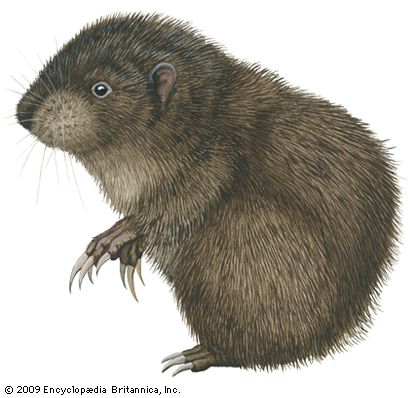
The mountain beaver (Aplodontia rufa) is a solitary, burrowing rodent native to the Pacific Northwest. It is important to note that despite its name, it is…
What do mountain beavers eat and how do they impact their ecosystem?
The mountain beaver (Aplodontia rufa) is a solitary, burrowing rodent native to the Pacific Northwest. It is important to note that despite its name, it is not closely related to the true beaver (genus Castor), which is famous for its “ecosystem engineer” role in building dams and altering landscapes.12
Diet
Mountain beavers are herbivores with a varied diet that shifts seasonally:
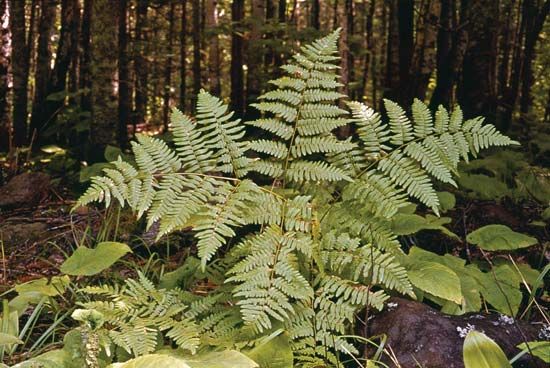
- Summer: They consume most species of ferns, as well as the leaves of shrubs and deciduous trees.1
- Winter: They shift their diet to the bark and seedlings of both conifers and deciduous trees.1
- Unique Consumption: They are known to eat plants that are toxic or unpalatable to many other animals, such as bracken fern, devil’s club, stinging nettle, and rhododendron.1
Ecosystem Impact
Unlike true beavers, mountain beavers do not build dams or significantly alter water flow. Instead, they impact their ecosystem primarily through their extensive burrowing activity. They construct complex tunnel systems that radiate from nest sites and food-storage chambers, which can influence soil structure and vegetation in the wet forests and meadows where they reside.1
Are mountain beavers considered endangered or threatened, and what conservation efforts exist for them?
The provided search results do not contain information regarding the current conservation status of the mountain beaver (Aplodontia rufa), nor do they detail specific conservation efforts for the species. While the text notes that the mountain beaver is the sole remaining species of its family and occupies four disjunct regions in the Pacific Northwest, it does not classify the animal as endangered or threatened.14
It is important to clarify that the information regarding the “brink of extinction” and subsequent protection mentioned in the search results refers specifically to the true beaver (genus Castor), which was heavily impacted by the historical fur trade, rather than the mountain beaver.5
What is a mountain beaver and how is it related to other rodents?
The mountain beaver (Aplodontia rufa), also known as the sewellel, is a muskrat-sized, burrowing rodent native to the Pacific Northwest of North America. Despite its name, it is not closely related to the true beaver (family Castoridae) and lacks the characteristic large tail and aquatic adaptations of that species.16
Evolutionary Relationships
The mountain beaver is the sole living species of the family Aplodontidae, which belongs to the suborder Sciuromorpha. It is considered a relict species, representing the last survivor of a diverse group of primitive rodents that dates back to the Eocene Epoch.14
Regarding its classification:
- Closest Relatives: It is more closely related to squirrels (family Sciuridae) than to any other living rodent family.1
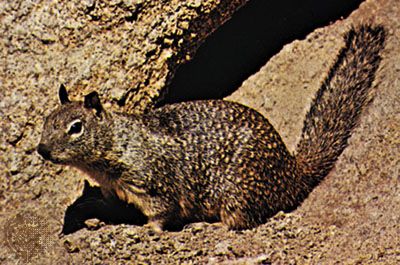
- Distinctions: While it may superficially resemble ground squirrels, this resemblance is distant. It remains a unique, primitive type of rodent that has persisted while many other ancient lineages in its group have gone extinct.41
Where are mountain beavers typically found in their natural habitat?
Mountain beavers are found exclusively in the Pacific Northwest of North America, where their range is divided into four distinct, disjunct regions:
- A primary region extending from southern British Columbia to the northern tip of California.
- A region located at Mount Shasta and along the western slopes of the Sierra Nevada.
- Two small, isolated populations situated north of San Francisco Bay along the California coast.
Within these areas, they inhabit wet forests and meadows at all elevations below the treeline, provided the soil is deep enough to support their extensive burrow systems. They show a particular preference for areas near seeps and streams, often residing in the understories of brambly thickets. While they are active throughout the year, they rarely venture far from their tunnel entrances and rely on these underground networks for shelter and movement, even during the winter months when they travel through tunnels made in the snow.1
Sources
- mountain beaver — Encyclopædia Britannica
- beaver — Encyclopædia Britannica
- Why do beavers build dams? — Encyclopædia Britannica
- mountain beaver — Merriam-Webster
- Pacific mountain system - Animal life — Encyclopædia Britannica
- United States - Animal life — Encyclopædia Britannica
- Aplodontia — Merriam-Webster
Published on · 3 min read