Mount Toubkal
Mount Toubkal is the highest peak in Morocco and the entire Atlas Mountains range, reaching an elevation of 13,665 feet (4,165 meters). Located in the High…
What is Mount Toubkal?
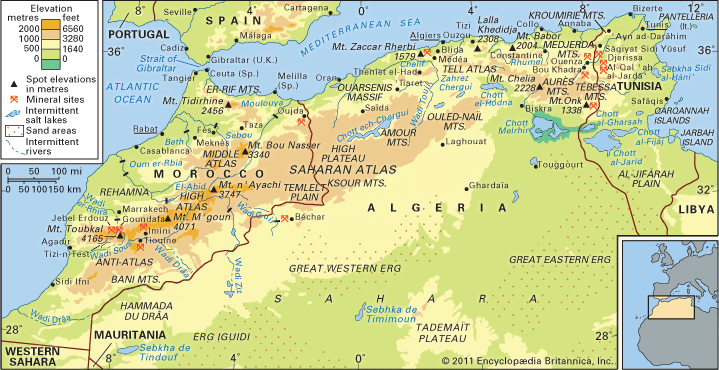
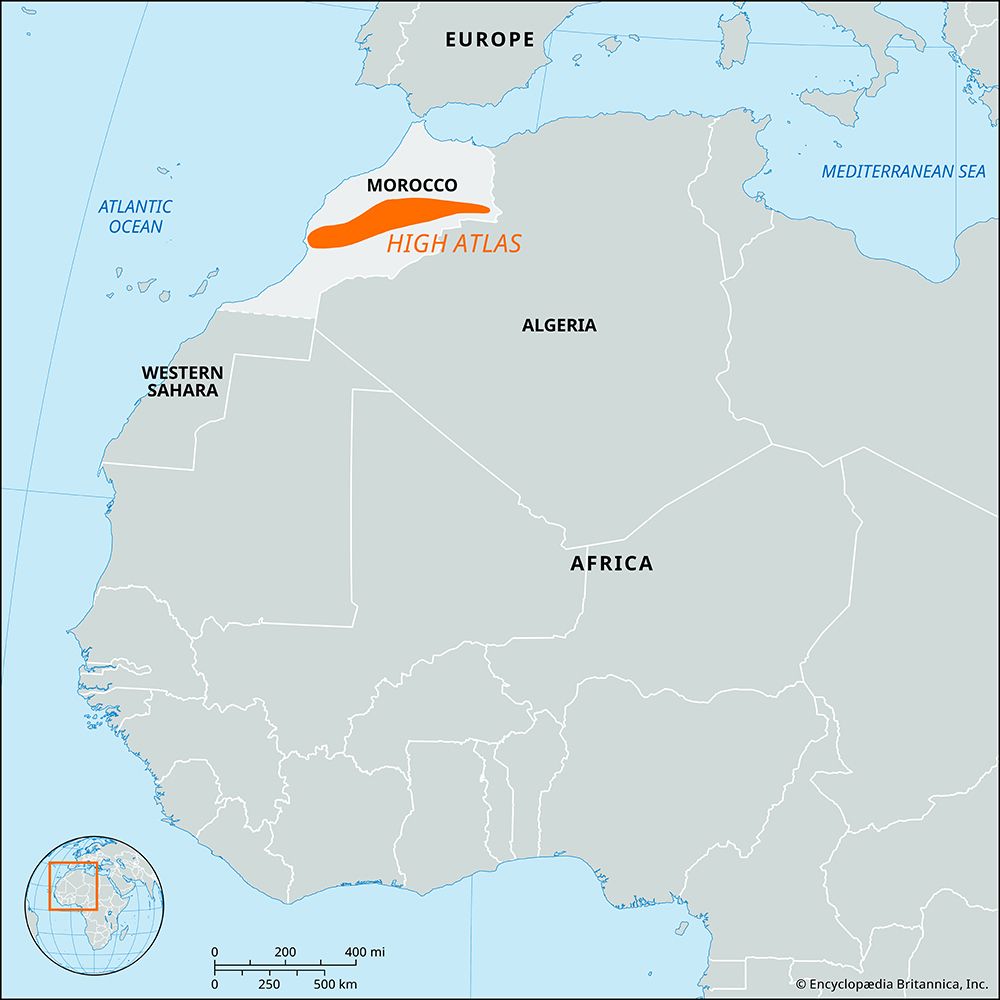
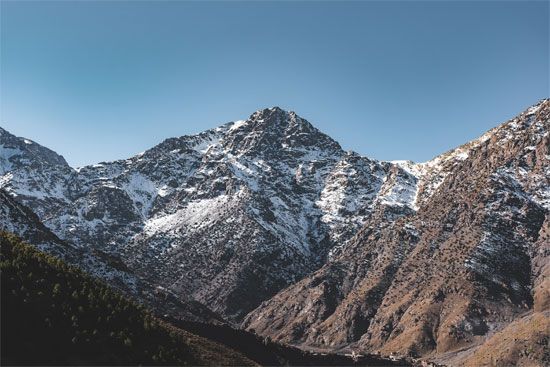
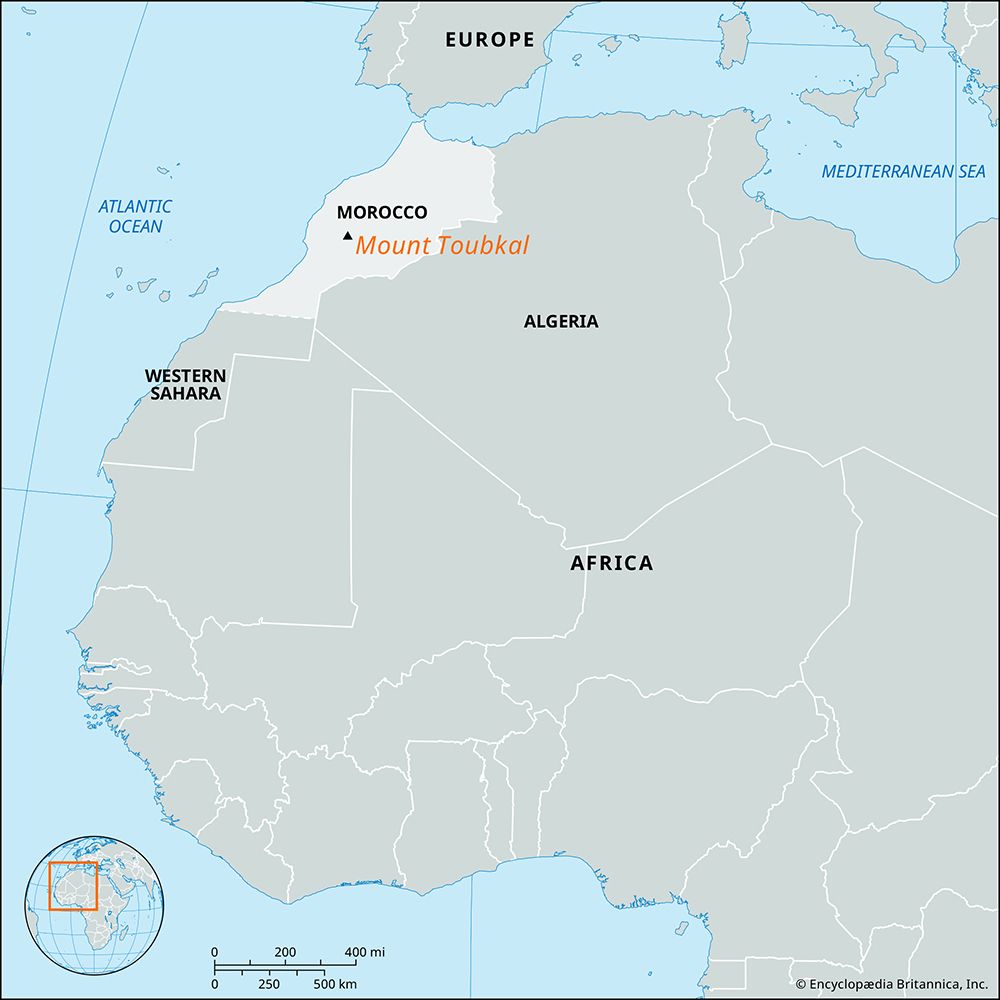
Mount Toubkal is the highest peak in Morocco and the entire Atlas Mountains range, reaching an elevation of 13,665 feet (4,165 meters). Located in the High Atlas region, approximately 40 miles (60 km) south of Marrakech, the mountain is a prominent geographical feature known for retaining snow until the height of summer.123
The mountain’s environment varies significantly with altitude. Its higher slopes feature juniper forests that transition into alpine meadows, while the lower slopes have been impacted by extensive overgrazing. The peak serves as the central attraction of Toubkal National Park, which is a popular destination for winter skiing and summer hiking. The surrounding High Atlas range is also home to Berber communities who cultivate irrigated fields in the well-watered valleys of the lower slopes.12
What are the main characteristics of the Atlas Mountains?
The Atlas Mountains are a series of mountain ranges spanning over 1,200 miles (2,000 km) across Morocco, Algeria, and Tunisia4. They serve as a vital geographical barrier separating the Mediterranean basin from the Sahara.4
Physical and Geological Characteristics
- Structure: The system consists of two primary structural regions: the Tell Atlas in the north, a young, folded mountain range still undergoing formation, and the Saharan Atlas in the south, which is linked to the ancient base rock of the African continent.2
- Elevation: The highest point is Mount Toubkal, reaching 13,665 feet (4,165 meters).56
- Climate: The region experiences a clash between humid, cold polar air from the north and hot, dry tropical air from the south. Rainfall is significantly higher in the north and east than in the south and west.7
Ecology and Resources
- Vegetation: Due to soil erosion and agricultural clearing, forest cover is limited. Higher altitudes feature cedar stands, while drier areas contain green oak and juniper.58
- Economy: The mountains are rich in minerals, including phosphate, lead, zinc, and iron ore. Reservoir dams are utilized for irrigation and hydroelectric power generation.9
Who are the Amazigh people living in the High Atlas?
The Amazigh (or Berber) people of the High Atlas are primarily known as the Ishelhiyen (or Shluh). They are the indigenous inhabitants of North Africa who have historically used the rugged mountain terrain as a refuge from successive invasions, allowing them to preserve their distinct languages, traditions, and social structures.1011
Way of Life and Economy
- Settlement: The Ishelhiyen live in fortified villages often perched on mountain crests or hillsides for defense. These villages are typically composed of stone or adobe dwellings clustered around a central courtyard.103
- Agriculture: Living in deep river valleys, they practice subsistence agriculture on terraced fields carved into the slopes. They utilize irrigation systems to divert water from wadis, allowing for the cultivation of cereals, vegetables, and fruit trees such as walnuts, almonds, and olives.10312
- Pastoralism: Many families supplement their farming with the raising of sheep and goats. Some groups practice transhumance, moving their herds between low-lying winter pastures and high-altitude summer grazing lands.103
Social Structure
- Governance: Communities are traditionally governed by a council of elders known as the jamāʿah, which manages local affairs and disputes. They follow a code of customary law called kanun.10
- Identity: While they have adopted Islam, they maintain a strong sense of group solidarity and identity. In recent decades, there has been a significant movement to recognize their culture and language, Tamazight, which is now an official language in Morocco.101311
How does the climate change at different altitudes in Morocco?
In Morocco, elevation is a primary driver of climate variation, significantly altering temperature and precipitation patterns across the landscape.152
Temperature Variations
As altitude increases, temperatures drop rapidly. While coastal lowlands enjoy a moderate Mediterranean climate with mild winters and warm summers, interior and high-altitude regions experience much harsher conditions. In the mountains, winters are severe, and temperatures frequently dip below the freezing point.215
Precipitation and Snowfall
Elevation significantly increases precipitation levels compared to the surrounding lowlands. While coastal areas may face drought, the mountains capture moisture, with some ranges receiving over 80 inches (2,030 mm) of annual precipitation.15
- Snowpack: Snow is common at elevations of approximately 6,500 feet (2,000 meters).15
- Persistence: In the High Atlas, snowpack can linger in the highest elevations until late spring or even the height of summer.152
Rain Shadow Effect
The mountains act as a critical barrier, creating a rain shadow on their eastern flanks. As air masses rise over the peaks and lose their moisture, the areas in the lee of the prevailing winds experience an abrupt transition into desert conditions.15
Sources
- Mount Toubkal — Encyclopædia Britannica
- Atlas Mountains - Climate of the Atlas Mountains — Encyclopædia Britannica
- High Atlas — Encyclopædia Britannica
- Exploring 7 of Earth’s Great Mountain Ranges - Atlas Mountains — Encyclopædia Britannica
- Atlas Mountains - Physiography — Encyclopædia Britannica
- Atlas Mountains - Geology — Encyclopædia Britannica
- Atlas Mountains - Resources — Encyclopædia Britannica
- Atlas Mountains — Encyclopædia Britannica
- Atlas Mountains - Plant and animal life — Encyclopædia Britannica
- Morocco - Languages — Encyclopædia Britannica
- Berber — Encyclopædia Britannica
- Morocco - Cultural milieu — Encyclopædia Britannica
- Atlas Mountains - The people — Encyclopædia Britannica
- Morocco - Traditional regions — Encyclopædia Britannica
- Morocco - Climate of Morocco — Encyclopædia Britannica
Published on · 4 min read