Mule Deer
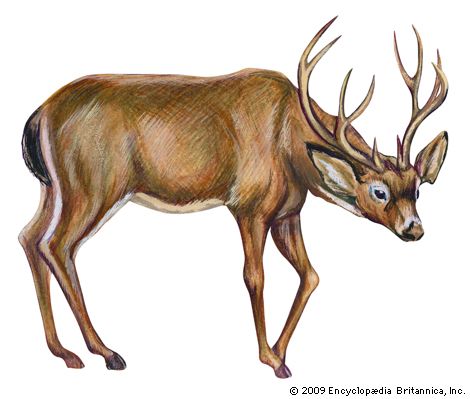
The mule deer (Odocoileus hemionus) is a medium-sized, gregarious deer native to western North America. It is named for its large, distinctive ears, which…
What are the key physical characteristics of mule deer?
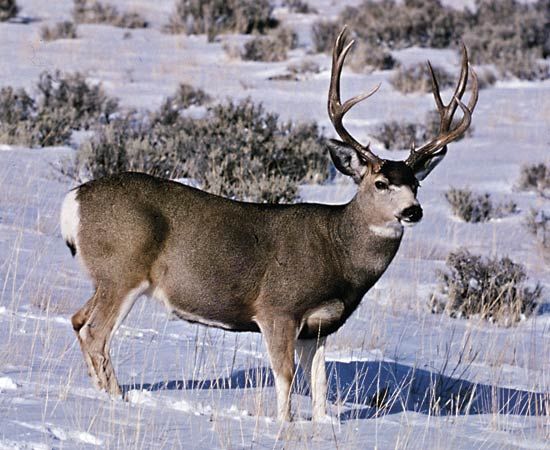
The mule deer (Odocoileus hemionus) is a medium-sized, gregarious deer native to western North America. It is named for its large, distinctive ears, which, along with its keen eyes, help the animal detect distant predators.1
Key physical characteristics include:
- Size and Build: They are larger and more heavily built than the white-tailed deer. Large bucks typically weigh up to 95 kg (210 pounds), while does are generally about one-third lighter.21
- Antlers and Markings: The species is characterized by large antlers and striking pelage (fur) markings.1
- Scent Glands: They possess specialized scent glands used for communication and environmental interaction.1
- Locomotion: A unique physical trait is their method of fleeing; they move with high, stiff-legged jumps, landing on all four feet simultaneously. This allows them to navigate rugged, steep terrain and clear large obstacles effectively.1
Where are mule deer primarily found, and what is their typical habitat?
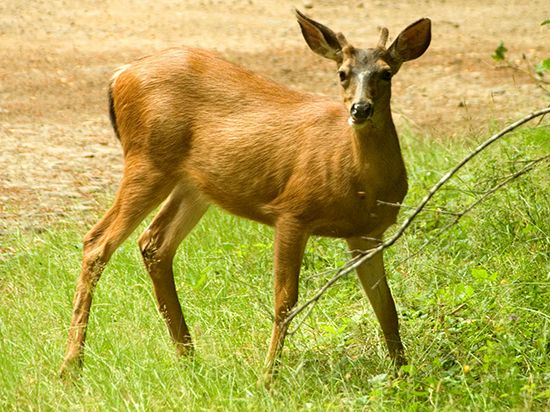
Mule deer (Odocoileus hemionus) are native to western North America, with a range extending from the Arctic Circle in the Yukon down to northern Mexico.1
Regarding their habitat, mule deer are highly adaptable and exhibit the following preferences:
- Landscape: While they frequent forests, they show a distinct preference for open, rugged landscapes. They are known to utilize steep slopes and uneven terrain as part of their antipredator strategy, as their unique jumping gait allows them to navigate such areas more effectively than many predators.13
- Elevation: In mountainous regions, such as in New Mexico, they are often found in forest and mountain areas at elevations above 7,000 feet (2,100 meters).4
- Human Environments: Mule deer are calm and inquisitive animals that readily integrate into human-altered environments. They are frequently drawn to parks, gardens, and lush lawns in residential areas where natural predators are less likely to venture.1
- Ecological Needs: As selective feeders, they thrive in disturbed ecosystems that provide high-quality, nutrient-rich forage, such as areas recovering from forest fires or regions affected by natural disturbances like flooding.13
How do mule deer differ from other deer species, such as white-tailed deer?
Mule deer (Odocoileus hemionus) and white-tailed deer (Odocoileus virginianus) are distinct species with notable differences in morphology and behavior. While mule deer are named for their large, mule-like ears, white-tailed deer are characterized by their namesake tail, which they often raise to display a white underside when alarmed.1
Key differences include:
- Locomotion: Mule deer utilize a unique, stiff-legged bounding gait, landing on all four feet simultaneously to navigate rugged, steep terrain. In contrast, white-tailed deer are known for their speed and agility in more varied environments.1
- Hybridization: The two species can interbreed, but this often results in negative consequences. Hybrids frequently exhibit impaired antipredator behavior, failing to jump or run effectively, which makes them highly vulnerable to predation.1
- Evolutionary Origin: Genetic evidence suggests that the mule deer is a relatively recent species that emerged from the hybridization of female white-tailed deer and male black-tailed deer.1
- Population Dynamics: While mule deer populations have faced declines due to habitat changes and predation, they are currently losing ground to the more widespread white-tailed deer in several regions.1
What is the significance of the mule deer’s name, and how does it relate to their appearance?
The mule deer (Odocoileus hemionus) derives its common name directly from its physical appearance, specifically its large, prominent ears that resemble those of a mule.2
Beyond this namesake feature, the mule deer is a medium-sized deer characterized by a robust build that is generally larger and more heavily muscled than the white-tailed deer. Their appearance is further distinguished by striking pelage markings, large antlers, and specialized scent glands. These physical traits, combined with their keen eyes and ears, serve as vital adaptations for detecting predators in the open, rugged landscapes they typically inhabit.12
Sources
- mule deer — Encyclopædia Britannica
- mule deer — Merriam-Webster
- New Mexico - Plant and animal life — Encyclopædia Britannica
- deer - Morphology and behaviour — Encyclopædia Britannica
Published on · 3 min read