Muntjac
A muntjac is any of approximately seven species of small- to medium-sized Asiatic deer belonging to the genus Muntiacus within the family Cervidae (order…
What is a muntjac and which family of animals does it belong to?
A muntjac is any of approximately seven species of small- to medium-sized Asiatic deer belonging to the genus Muntiacus within the family Cervidae (order Artiodactyla).1
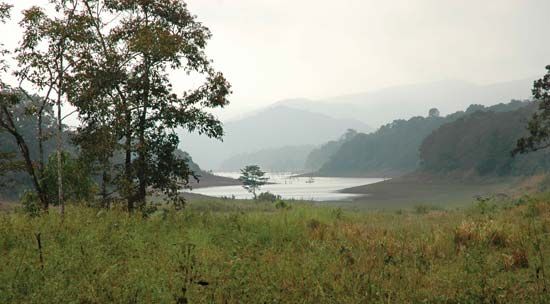
Often referred to as “barking deer” due to their dog-like alarm calls, these animals are typically solitary, nocturnal, and inhabit areas with dense vegetation. They are native to regions including India, Southeast Asia, and southern China, though some populations have been established in parts of England and France.12
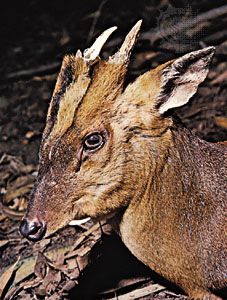
Physically, muntjacs are characterized by their short, one-branched antlers and, in males, elongated, tusklike upper canine teeth that can inflict severe injuries. While most species weigh between 15 and 35 kg, they range in size from the relatively large giant muntjac to the miniature muntjac, which is considered the smallest deer in the world.12
Where are muntjacs primarily found in the wild?
Muntjacs are primarily native to regions across India, Southeast Asia, and southern China. Within these areas, they typically inhabit environments characterized by thick vegetation.3
Specific populations and species are found in various locations throughout these regions, including:
- Myanmar and Thailand: Home to Fea’s muntjac (M. feae).3
- Vietnam: The giant muntjac (M. vuquangensis) was discovered in the Vu Quang Nature Reserve in the northern part of the country.3
- India: The miniature muntjac (M. putaoensis) has been identified in the rainforests of Arunachal Pradesh in the far northeast.3
While they are indigenous to Asia, some populations have also become established in parts of England and France.3
What are the unique physical characteristics of muntjacs?
Muntjacs, often considered the most primitive deer, possess several distinct physical characteristics that set them apart from other members of the family Cervidae.13
Key Physical Features
- Antlers and Pedicles: Males bear short, one-branched antlers that grow from long, bony bases known as pedicles. These pedicles extend as bony ridges down the face, which is why muntjacs are sometimes called “rib-faced deer”. Females lack antlers, possessing only small knobs in their place.14
- Tusklike Teeth: A defining feature of male muntjacs is their elongated, downward-pointing upper canine teeth. These tusks protrude from the mouth and are used as defensive weapons capable of inflicting severe injuries.41
- Size and Build: Most species stand 40–65 cm (15–25 inches) at the shoulder and weigh between 15 and 35 kg (33–77 pounds). Their coloration varies by species, ranging from reddish or grayish brown to dark brown.1
- Size Variation: The genus includes significant size diversity, ranging from the giant muntjac (M. vuquangensis), which can weigh up to 50 kg, to the miniature muntjac (M. putaoensis), the world’s smallest deer at approximately 11 kg.1
How do muntjacs differ from other deer species in terms of size and behavior?
Muntjacs differ from other deer species in several key ways, primarily due to their status as the most primitive members of the family Cervidae.1
Size and Physical Differences
While many deer species exhibit complex, multi-pronged antlers, muntjacs are characterized by short, simple, one-branched antlers supported by long, bony pedicles. Furthermore, male muntjacs possess unique, elongated, tusklike upper canine teeth that protrude from the mouth, which they use for defense. In terms of size, most muntjacs are small to medium-sized, typically weighing between 15 and 35 kg. This genus includes extreme variations, such as the giant muntjac, which can weigh up to 50 kg, and the miniature muntjac, which is recognized as the world’s smallest deer at approximately 11 kg.314
Behavioral Differences
Unlike many other deer that may be gregarious, muntjacs are solitary and nocturnal animals. They are frequently referred to as “barking deer” because of their distinct alarm call, which sounds similar to the bark of a dog. They typically inhabit areas of thick vegetation, relying on their secretive nature rather than the herd-based survival strategies seen in many other Old World deer species.341
Sources
- muntjac — Encyclopædia Britannica
- Muntiacus — Merriam-Webster
- muntjac — Merriam-Webster
- deer - Old World deer — Encyclopædia Britannica
Published on · 3 min read