Southern White Rhinoceros
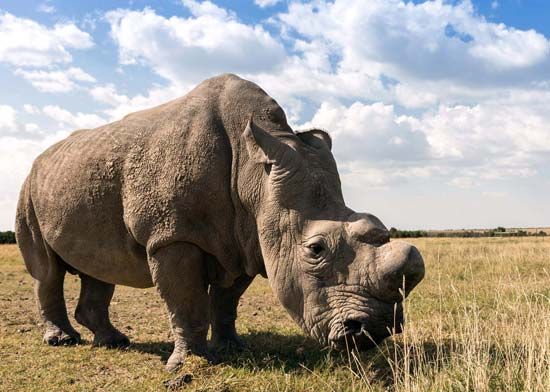
The southern white rhinoceros (Ceratotherium simum simum) is a subspecies of the white rhinoceros and represents the largest rhinoceros group by population.…
What is a southern white rhinoceros?
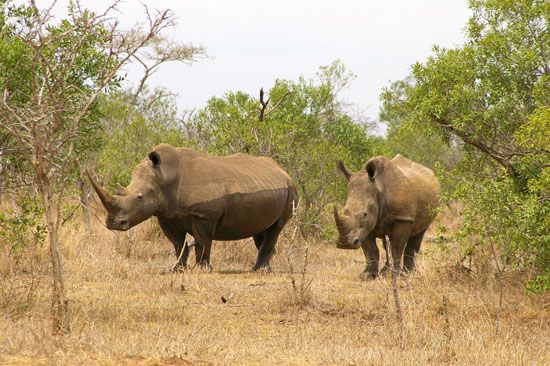
The southern white rhinoceros (Ceratotherium simum simum) is a subspecies of the white rhinoceros and represents the largest rhinoceros group by population. Found primarily in southern Africa, these animals are specialized grazers distinguished by a broad, square muzzle adapted for feeding on short grasses.12
Physically, they are larger and heavier than the northern white rhinoceros, with males weighing up to 2,400 kg (5,300 pounds). They typically live in groups of up to 10 individuals and can reach 50 years of age in the wild.1
The history of the southern white rhinoceros is a significant conservation success story. After their numbers dwindled to fewer than 100 individuals around 1900, the population has rebounded to approximately 20,000 in the 2020s. While the species is currently classified as near-threatened, this status is largely due to the recovery of this specific subspecies, as the northern white rhinoceros is functionally extinct.1
Where does the southern white rhinoceros live?
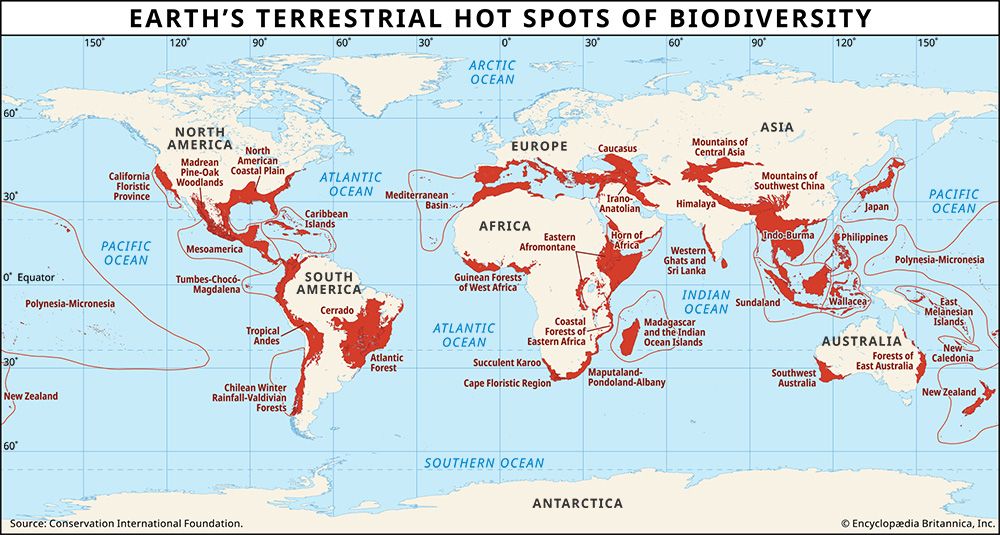
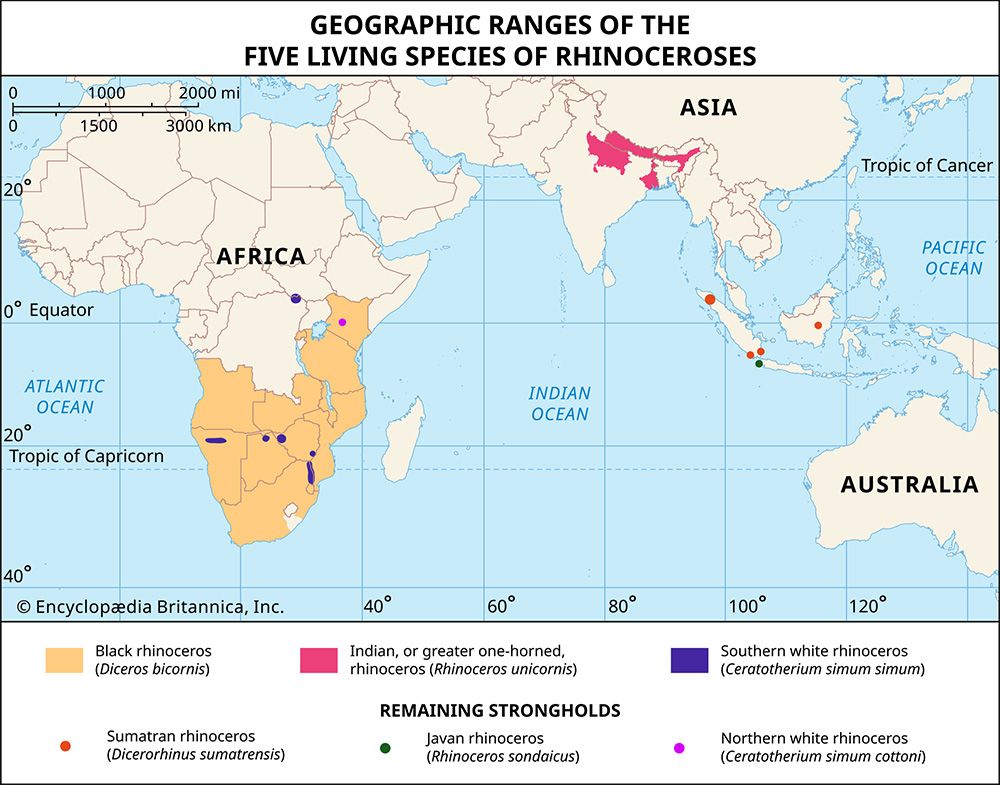
The southern white rhinoceros (Ceratotherium simum simum) is found almost exclusively in southern Africa. Its primary range spans across several countries, including Angola, Namibia, Botswana, Zimbabwe, South Africa, Eswatini, and Mozambique.1
Additionally, there are smaller populations of introduced animals located in Kenya and southern Zambia. Beyond these wild habitats, the species is also maintained in zoos and private nature reserves throughout the world. Within South Africa, significant populations are protected in large areas such as Kruger National Park, which is part of the Great Limpopo Transfrontier Park that connects protected lands across international borders to support biodiversity.13
What does a southern white rhinoceros eat?
The southern white rhinoceros (Ceratotherium simum simum) is a specialized grazing animal. Its physical anatomy is specifically adapted for this diet, featuring a broad, square muzzle that allows it to efficiently crop vegetation.153
These rhinoceroses prefer to feed on short grasses that are approximately 7 to 10 cm (3 to 4 inches) in height. Unlike browsing rhinoceros species, which use a pointed upper lip to pluck leaves and twigs from trees and shrubs, the white rhinoceros uses its square-shaped mouth to graze on the ground.1235
How can you tell a southern white rhinoceros from other types of rhinos?
Distinguishing the southern white rhinoceros (Ceratotherium simum simum) from other rhinoceros species involves observing several key physical and behavioral characteristics:
Physical Features
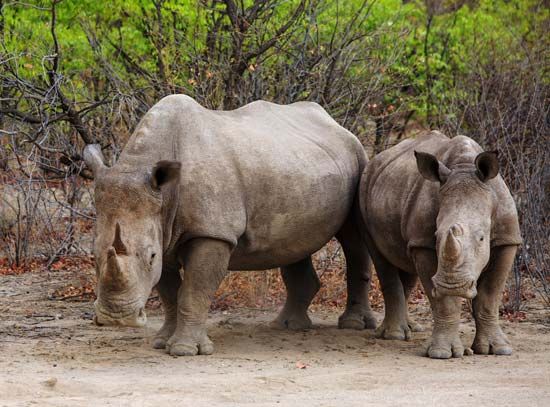
- Muzzle Shape: The most defining feature of the white rhinoceros is its broad, square-shaped muzzle, which is an adaptation for grazing on short grasses. In contrast, other species, such as the black rhinoceros, have a pointed, prehensile upper lip used for browsing on leaves and twigs.16
- Size and Build: The white rhinoceros is the largest of all rhinoceros species, with adults weighing between 3 and 5 tons. Among white rhinoceroses, the southern subspecies is notably heavier and larger than the northern subspecies, possessing shorter limbs and a more concave skull.51
- Coloration: While all rhinoceroses are essentially gray or brown, the white rhinoceros tends to be paler than other species.15
- Fighting Style: Unlike the three Asian species, which use razor-sharp lower incisor teeth to fight, the African species (including the white rhinoceros) fight using their horns.5
Behavioral Traits
Sources
- southern white rhinoceros — Encyclopædia Britannica
- perissodactyl - Feeding — Encyclopædia Britannica
- northern white rhinoceros — Encyclopædia Britannica
- South Africa - Conservation of South Africa — Encyclopædia Britannica
- perissodactyl - Rhinoceroses — Encyclopædia Britannica
- rhinoceros — Encyclopædia Britannica
Published on · 3 min read