Muscicapidae
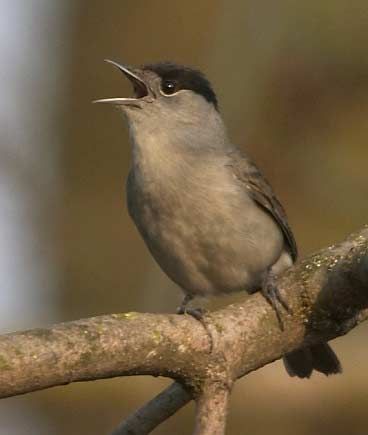
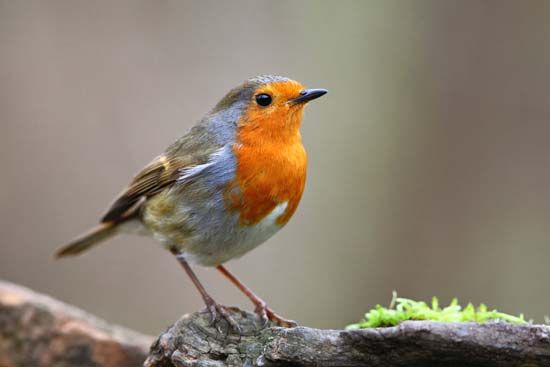
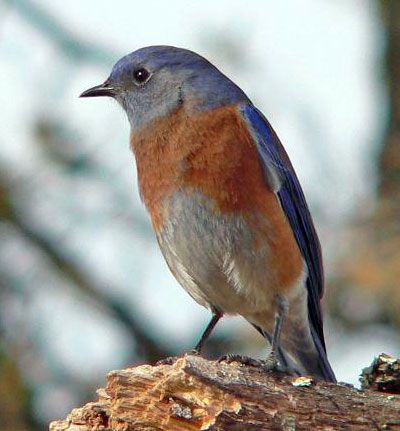
Muscicapidae is a large family of songbirds within the order Passeriformes. These birds are primarily insectivores, typically ranging from 7.5 to 22.5 cm (3…
What is Muscicapidae?
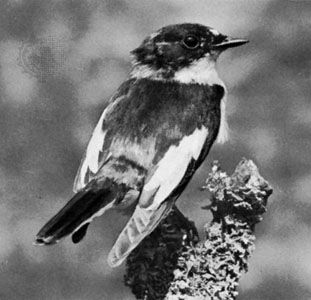
Muscicapidae is a large family of songbirds within the order Passeriformes. These birds are primarily insectivores, typically ranging from 7.5 to 22.5 cm (3 to 9 inches) in size.12
The classification of this family is a subject of ongoing scientific debate. In a narrow sense, the family includes Old World flycatchers (subfamily Muscicapinae) and wattle-eyes (subfamily Platysteirinae). However, many taxonomists adopt a broader definition that may also encompass thrushes, warblers, and babblers, though these groups are frequently categorized as separate families.13
Anatomically, members of the group are characterized by a well-developed 10th primary feather in the wing and various adaptations for eating insects. The family is widely distributed across Eurasia, Africa, Australia, and the Pacific islands, inhabiting diverse environments such as forests, scrublands, and cultivated areas.12
What are the main differences between Old World and New World flycatchers?
Old World and New World flycatchers are distinct groups of perching birds that share similar insect-eating habits but belong to different biological families.
Key Differences
Feature
Old World Flycatchers
New World Flycatchers
Family
Muscicapidae
Muscicapidae
Tyrannidae
Distribution
Primarily Eurasia, Africa, and the Pacific islands
Primarily Central and South America; about 30 species in North America
Behavior
Often flick wings; typically arboreal
Often aggressive; territorial; some species harass larger birds like hawks
Diet
Primarily insects
Primarily insects; some species also feed extensively on berries and fruit
Songs
Varies; some are melodious, others have simple calls
Generally simple, squeaking, or grating sounds; some are monotonous
Shared Characteristics
Despite their different evolutionary lineages, both groups are members of the order Passeriformes and exhibit convergent evolution regarding their feeding strategies. Both types of flycatchers are known for the habit of darting from a perch to seize insects while in flight. Additionally, both groups possess broad, flattened bills that are slightly hooked, often with bristles at the base to assist in capturing prey.425
Why is the taxonomy of the Muscicapidae family considered controversial?
The taxonomy of the Muscicapidae family is considered controversial primarily because there is no single anatomical character that is consistently useful for classification across the entire group.1
The debate centers on two main issues:
- Scope of the Family: Authorities disagree on how broadly to define the family. In a narrow sense, it is restricted to Old World flycatchers and wattle-eyes. However, many taxonomists include other groups—such as thrushes, warblers, and babblers—as subfamilies, while others argue these should be ranked as separate, independent families.183
- Classification Criteria: Historically, passerine classification relied on external features like bill shape and tarsal scutellation, which have since been found to be too variable or the result of convergent evolution to be reliable. While modern DNA analysis has provided significant clarity, the field is still evolving, and many relationships remain under investigation or are not yet universally incorporated into standard classification systems.9
Even when the family is defined narrowly, experts often disagree on which specific flycatching groups should be included within it.1
What physical adaptations help Muscicapidae birds catch insects in flight?
Members of the Muscicapidae family possess specific anatomical adaptations that facilitate their specialized method of capturing insects while in flight.
A primary physical characteristic of these birds is the presence of a well-developed 10th primary feather in the wing, which supports their agile, darting flight patterns as they pursue prey on the wing. While the family is diverse and lacks a single, universally consistent anatomical marker for classification, members generally share specialized adaptations for an insectivorous diet. These adaptations typically include a broad, flattened bill that is well-suited for snapping up insects in midair, often accompanied by bristles at the base of the bill that help to trap or guide prey during capture.12
Because the taxonomy of this group remains a subject of scientific debate, these physical traits are often studied in the context of convergent evolution, as similar feeding behaviors have independently evolved in other bird families, such as the Tyrannidae (New World flycatchers).12
Sources
- Muscicapidae — Encyclopædia Britannica
- Flycatcher — Encyclopædia Britannica
- Passeriform - Annotated classification — Encyclopædia Britannica
- tyrant flycatcher — Encyclopædia Britannica
- Coraciiform - Evolution and paleontology — Encyclopædia Britannica
- Falconiform - Evolution and paleontology — Encyclopædia Britannica
- warbler — Encyclopædia Britannica
- Passeriform - Evolution and paleontology — Encyclopædia Britannica
- Passeriform - Distinguishing taxonomic features — Encyclopædia Britannica
- Muscicapidae — Merriam-Webster
- Charadriiform - Adaptations for feeding — Encyclopædia Britannica
Published on · 3 min read