Musk Deer
Musk is a potent, persistent substance harvested from a preputial gland located in a sac under the abdominal skin of the male musk deer.
What role has musk from these animals played in traditional medicine and perfumery?
Musk is a potent, persistent substance harvested from a preputial gland located in a sac under the abdominal skin of the male musk deer.12
Use in Perfumery
In the fragrance industry, natural musk is highly valued for its unique odor characteristics and its ability to act as a fixative, which helps a scent remain detectable for long periods. To prepare it for use, the substance—which is semiliquid when fresh and dries into a grainy powder—is typically processed into a tincture using pure alcohol. Because of the ethical and conservation concerns surrounding the harvesting of animal products, the industry now frequently relies on synthetic substitutes, such as muscone or various nitro musks, to replicate the desired scent profile.134
Traditional Medicine
In parts of India and East Asia, musk has historically been utilized in traditional medicinal practices. It has been attributed with various therapeutic properties, including acting as an aphrodisiac, a stimulant, and an antispasmodic agent.12
Where are musk deer found in the wild, and what is their natural habitat?
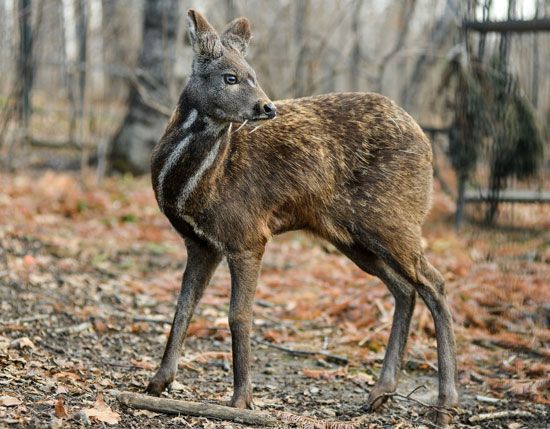
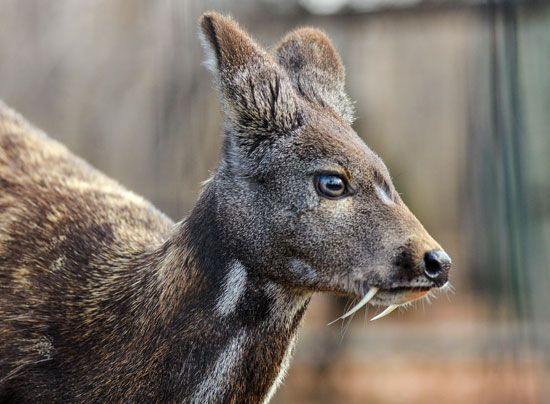
Musk deer (Moschus moschiferus) are solitary, shy animals primarily found in the mountainous regions of Asia, ranging from Siberia to the Himalayas. They are specifically adapted to the uplands of Central Asia, where they inhabit rugged, high-altitude environments.67
These deer are specialized to thrive in areas that provide specific nutritional resources, often favoring ecosystems that have been disturbed or are in early stages of plant succession, which offer the high-protein, low-fiber vegetation they require. Their ability to navigate steep slopes and rugged terrain serves as an effective antipredator strategy, allowing them to exploit gradients and altitudes that are inaccessible to many other species.8
What are the unique physical characteristics of musk deer?
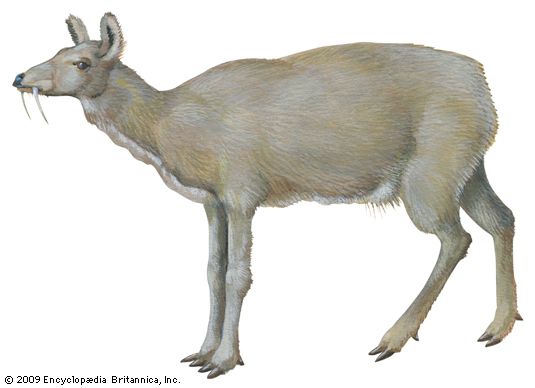
The musk deer (Moschus moschiferus) is a small, compact animal that possesses several unique physical characteristics that distinguish it from other members of the deer family:
- Antlerless: Unlike most other deer species, musk deer do not grow antlers.6
- Tusks: Instead of antlers, males are equipped with long, sharp upper canine teeth that project downward as tusks, which are used for territorial defense.61
- Gall Bladder: They are the only deer species that possess a gall bladder.61
- Musk Pod: Males feature a specialized musk-producing organ known as a musk pod, located in a sac under the abdominal skin.67
- Appearance: They stand approximately 50–60 cm (20–24 inches) tall at the shoulder, with a slightly higher rump. Their coat is grayish brown and consists of long, coarse, brittle hair. They also have large ears and a very short tail.6
How are musk deer classified within the mammalian order Artiodactyla?
Musk deer (Moschus moschiferus) are classified within the mammalian order Artiodactyla, which consists of cloven-hoofed, herbivorous ungulates.69
While they are often referred to as deer, they are distinct from the true deer family, Cervidae. Within the order Artiodactyla, musk deer are placed in their own separate family, Moschidae. Under the suborder Ruminantia, they are further categorized within the infraorder Pecora and the superfamily Cervoidea, specifically as the subfamily Moschinae.6109
Sources
- Musk — Encyclopædia Britannica
- musk — Merriam-Webster
- List of English Words from India - Musk — Encyclopædia Britannica
- musk — Merriam-Webster
- nitro musk — Merriam-Webster
- musk deer — Encyclopædia Britannica
- deer - Morphology and behaviour — Encyclopædia Britannica
- musk deer — Merriam-Webster
- artiodactyl - Annotated classification — Encyclopædia Britannica
- deer — Encyclopædia Britannica
Published on · 3 min read