Kiang
The kiang (Equus kiang) is the largest species of wild ass, native to the cold, arid highlands of Central Asia, including regions in India, Nepal, Pakistan…
What is kiang?
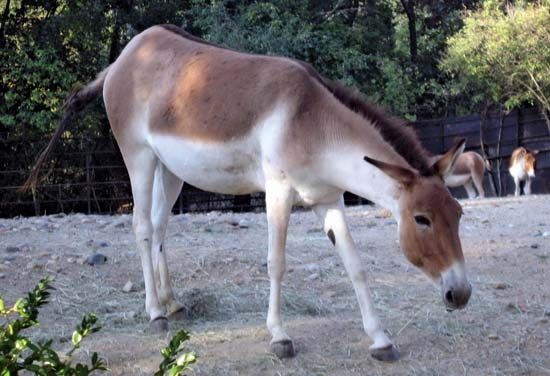
The kiang (Equus kiang) is the largest species of wild ass, native to the cold, arid highlands of Central Asia, including regions in India, Nepal, Pakistan, and China.12
These animals typically inhabit high-altitude environments, often found at elevations exceeding 4,000 meters (13,000 feet). Physically, they are characterized by a reddish coat during the summer that turns brown in other seasons, complemented by white underparts, a white muzzle, and white legs. A mature kiang stands approximately 140 cm (55 inches) at the shoulder and can weigh between 250 and 440 kg (550 and 970 pounds).12
While the species has faced population declines in some regions due to competition for resources with livestock, they remain resilient and thrive in areas where they do not face human interference.1
How does the kiang adapt to high-altitude environments?
The kiang is uniquely adapted to survive in the harsh, high-altitude environments of the Tibetan Plateau and surrounding regions, where it thrives at elevations exceeding 4,000 meters (13,000 feet).
While the provided information notes their physical characteristics, such as their size and seasonal coat changes, it does not explicitly detail the physiological mechanisms behind their high-altitude adaptation. However, their ability to inhabit these cold, arid highlands demonstrates a remarkable resilience to extreme environmental conditions. Their population stability in areas free from human competition with livestock further highlights their successful integration into these rugged, high-elevation ecosystems.1
What are the main differences between the kiang and other wild ass species?
The kiang (Equus kiang) is distinguished from other wild ass species primarily by its size, habitat, and physical coloration.
Key Differences
- Size: The kiang is the largest species of wild ass, standing approximately 140 cm (55 inches) at the shoulder and weighing between 250 and 440 kg (550 and 970 pounds). In contrast, other wild asses generally range from 90 to 150 cm in height but are typically lighter-bodied.13
- Habitat: While other wild asses are often desert dwellers, the kiang is specifically adapted to the cold, high-altitude highlands of Central Asia, living at elevations above 4,000 meters (13,000 feet).13
- Coloration: The kiang features a reddish coat in the summer that turns brown in other seasons, with white underparts, a white muzzle, and white legs. Other Asiatic wild asses (E. hemionus) are generally lighter in color, ranging from reddish to yellow-gray, while the African wild ass is typically bluish gray to fawn.123
- Physical Features: Compared to the African wild ass, the Asiatic wild ass—to which the kiang is closely related—possesses longer, more slender legs, shorter ears, and larger hooves.3
What other animals share the Tibetan Plateau habitat?
The Tibetan Plateau and its surrounding mountain ranges, such as the Kunlun Mountains, support a diverse array of wildlife adapted to high-altitude, arid, and steppe conditions.
Mammals
The region is home to several large ungulates, including:
- Wild Ungulates: Large herds of kiang (wild asses) and clusters of wild yaks are common. Other notable species include the Tibetan gazelle, chiru (Tibetan goat antelope), argali sheep, blue sheep, Ladakh urials, ibex, musk deer, and various wild goats.
- Predators: Brown bears are found near watercourses, while wolves are endemic to the region. The snow leopard is also present, though rare. Other predators include lynx, jackals, and various spotted cats.
- Small Mammals: The region hosts pikas, marmots, voles, and ground squirrels.
Birds and Aquatic Life
Tibet is home to over 400 species of birds, including black-necked cranes, Himalayan monal pheasants, hawks, and hoopoes. Aquatic environments in the region support various fishes, frogs, crabs, otters, and turtles.456
Sources
- kiang — Encyclopædia Britannica
- kiang — Merriam-Webster
- ass — Encyclopædia Britannica
- Kunlun Mountains - Plant and animal life — Encyclopædia Britannica
- Tibet - Plant and animal life — Encyclopædia Britannica
- human respiratory system - High altitudes — Encyclopædia Britannica
- Tundra - Alpine mammals — Encyclopædia Britannica
Published on · 3 min read