Muskrat
The muskrat (Ondatra zibethicus) is an amphibious rodent native to North America, where its range spans from Alaska and Newfoundland down to the southern…
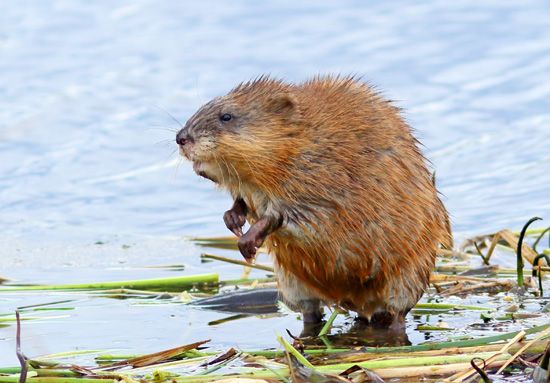
Where are muskrats typically found in the wild?
The muskrat (Ondatra zibethicus) is an amphibious rodent native to North America, where its range spans from Alaska and Newfoundland down to the southern United States. While they are indigenous to this region, they are notably absent from Florida and coastal areas of Georgia and South Carolina. Additionally, they have been introduced to parts of British Columbia, California, and southern Argentina.1
Beyond the Americas, muskrats are widespread across Eurasia, including Ukraine, Russia, Siberia, Mongolia, China, and Honshu Island in Japan, following introductions in the early 1900s.1
In terms of specific habitat, these animals are typically found in marshes, wooded swamps, lakes, and streams. They construct lodges from aquatic vegetation or dig burrows near the water’s edge for shelter.1
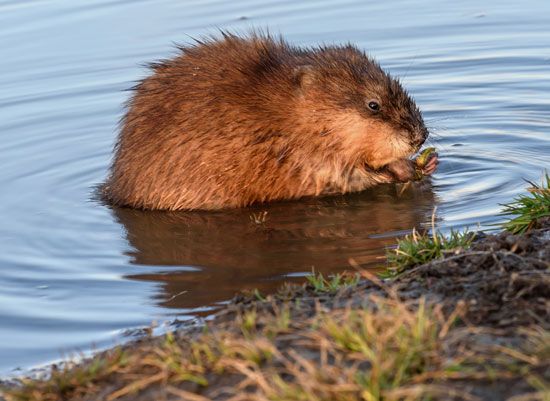
How do muskrats contribute to their ecosystem?
Muskrats play a significant role in their ecosystem primarily through their feeding habits and construction activities. As herbivores, they consume a wide variety of aquatic vegetation, including grasses, cattails, and the roots and stalks of other plants, which helps manage plant density in marshes, lakes, and streams.1
Beyond their role as primary consumers, muskrats are occasionally predatory, feeding on freshwater mussels, snails, crustaceans, salamanders, fish, and young birds, thereby influencing the populations of these species.1
Their physical impact on the environment is also notable. By building sizable lodges out of aquatic vegetation and digging burrows near the water’s edge, they create structural changes in their habitat. While these activities provide shelter for the muskrats, their burrowing can sometimes weaken earthen dams and dikes, which may alter local water flow and land stability.1
What are the physical characteristics of muskrats?
The muskrat (Ondatra zibethicus) is a robust rodent belonging to the vole subfamily. Its physical characteristics are highly specialized for an amphibious lifestyle:
- Body and Size: It has a compact body reaching up to 33 cm (13 inches) in length and can weigh as much as 1.8 kg (4 pounds).
- Fur: The coat ranges from reddish to blackish brown. It consists of a short, soft underfur that traps air for insulation and buoyancy, overlaid with long, stiff, glossy guard hairs.
- Tail: The tail is sparsely haired, scaly, and flattened vertically, acting as a rudder while swimming. It can be as long as the body itself.
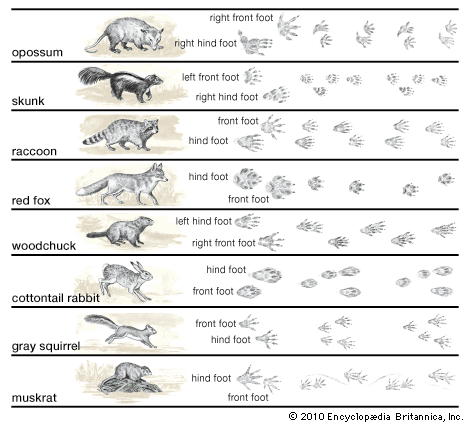
- Limbs: The muskrat has short legs and large hind feet. These feet are partially webbed and fringed with stiff bristles, allowing them to function as oars.
- Sensory Features: The eyes are small, and the ears are nearly concealed by the animal’s dense fur.
- Scent: It is named for the musky odor produced by its perineal glands, which is used to mark its territory.
How have muskrats been historically important to humans?
Historically, the muskrat has been significant to humans primarily as a resource for the fur trade. Because of its thick and durable coat, the animal has been trapped for centuries to provide pelts for clothing and accessories. Additionally, in some regions, muskrat meat has been harvested and sold for human consumption under the name “marsh rabbit”.1
Beyond its economic utility, the muskrat has also left a mark on the English language. When European settlers arrived in North America in the 1600s, they encountered the animal and adapted its original Algonquian name, musquash, into the more familiar-sounding “muskrat” through a process known as folk etymology. This linguistic shift combined the word “musk”—referencing the animal’s distinct scent—with “rat,” reflecting its rodent-like appearance.23
Sources
- muskrat — Encyclopædia Britannica
- 'Muskrat,' 'Helpmate,' and 6 More Folk Etymologies | Muskrat — Merriam-Webster
- muskrat — Merriam-Webster
Published on · 3 min read