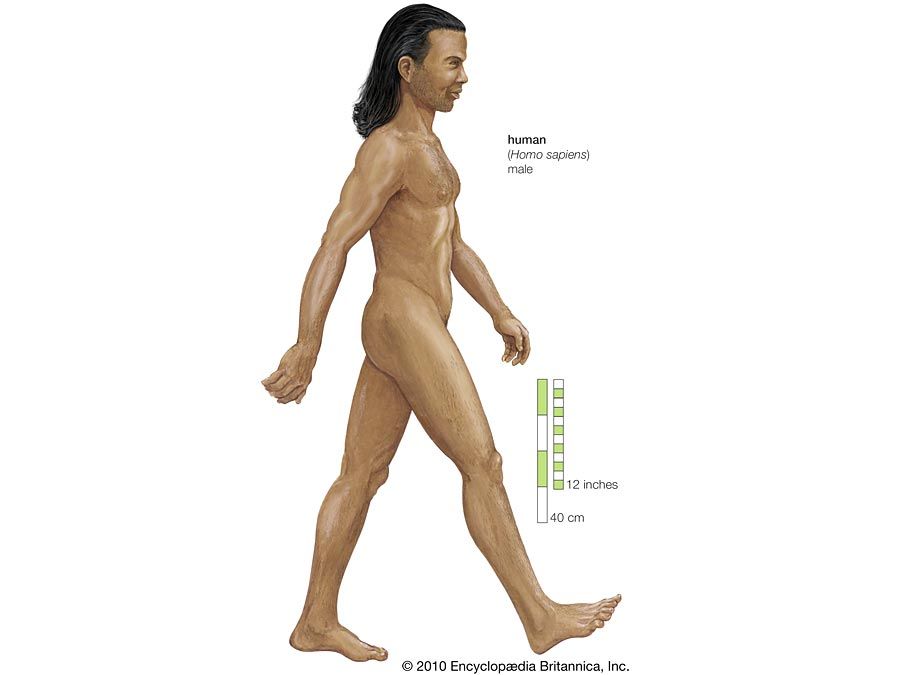
Neanderthal
Archaeological evidence indicates that Neanderthals possessed cognitive capabilities beyond basic survival, as evidenced by the recovery of various…
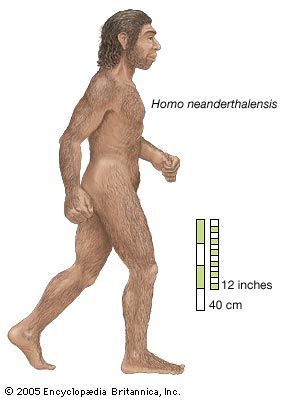
What artistic or symbolic artifacts have been associated with Neanderthals?
Archaeological evidence indicates that Neanderthals possessed cognitive capabilities beyond basic survival, as evidenced by the recovery of various nonutilitarian and symbolic artifacts from their sites.1
These artifacts include:
- Ornaments and Jewelry: Neanderthals purposefully modified and likely wore items such as shells, feathers, and claws. They also utilized jewelry and personal ornaments as early as 44,000 years ago.12
- Colorants and Pigments: They collected and used naturally occurring pigments, including red ochre and manganese oxides, for decorative or symbolic purposes. Evidence of use-wear on hundreds of black pigment fragments suggests these materials were actively employed.1
- Decorated Objects: Researchers have found bone tools decorated with designs, as well as regular incisions and simple patterns on bone and stone fragments.1
- Manuports: Neanderthals collected and transported “manuports”—natural, unmodified objects like fossils and geological curiosities—that were carried away from their original contexts, sometimes for their intrinsic value or beauty.1
- Musical Instruments: A controversial discovery of a flutelike wind instrument from the Divje Babe site in Slovenia suggests the potential use of music.1
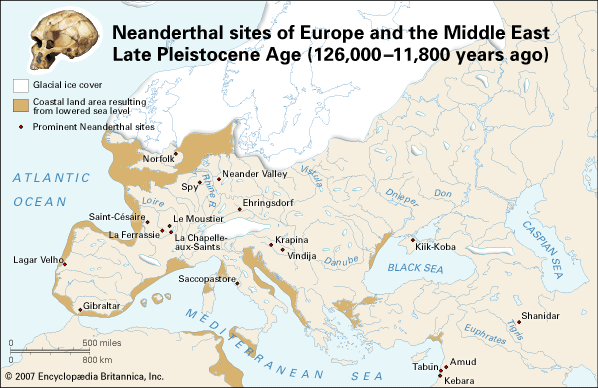
How did Neanderthals’ cognitive abilities compare to those of modern humans?
Comparing the cognitive abilities of Neanderthals to those of modern humans is a complex challenge, as archaeological and skeletal data provide only indirect evidence of mental processes. While Neanderthals possessed brain volumes rivaling or exceeding those of modern humans, they were less “brainy” when measured relative to their body mass.14
Evidence suggests Neanderthals were capable of sophisticated, symbolically mediated behavior, which challenges older views that they were cognitively primitive. Key indicators of their cognitive complexity include:91
- Advanced Technology: Neanderthals utilized the Mousterian industry and, in some regions, the Châtelperronian industry, which required significant planning and precision.9
- Symbolic Expression: The use of ornaments, pigments, and cave art indicates abstract thought.9
- Social and Ritual Behavior: Evidence of burial practices and potential traditional medicine suggests complex social and ritualistic behaviors.9
However, because many cognitive traits—such as language and spirituality—leave no direct archaeological trace, it is impossible to definitively rank their cognitive competence against modern humans. Genetic evidence confirms that modern humans and Neanderthals interbred, indicating they were not biologically distinct species.1410
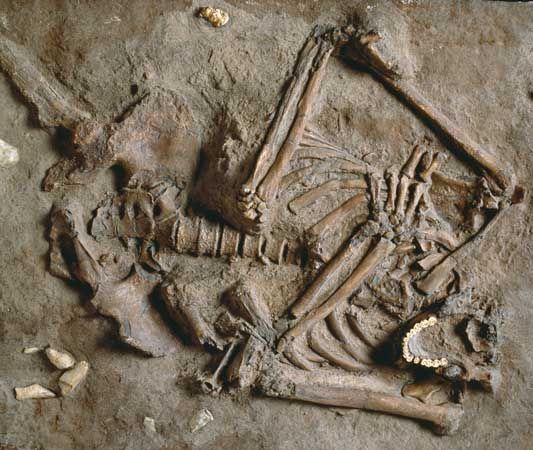
What was the diet of Neanderthals, and how did it differ from early modern humans?
Neanderthals maintained a broad, flexible diet that included terrestrial, marine, and riverine resources. Stable carbon isotope analysis of bone collagen suggests they had “wolfish” diets comparable to carnivores, particularly those of foragers in habitats with fewer trees who consumed large amounts of meat. However, evidence from dental calculus (tartar) and fossilized fecal matter confirms that they also consumed abundant plant matter.1
Neanderthals likely cooked various plant foods over wood fires, and there is evidence suggesting they may have even utilized medicinal plants. Their teeth show heavy wear and beveling, indicating they used their mouths as a “third hand” to process these food sources.1
While the provided search results do not offer a direct comparative analysis of the specific dietary differences between Neanderthals and early modern humans, they note that both groups utilized similar Mousterian industry tool technologies for food preparation at certain sites. Furthermore, genetic research indicates that interbreeding between the two groups introduced certain genes into the modern human gene pool, including some that may influence metabolic health, such as those increasing the risk of type 2 diabetes under modern dietary regimens.112
What kind of tools and technology did Neanderthals use?
Neanderthals were sophisticated toolmakers whose technology evolved to meet diverse survival needs. Their primary tool culture, the Mousterian industry, is characterized by the Levallois flaking technique, which involved striking flakes from prepared stone cores to create precise, sharp implements.113
Tool Categories and Functions
Neanderthal tool kits were highly specialized, featuring distinct implements for domestic and hunting tasks:
- Domestic Tools: They used scrapers for tanning hides, awls for punching holes in leather to create clothing, and burins for carving wood and bone.1
- Hunting and Processing: Their kits included hand axes, knives, and denticulate (toothed) instruments used as saws or for straightening shafts. They also utilized wooden spears to hunt large game.13
- Advanced Technology: In later periods, some Neanderthals developed the Châtelperronian industry, a blade-based technology that required significant planning and included the use of hafted tools.1
Innovation and Symbolic Expression
Neanderthals demonstrated cognitive complexity through the creation of nonutilitarian objects, including ornaments, decorated bone tools, and the use of pigments like red ochre and manganese oxides. They also utilized fire to harden wooden tools, representing an early mastery of material properties.114
Sources
- Neanderthal - Neanderthal culture — Encyclopædia Britannica
- Rock art - Cave painting in Europe — Encyclopædia Britannica
- Cave art — Encyclopædia Britannica
- human evolution - Speech and symbolic intelligence — Encyclopædia Britannica
- jewelry - The history of jewelry design — Encyclopædia Britannica
- Paleolithic Period — Encyclopædia Britannica
- Neanderthal - Other adaptations — Encyclopædia Britannica
- Neanderthal — Encyclopædia Britannica
- Neanderthal - Craniofacial features — Encyclopædia Britannica
- Neanderthal - Neanderthal classification — Encyclopædia Britannica
- human evolution - Increasing brain size — Encyclopædia Britannica
- Neanderthal - Genetics — Encyclopædia Britannica
- Mousterian industry — Encyclopædia Britannica
- hand tool - The Acheulean industry — Encyclopædia Britannica
Published on · 4 min read