Saccopastore Skulls
The Saccopastore skulls are two Neanderthal fossils discovered in 1929 and 1935 within a river deposit near a tributary of the Tiber River outside…
What is Saccopastore skulls?
The Saccopastore skulls are two Neanderthal fossils discovered in 1929 and 1935 within a river deposit near a tributary of the Tiber River outside Rome/Tiber-River) outside Rome.1
Dating back approximately 70,000 to 100,000 years, these fossils represent an early developmental phase of western European Neanderthals. They display classic Neanderthal anatomical features, including a long, low, and rounded braincase, strongly developed arched browridges, and a combination of moderate-sized cheek teeth with large front teeth. Additionally, the skulls feature prominent dental lesions, which serve as evidence that the individuals experienced periods of severe childhood starvation.1
What are the primary physical characteristics that define a Neanderthal?
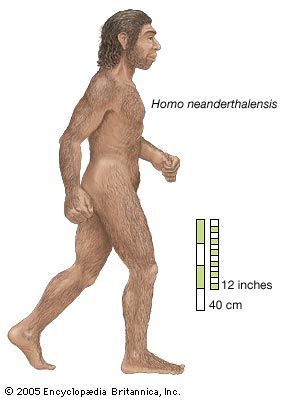
Neanderthals were a distinct group of cold-adapted humans characterized by a unique set of morphological traits. Their physical build was generally robust, featuring a broad chest and massive, heavily muscled limbs, which served as an adaptation to protect their extremities against cold stress.3
Craniofacial Features
Neanderthal skulls are defined by several specific characteristics:
- Cranium: They possessed a low-vaulted cranium with a pronounced occipital region at the rear to anchor large neck muscles.4
- Face: Notable features include large orbital and nasal openings and prominent, arched brow ridges.45
- Jaw and Teeth: The lower jaw was robust with a receding chin. While their molars and premolars were similar in size to those of modern humans, their front teeth were larger. Some individuals exhibited taurodontism, or voluminous pulp cavities in their teeth.43
Skeletal Structure
Beyond the skull, their limb bones were heavily built with large articular surfaces at the joints, and the shafts of these bones were often bowed from front to back. Additionally, Neanderthals exhibited less lumbar lordosis (back curvature) compared to modern humans.54
How do scientists determine the age of ancient fossils like these?
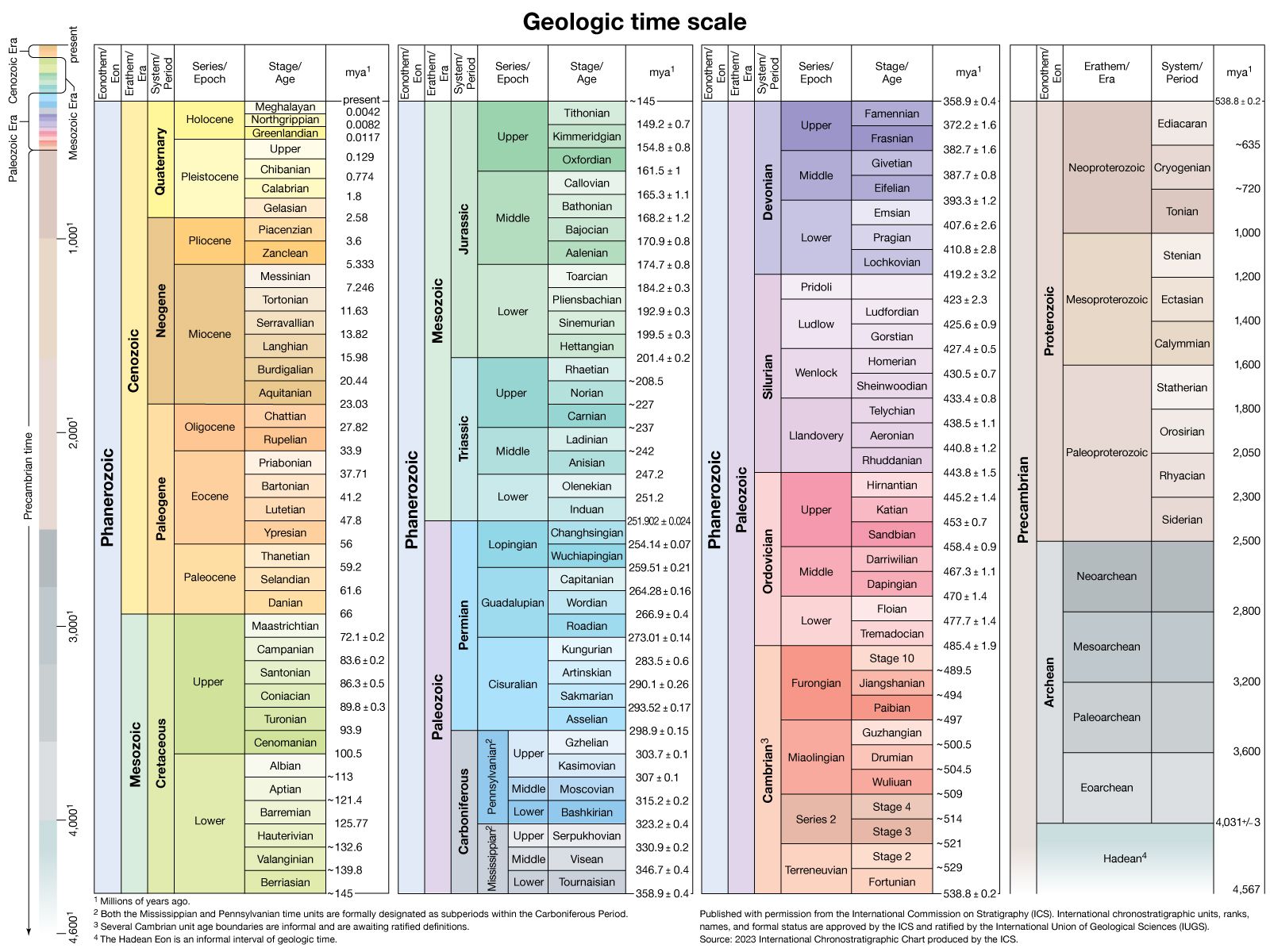
Scientists determine the age of ancient fossils and geological materials using several sophisticated methods, primarily categorized into relative and absolute dating techniques.
Absolute Dating
Absolute dating provides a numerical age for a specimen by measuring the decay of radioactive elements.
- Radiocarbon Dating: This method is used for organic materials up to approximately 50,000–60,000 years old. It relies on the constant decay rate of carbon-14, which living organisms absorb until death. By measuring the residual radiocarbon, scientists can estimate the time elapsed since the organism died. Modern techniques, such as accelerator mass spectrometry, allow for precise dating using very small samples.67
- Radiometric Dating: For older fossils or rocks, scientists use other radioactive isotopes that decay at known, constant rates into daughter atoms. By measuring the ratio of parent to daughter isotopes, researchers can determine the age of materials that predate the existence of life.89
Relative Dating
Relative dating establishes the chronological order of events without providing a specific numerical age.
- Superposition: This principle states that in undisturbed sedimentary rock layers, the oldest strata are at the bottom and the youngest are at the top.8
- Correlation: By comparing the fossil content across different rock outcrops, scientists can match sequences and construct a relative geologic time scale.8
What can tooth lesions tell us about the lives of early humans?
Tooth lesions and dental wear patterns provide significant insights into the lives and health of early humans, particularly Neanderthals. By analyzing these features, researchers can reconstruct aspects of their daily activities, diet, and physical development:
- Nutritional and Health Stress: Neanderthal remains often exhibit enamel growth defects known as hypoplasias. These represent periods of arrested development, serving as a biological record of nutritional stress or disease experienced during childhood.11
- Teeth as Tools: Heavy dental wear and specific beveling on the front teeth indicate that Neanderthals frequently used their teeth as a “third hand” or tool for tasks such as processing materials. Striations found on these teeth have even allowed scientists to determine that Neanderthals were largely right-handed, a trait that emerged early in maturation.12
- Social Structure: Differences in dental chipping and wear patterns observed between male and female remains suggest that a division of labour existed within their social groups.12
- Dietary Habits: Microscopic wear on chewing surfaces reveals that Neanderthals consumed a broad diet, including large amounts of meat, while dental calculus (tartar) provides evidence of plant consumption.12
Sources
- Saccopastore skulls — Encyclopædia Britannica
- list of primates — Encyclopædia Britannica
- Neanderthal - Craniofacial features — Encyclopædia Britannica
- Neanderthal - Body proportions and cold stress — Encyclopædia Britannica
- Neanderthal - First discoveries — Encyclopædia Britannica
- carbon-14 dating — Encyclopædia Britannica
- geochronology - Accumulational processes — Encyclopædia Britannica
- Did you know? — Merriam-Webster
- dating - Carbon-14 dating and other cosmogenic methods — Encyclopædia Britannica
- geochronology — Encyclopædia Britannica
- Neanderthal - Trauma and pathology — Encyclopædia Britannica
- Neanderthal - Neanderthal culture — Encyclopædia Britannica
- human evolution - Reduction in tooth size — Encyclopædia Britannica
- mammal - Teeth — Encyclopædia Britannica
Published on · 3 min read