Madeira River
The Madeira River, a major tributary of the Amazon, has historically been home to various indigenous groups and traditional inhabitants. Among these are the…
What indigenous communities live along the Madeira River, and how do they interact with the river?
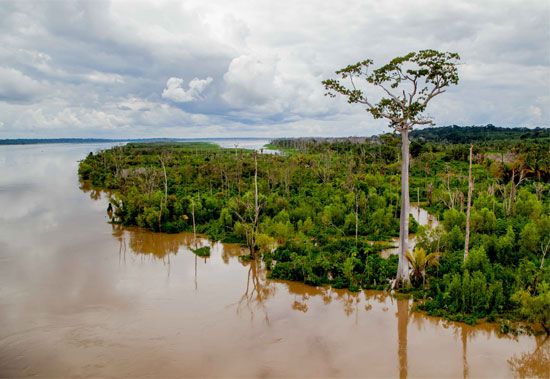
The Madeira River, a major tributary of the Amazon, has historically been home to various indigenous groups and traditional inhabitants. Among these are the Mura, a South American Indian people who originally inhabited the right bank of the lower Madeira River near the mouth of the Jamari River.12
The Mura are traditionally skilled fishermen who rely heavily on the river for their way of life, often spending much of their time in canoes. Historically, the region’s traditional inhabitants, including indigenous groups and mestizos, lived along the riverbanks and gathered forest products such as rubber and Brazil nuts. Following contact with European settlers, the Mura adopted guerrilla tactics and expanded their range toward the Purus River, though their population has since been significantly diminished by disease, conflict, and assimilation. Today, the Mura are considered to be approaching extinction as an ethnic population, with most members speaking Portuguese and practicing a blend of nominal Christianity and traditional rituals.21
What are the primary tributaries of the Madeira River?
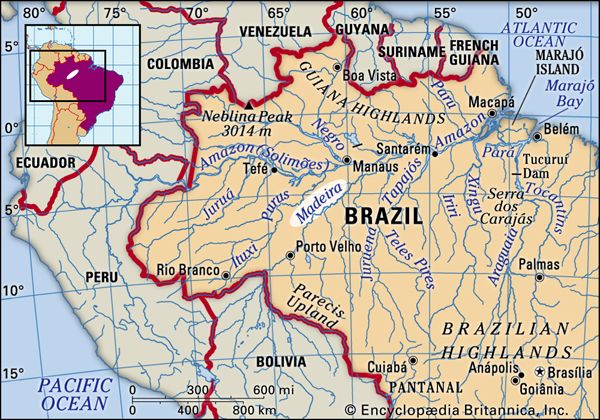
The Madeira River is formed by the junction of the Mamoré and Beni rivers at Villa Bella, Bolivia. As it flows northward, it receives the Abuná River before continuing into Brazil.1
Beyond its first cataract, the river system is further fed by several significant affluents that provide access to the region’s forests:
- Madre de Dios River: A major affluent that contributes to the upper reaches of the system.4
- Beni River: One of the two primary rivers that form the Madeira.14
- Mamoré River: The other primary river that forms the Madeira.14
- Guaporé River: A tributary of the Mamoré that provides access to the Mato Grosso Plateau.4
While the Purus and Juruá rivers are often associated with the Madeira due to their proximity and role in accessing the same forest regions, they are distinct tributaries that flank the Madeira to the west.4
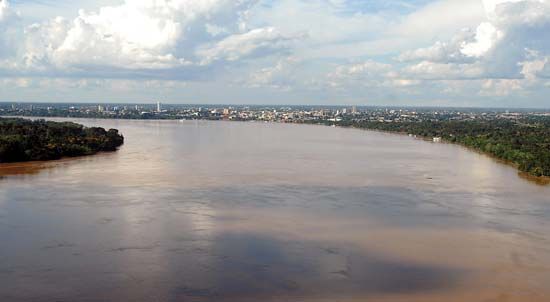
How long is the Madeira River, and how does its length compare to other major rivers in South America?
The Madeira River measures 2,082 miles (3,352 km) in length, calculated from the upper reaches of the Mamoré River. It is recognized as the second largest affluent of the Amazon River.
When compared to other major river systems in South America, the Madeira is a significant but secondary component of the continent’s vast drainage network:
- Amazon River: The largest system in South America, stretching approximately 4,000 miles (6,400 km) or more depending on the source measurement.
- Paraná River: A major component of the Río de la Plata system, with a total length of 3,032 miles (4,880 km).
- São Francisco River: A major Brazilian river flowing entirely within the country, measuring 1,811 miles (2,914 km).
- Orinoco River: A primary drainage system in the north, measuring some 1,700 miles (2,740 km).
- Paraguay River: A key tributary of the Paraná, measuring 1,584 miles (2,550 km).
While the Madeira is shorter than the main stem of the Amazon and the Paraná, it remains one of the longest and most vital tributaries in the Amazon basin.
Where is the Madeira River located, and what major countries does it flow through?
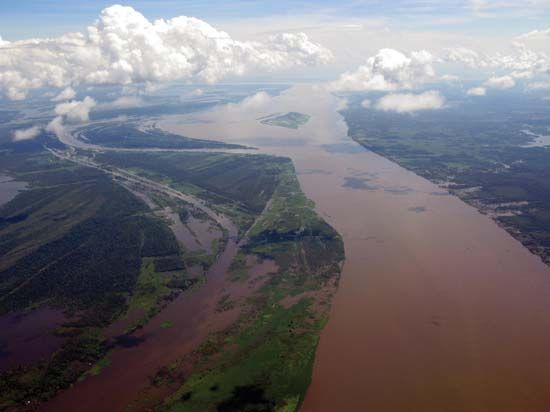
The Madeira River is a major tributary of the Amazon River located in South America. It originates at the junction of the Mamoré and Beni rivers at Villa Bella, Bolivia.1
The river flows through two primary countries:
- Bolivia: The river forms the border between Bolivia and Brazil for approximately 60 miles (100 km).1
- Brazil: After receiving the Abuná River, the Madeira flows northeastward entirely within Brazil, passing through the states of Rondônia and Amazonas before joining the Amazon River east of Manaus.1
Sources
- Madeira River — Encyclopædia Britannica
- Madeira Islands — Encyclopædia Britannica
- Mura — Encyclopædia Britannica
- Amazon River - Physiography of the river course — Encyclopædia Britannica
- Amazon River - The length of the Amazon — Encyclopædia Britannica
- South America - Rivers of South America — Encyclopædia Britannica
Published on · 3 min read