Nelumbonaceae
The provided search results do not contain specific information regarding the use of Nelumbonaceae plants in modern medical applications. While the sacred…
How are Nelumbonaceae plants used in traditional medicine and modern applications?
The provided search results do not contain specific information regarding the use of Nelumbonaceae plants in modern medical applications. While the sacred lotus (Nelumbo nucifera) is noted for its role in traditional Eastern medicine—where its seeds are used to treat a variety of ailments and are associated with longevity—the available documentation focuses primarily on the plant’s culinary, ornamental, and ecological uses rather than clinical or pharmaceutical applications.12
In culinary contexts, the entire plant is edible:
- Rhizomes: Eaten in soups, curries, or preserved in sugar, and processed into lotus meal starch.12
- Leaves: Boiled as a vegetable or used as a wrap for rice and steamed dishes.12
- Seeds: Used in traditional foods like mooncakes and processed into noodles.2
- Flowers: Stamens and dried petals are used to flavor tea.12
Additionally, dried lotus pods are widely utilized by florists in decorative arrangements.12
Which plants are included in the Nelumbonaceae family, and where are they commonly found?
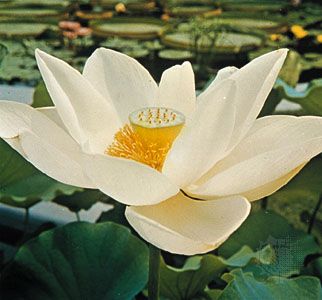
The Nelumbonaceae family, often referred to as the lotus-lily family, consists of only one genus, Nelumbo, which includes two distinct species of aquatic plants:13
- Sacred lotus (Nelumbo nucifera): This species is native to tropical and subtropical Asia. It is highly regarded for its fragrant, pink or rose-colored flowers that can stand up to 1.8 meters (nearly 6 feet) above the water surface.1
- American lotus (Nelumbo lutea): Also known as the water chinquapin, this species is found in the eastern United States and extends southward to Colombia. It is characterized by pale yellow flowers that typically rise about 60 cm (2 feet) above the water.1
While these plants share a superficial resemblance to water lilies, they are botanically distinct and are classified within the order Proteales. They are easily identified by their large, circular leaves that are held above the water like inverted umbrellas, as well as their unique seed-bearing structures.13
What cultural and symbolic significance do lotus plants from the Nelumbonaceae family have in various cultures?
The lotus plants of the Nelumbonaceae family hold profound cultural and symbolic significance across various civilizations, primarily centered on themes of purity, spiritual enlightenment, and rebirth.
Spiritual and Religious Symbolism
- Hinduism and Buddhism: The sacred lotus (Nelumbo nucifera) is a central icon in both traditions. Because the flower blossoms above muddy water, it is viewed as a metaphor for the rise to spiritual enlightenment and liberation from the material world. This symbolism is so enduring that it inspired the design of the Lotus Temple in Delhi, a Baha’i house of worship that uses the flower’s form to represent faith and purity.52
- Ancient Egypt: In ancient Egyptian culture, the lotus was a powerful symbol of rebirth. Its ability to close at night and reopen in the morning was linked to the rising sun and the cycle of life and death.15
Architectural and Artistic Legacy
Beyond its religious associations, the lotus has been a persistent motif in architecture and design for millennia:
- Classical Architecture: The lotus form was frequently used to decorate the capitals of columns, a practice originating in ancient Egypt. It served as an antecedent to the Ionic order of design.1
- Symbolism of Fertility: Historically, the lotus has been associated with fertility, sexuality, and the renewal of life, appearing frequently in ancient art and iconography.1
How do the lotus plants in the Nelumbonaceae family adapt to their aquatic environments?
Plants in the Nelumbonaceae family have evolved several specialized adaptations to thrive in aquatic environments:
- Elevated Growth: Unlike many other water plants, their large, circular leaves and fragrant flowers are held high above the water surface on strong, leafless stalks. This structure prevents the foliage from being submerged, allowing the plant to flourish even in muddy or deep water.12
- Seed Dispersal and Longevity: The plant produces nutlike fruits within a spongy, capsule-like receptacle. When mature, this structure dries and breaks off, floating on the water to disperse seeds. The seeds themselves possess an extremely hard outer covering, which allows them to remain viable for centuries in river mud, ensuring survival through harsh conditions.12
- Structural Support: The leaves are funnel- or cup-shaped and slightly hairy, which helps them manage water and maintain their position above the surface.12
- Ecological Integration: The underwater portions of the plants provide essential shade and shelter for fish, creating a mutually beneficial relationship within their aquatic habitats.12
Sources
- Nelumbonaceae — Encyclopædia Britannica
- sacred lotus — Encyclopædia Britannica
- Proteales — Encyclopædia Britannica
- water lily — Encyclopædia Britannica
- lotus — Encyclopædia Britannica
- American lotus — Merriam-Webster
- 23 Must-See Buildings for Your First Trip to India - Lotus Temple — Encyclopædia Britannica
Published on · 3 min read