Proteales
The order Proteales comprises four distinct families with varying geographic distributions across the globe:
Where are Proteales plants typically found geographically?
The order Proteales comprises four distinct families with varying geographic distributions across the globe:
- Proteaceae: This family is found predominantly in the Southern Hemisphere, with significant diversity in Australia, South Africa, Madagascar, New Caledonia, New Guinea, and South America.1
- Sabiaceae: These evergreen trees and lianas are native to tropical regions of the Americas and Southeast Asia.1
- Platanaceae: Represented by the genus Platanus (plane trees and sycamores), these are found throughout the Northern Hemisphere.1
- Nelumbonaceae: This aquatic family, consisting of the lotus, is found in north temperate regions.1
While Proteaceae members are often adapted to regions with long dry seasons, the order as a whole spans a wide range of climates and environments, from the tropical Amazon basin to temperate zones.1
What are the main characteristics of plants in the Proteales order?
The order Proteales consists of four diverse families of eudicotyledonous flowering plants. While these families appear disparate, they are grouped together based on molecular studies.1
Key Characteristics by Family
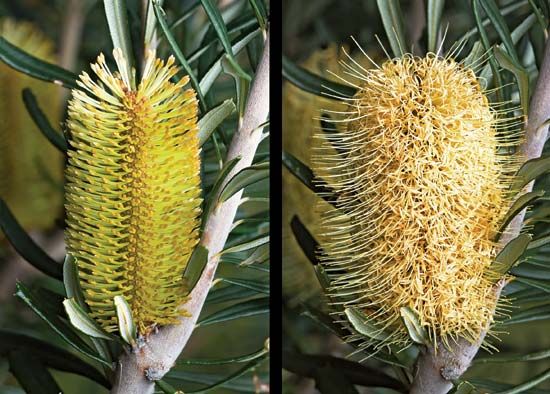
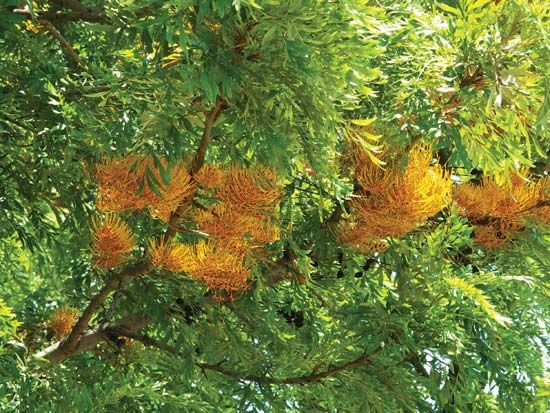
- Proteaceae: These are woody trees and shrubs often adapted to dry climates. They feature small flowers arranged in dense, showy inflorescences. Many species possess thick, hairy leaves or stomata in deep pits to minimize water loss, and some exhibit fire-survival traits like underground woody tubers.1
- Sabiaceae: This family consists of evergreen trees or lianas characterized by leaves with looping venation. Their small flowers have stamens positioned opposite the petals or sepals, and they produce flattened, fleshy fruits.13
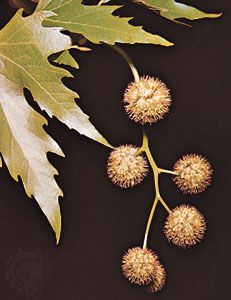
- Platanaceae: Represented by the genus Platanus (plane trees and sycamores), these are deciduous trees with light, scaly bark and palmately lobed leaves. They produce small, wind-pollinated flowers in dense, unisexual heads.1
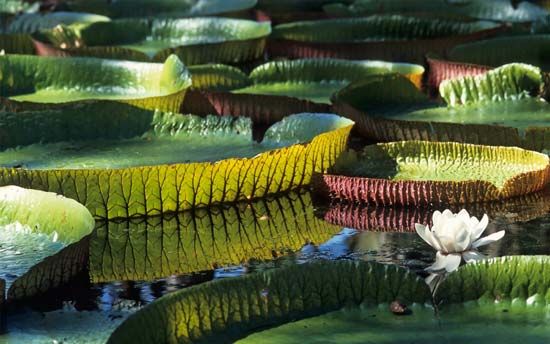
- Nelumbonaceae: This family includes the lotus, an aquatic plant with large, round leaves held above the water. Their flowers feature free carpels in an inverted cone-shaped receptacle, and their seeds are noted for extreme longevity in river mud.1
Are there any endangered species within the Proteales order?
Which plant families are included in the Proteales order?
The Proteales order, a group of eudicotyledonous flowering plants, comprises the following four families:
- Proteaceae: The largest family in the order, consisting of woody trees and shrubs predominantly found in the Southern Hemisphere.
- Sabiaceae: A family of evergreen trees or lianas native to tropical America and Southeast Asia.
- Platanaceae: A family represented by a single Northern Hemisphere genus, Platanus, which includes plane trees and sycamores.
- Nelumbonaceae: An aquatic family consisting of a single genus, the lotus (Nelumbo).
Sources
- Proteales — Encyclopædia Britannica
- Proteales — Merriam-Webster
- Sabiaceae — Encyclopædia Britannica
- fungus - Annotated classification — Encyclopædia Britannica
Published on · 2 min read