Nephridium
Nephridia are specialized excretory units found primarily in invertebrates, such as annelids, flatworms, and rotifers, whereas vertebrates utilize complex…
How do nephridia differ from other excretory organs in animals?
Nephridia are specialized excretory units found primarily in invertebrates, such as annelids, flatworms, and rotifers, whereas vertebrates utilize complex kidneys composed of nephric tubules.12
The primary differences include:
- Structural Complexity: Nephridia exist as either simple protonephridia (using flame bulbs or solenocytes to filter fluid) or more complex metanephridia. In contrast, vertebrate kidneys develop from nephrotomes and incorporate a glomerulus—a specialized capillary network—to form a renal corpuscle for filtration.13
- Developmental Origin: Vertebrate kidneys undergo a sequential development through three stages: the pronephros, mesonephros, and metanephros, with the latter being the functional organ in adult reptiles, birds, and mammals.3
- Function: While nephridia often expel waste directly from the body cavity to the exterior via a nephridiopore, vertebrate kidneys are highly integrated with the circulatory system to regulate blood composition and water balance, often utilizing hormones like vasopressin to adjust urine concentration.324
Can you describe the cellular structure of a typical nephridium?
The cellular structure of a nephridium depends on whether it is a primitive protonephridium or a more advanced metanephridium.
Protonephridia
Found in organisms like flatworms and rotifers, the protonephridium consists of a hollow cell located within the body cavity that connects to an external nephridiopore. This internal cell is specialized for filtration:1
- Flame bulbs: If the cell possesses cilia, it is called a flame bulb or flame cell.1
- Solenocytes: If the cell utilizes a flagellum, it is known as a solenocyte.1 The rhythmic movement of these cilia or flagella drives filtered fluid through the duct system to the exterior.1
Metanephridia
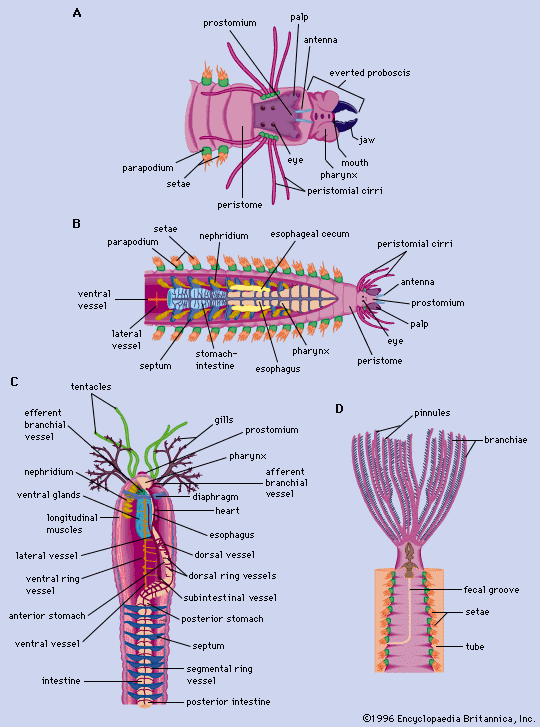
Common in segmented invertebrates like the earthworm, the metanephridium is a more complex tubule that lacks flame cells. Instead, it features an internal opening called a nephridiostome that draws in body cavity fluids. The tubule is lined with cilia that facilitate the movement of fluid, while specialized tubule cells actively reabsorb useful nutrients. In complex forms, the tubule may differentiate into distinct regions, including an enlarged bladder, to modify the fluid’s composition before excretion.13
What are some evolutionary adaptations of nephridia in different animal species?
The evolution of nephridia represents a significant advancement in animal physiology, enabling tissue specialization by removing the necessity for every cell to be in direct contact with the environment for waste diffusion. These structures have adapted in various ways to meet the metabolic and environmental demands of different species:1
- Structural Specialization: Nephridia evolved from simple, scattered protonephridia—found in flatworms and rotifers—to more complex, paired metanephridia in segmented invertebrates like annelids1. While protonephridia utilize flame bulbs or solenocytes to filter fluid, metanephridia feature ciliated funnels (nephridiostomes) that draw in coelomic fluid directly.15
- Environmental Adaptation: In aquatic annelids, the primary nitrogenous waste product is ammonia, which is easily excreted into the surrounding water. Conversely, terrestrial earthworms have adapted to excrete urea and possess longer, more complex tubules that allow for the significant reabsorption of water and salts, a critical adaptation for maintaining osmotic balance in soil environments.53
- Functional Integration: Nephridial function mirrors vertebrate kidney processes—filtration, resorption, and secretion5. Some species, such as leeches, have developed unique tolerances to high ammonia concentrations, potentially aided by calcium levels in their cells and bacterial activity within their nephridial capsules.5
What are the main types of nephridia, and how do they differ in structure?
Nephridia are the primary excretory units in many invertebrates, functioning to expel metabolic waste from the body cavity to the exterior. They are categorized into two main types based on their structural complexity and evolutionary development.1
Protonephridia
Found in primitive invertebrates such as flatworms, ribbon worms, and rotifers, these are the simpler form of nephridia. They are typically scattered among body cells rather than arranged in a specific pattern.1
- Structure: A protonephridium consists of a hollow cell located in the body cavity connected to a duct that leads to an external nephridiopore.1
- Filtration: The internal cell is specialized for filtration. If it contains cilia, it is called a flame bulb (or flame cell); if it contains a flagellum, it is a solenocyte. The movement of these structures drives fluid through the duct.1
Metanephridia
These are more advanced structures found in segmented invertebrates, such as annelids, and are usually arranged in pairs per segment.13
- Structure: Unlike protonephridia, the metanephridium is a complex tubule that lacks flame cells. It features an internal opening called a nephridiostome that draws in coelomic fluid.13
- Function: Cilia lining the tubule move the fluid toward the exterior, while specialized cells actively reabsorb nutrients, modifying the fluid’s composition along the way.13
We could dive deeper into how these systems facilitate osmotic balance in different environments.
Sources
- Nephridium — Encyclopædia Britannica
- Animal development - Excretory organs — Encyclopædia Britannica
- Excretion - The nephridia of annelids, nemertines, flatworms, and rotifers — Encyclopædia Britannica
- Excretion - Amphibians — Encyclopædia Britannica
- annelid - Excretory system — Encyclopædia Britannica
- pronephros — Encyclopædia Britannica
Published on · 4 min read